• Teachers shifted from engagement-focused use to designing gamification around specific lesson goals. • As their practice evolved, they described broader participation and more useful in-lesson feedback. • In Arabic and Islamic Studies, intentional design also meant keeping interaction aligned with curriculum and cultural expectations.
A 2026 Emirates College for Advanced Education (ECAE) study published in Frontiers in Education followed Grade 9 Arabic Language and Islamic Studies teachers across multiple public schools as they used ClassPoint over four months.
Emirates College researchers hosted two professional development workshops, then tracked how teachers integrated ClassPoint into their regular lessons.
The findings revealed a shift: teachers moved from using gamification mainly for engagement to designing it more intentionally, structuring participation, embedding feedback loops, and aligning activities with learning goals.
The value wasn’t in the game mechanics themselves. It was in how teachers designed ClassPoint pedagogy around them.
If you’re adopting classroom technology and wondering how to move past the novelty phase, this study shows the professional development and implementation structure that made the difference.
The Problem: Engagement Without Insight
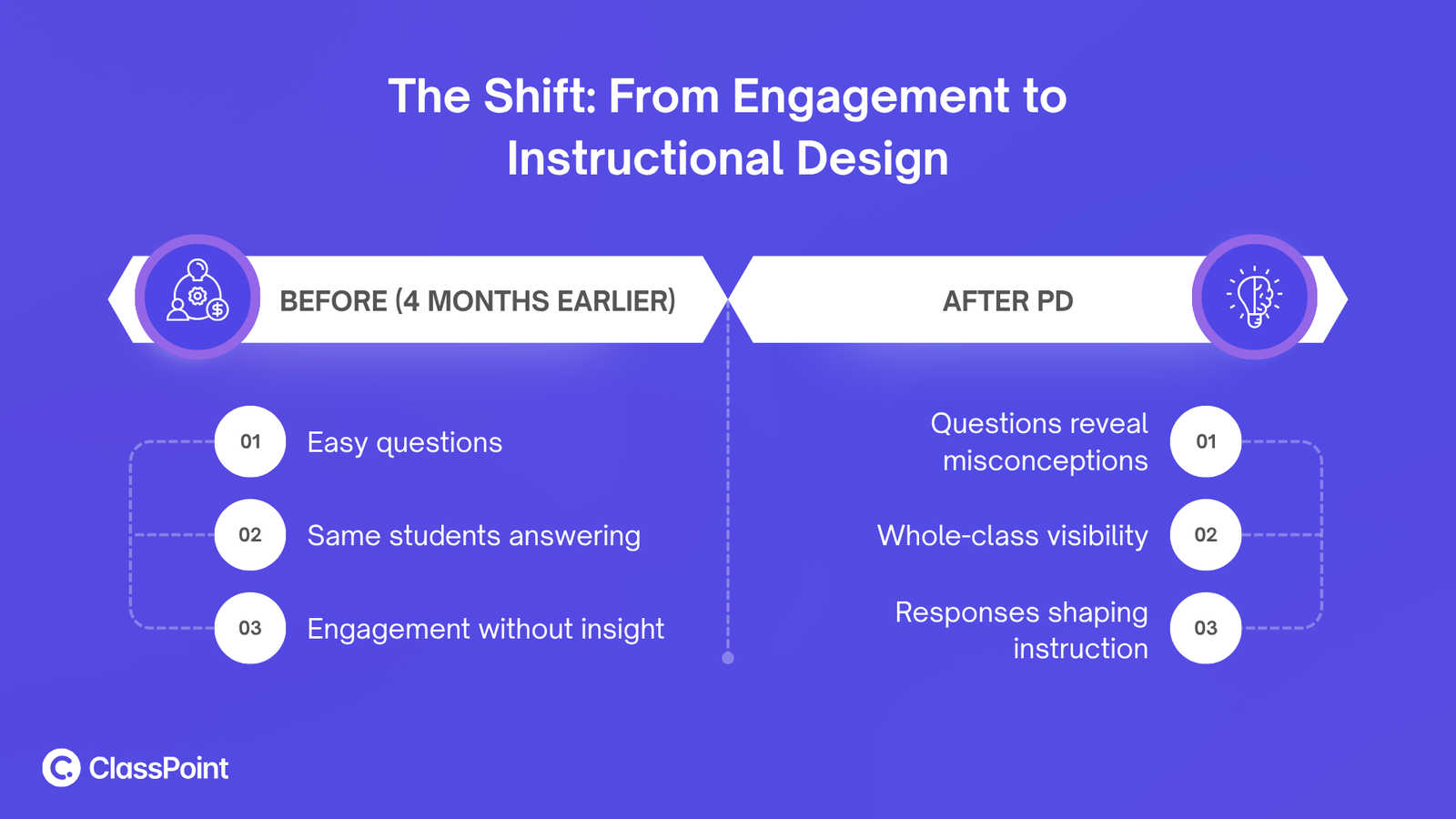
Teachers in the Emirates College described a familiar pattern. They started using gamification to make lessons more exciting and ClassPoint added energy to classes. Students were engaged, but that engagement wasn’t translating into better teaching.
The same students dominated. Before using ClassPoint intentionally, participation stayed narrow, the same confident few answering, while quieter students stayed invisible. Teachers couldn’t tell what those students understood.
Responses didn’t reveal understanding. At first, teachers asked easy questions, students answered, earned stars, and stayed engaged. But the responses didn’t show where students were confused or what to reteach, one teacher said:
“I could see they were engaged, but I wasn’t learning anything useful from their answers.”
The interaction didn’t shape instruction. Teachers collected responses but didn’t use them to check for understanding or shape what came next. Engagement felt good in the moment, but it wasn’t driving better decisions about pacing, reteaching, or moving on.
The result? Time spent, students engaged, but limited instructional value. The study found this isn’t unique to these classrooms, it’s where most teachers start with classroom technology. The question is how to move past this surface level of tech usage.
The Emirates College Implementation Model
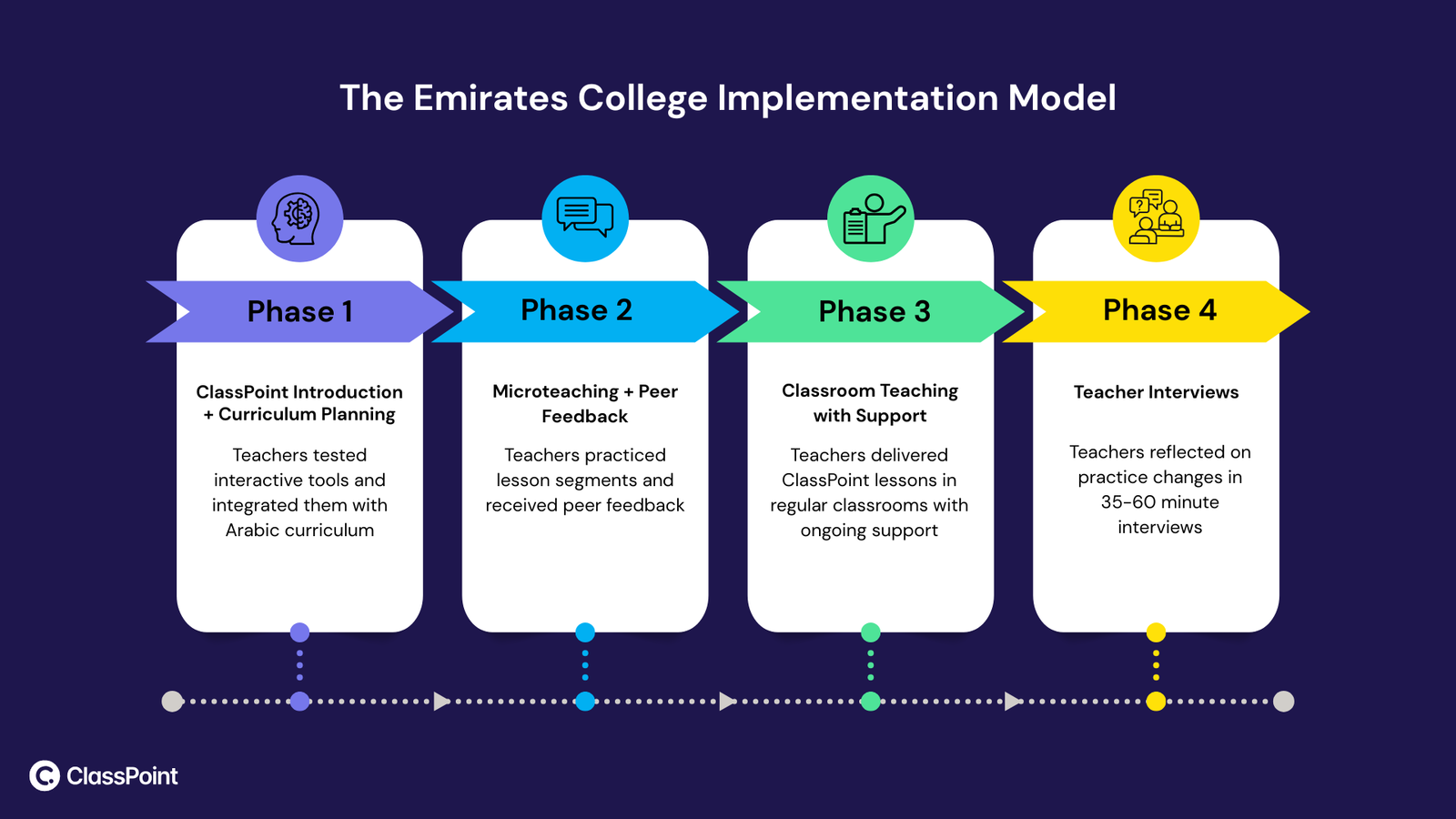
Emirates College for Advanced Education structured the study in four phases to track how teachers moved from engagement-focused ClassPoint use to intentional pedagogical design.
Teachers attended two workshops at ECAE, practiced for four months in their classrooms with ongoing support, then reflected on changes through interviews. This structure gave teachers time to learn ClassPoint features, practice with peer feedback, experiment in real lessons, and reflect on what shifted.
What the Emirates College Study Revealed
Over four months, teachers described three main shifts in how they used ClassPoint. These changes reflect a movement from engagement-focused use to designing ClassPoint pedagogy around learning goals.
1. From using ClassPoint to teaching with ClassPoint
At first, some teachers used interactive activities mainly to add energy to their lessons. Over time, they became more deliberate: when students would respond, what each question should reveal, and how those answers should shape what came next clarify, slow down, reteach, or move on.
ClassPoint stopped feeling like an add-on and became part of how teachers structured the lesson itself: activating prior knowledge, checking understanding, consolidating learning, or deciding whether to revisit a concept. Several also said their questions grew more purposeful. Collecting answers is one thing; using them to decide what happens next is another.
That is one of the paper’s strongest ideas. The researchers describe ClassPoint as becoming part of a broader pedagogical infrastructure: less about quizzes and stars alone, and more about how teachers organized participation, feedback, assessment, and lesson flow.
2. Participation Became Something Teachers Could Design
Teachers said discussion had often centered on the same confident few. Structured whole-class responding through gamification gave them another option: invite everyone to answer, not only those who volunteered aloud.
In their accounts, participation became broader and more organized. Quieter students had more room to contribute.
The real gain was not “more engagement,” but more students’ thinking becoming visible. This shift reflected how teachers designed ClassPoint pedagogy to surface understanding from all students, not just the vocal ones.
The same shift from narrow participation to whole-class visibility appeared at Safa British School in Dubai. Read how their primary phase teachers made quiet students visible at Safa British School Case Study
3. Good design also meant knowing what fit the subject
For Arabic Language and Islamic Studies teachers, designing ClassPoint pedagogy also meant asking whether an activity fit the subject’s academic and cultural expectations.
They described gamification as most appropriate when it served clear goals, grammar, vocabulary, comprehension, or reflection, and when tone and competition matched the lesson. That mattered especially in Islamic Studies:
“Since it comes to Islamic Studies, seriousness and values of this subject play a pivotal role. I always try to be careful … so that we uphold our lessons while respecting this discipline.”
Cultural values didn’t block interactive teaching. They helped shape what good interaction should look like.
💡New to ClassPoint? Visit our tutorial hub to learn how to use interactive quizzes, name pickers, polls, AI tools, and other features to increase classroom engagement.
What This Means for Schools
The Emirates College for Advanced Education study’s takeaway isn’t simply to adopt gamification tools. It’s to create the conditions for teachers to design interaction around instructional decisions, not just engagement.
Based on what worked in the Abu Dhabi study, schools should focus on:
Professional learning that goes beyond features. Teachers need time to design purposeful questions, not just learn how the tool works.
Support for iterative practice. The shift from engagement-focused to design-focused use took four months. Expect teachers to experiment and refine.
Alignment with curriculum and context. ClassPoint pedagogy needs to fit subject-specific and cultural expectations, not override them.
Focus on instructional decisions. The value comes from using student responses to shape what happens next—clarify, reteach, or move on.
The study shows that this kind of practice develops over time. Teachers didn’t begin with fully formed routines. Schools that supported ongoing reflection and adjustment saw deeper integration.
The most interesting shift in the ECAE study was from using ClassPoint to designing ClassPoint pedagogy.
Teachers started with gamification for engagement. Over time, they used it to structure participation, surface understanding, and guide instruction. The value wasn’t in the game mechanics. It was in the teaching decisions built around them.
What this means for schools: The study shows a specific path: two workshops on curriculum planning and microteaching, four months of classroom use, then reflection. That structure moved teachers from asking easy questions for engagement to designing questions that revealed where students were confused.
The outcome? Quieter students became visible. Teacher responses showed exactly where to slow down or reteach. And activities stayed aligned with subject expectations.
The difference between adopting a tool and designing pedagogy around it comes down to this: teachers need to learn how to design with it, not just use it.
Try ClassPoint for Free
800,000+ educators and professionals use ClassPoint to boost audience engagement right inside PowerPoint.
Hebah Alsarhan has spent over 4 years as MENA Country Manager at Inknoe, supporting ClassPoint and Edcafe AI users across the Middle East and North Africa. She works with schools and universities in Saudi Arabia, UAE, Egypt, and beyond, helping educators adopt and implement the tools so they fit local curricula and classrooms. Her writing covers teaching strategies and practical edtech application.