Maybe you already use points, live quizzes, or a leaderboard. Maybe you don’t use any of that yet and you’re weighing whether gamification belongs in your teaching at all.
Either way, the same question sits underneath: when you add game-style mechanics, what are you training students to care about?
Growth mindset lives in that answer.
It’s what you praise on an ordinary day: effort, a second try, a better explanation than last week. Game elements can line up with that, or they can backfire your intention.
The difference is the rules you set and what you name out loud when someone earns a point. If you already mix gamification into your lessons, treat this as the mindset layer on top.
We’ll cover habits, when gamification fits growth mindset in the classroom, rules for points, badges, leaderboards, and speed, and when to ease off.
We’ll also explore how several tools like ClassPoint fit those rules, so you can picture what this looks like in a real lesson, not only in theory.
What growth mindset looks like in your classroom
Psychologists refers to the growth mindset as one’s belief that ability can change with effort and strategies that help move the needle.
A fixed mindset is closer to “you either have it or you don’t,” which nudges students toward looking smart and away from hard tasks. Carol Dweck’s work made that contrast famous.
In practice, the shift is praise. In The Perils and Promises of Praise, Dweck explains why “you’re so smart” can backfire when work gets difficult, while process praise, effort, strategies, sticking with a problem, tends to support persistence.
From process praise to mindset programs
Longitudinal research published in Child Development found that early process praise to toddlers tracks with stronger incremental beliefs about intelligence years later: that ability can grow, not only that you’re born with a fixed amount.
A different question is what happens when schools run programs whose job is to teach “intelligence can grow” in a lesson or a short series?
A 2025 review in Review of Education pulled together 24 randomized trials that did exactly that: school-based programs aimed at a growth mindset of intelligence, with achievement as the outcome. The result was that students’ scores barely moved, sometimes not at all.
In the end, standalone school programs don’t reliably shift scores.
Bottomline: Growth mindset in the classroom still shows up in how you talk to students on ordinary days. Not in a one-off “mindset” program, lesson, or slide deck. Those rarely move grades on their own if how you give feedback and what students practice day to day stays unchanged.
Growth mindset in action: habits students can see
Growth mindset in the classroom is what you repeat in ordinary lessons: praise, mistakes, progress. It’s not one speech at the start of the unit.
Effort and strategies
Praise what students control: a second strategy, rereading the prompt, asking a clarifying question.
“Great job” and “you’re so smart” don’t tell anyone what to do again.
Your language is the training signal: name the move, not the trait.
Lead with behavior: “You reread the problem before you answered” then one line on why it matters.
Anchor the habit by ending with when to do it again like “Next time the steps feel long, do that same pause.”
Mistakes, feedback, and revision
When failure isn’t a final verdict, students get room to revise. It’s important to make feedback usable here, a hint, a low-stakes try, then another attempt before the grade is set.
In practice, Put a common wrong answer on the board and walk them through where the thinking slipped. This way, it’s useful for everyone and not a public shaming of one student.
Last thing is to say what changes in the revision: “Fix the claim, then resubmit” beats only “needs work.”
Progress compared to last time, not only top scores
Show a path, not only a rank: “stronger than your last draft,” “faster than your own warm-up last week.”
That can sit beside a public leaderboard; you’re adding a growth story, not replacing the scoreboard.
Speaking of growth story, you can show their baseline by keeping last week’s score or time somewhere visible, a row on a chart, a cell in a tracker, so “beat your own last” isn’t vague.
You can also pair rank with growth. When you celebrate the top of a leaderboard, add one line about trajectory if you can: “Maya also moved up from last round.”
Why gamification supports growth mindset in the classroom
Gamification supports growth mindset because the right mechanics make effort visible and worth repeating. Points, retries, streaks, and live questions aren’t just fun. They’re feedback loops. And feedback loops are exactly what growth-minded learners need to keep going.
Keep in mind that gamification isn’t a shortcut to growth mindset in the classroom.
It’s a set of structures that can repeat what you already said that matters: effort, revision, and getting better over time.
Those same structures can also train the wrong thing: speed, optics, and who looks smartest today.
So the fit isn’t automatic. It depends on what you reward and what you say out loud when someone earns a point or moves up a board.
Low-stakes failure and retries
Growth-minded classrooms treat mistakes as information and leave room to revise. Many game-style activities are built around another turn instead of a single high-stakes score, that’s the tie.
Games and game-style quizzes can give students a try that doesn’t feel like a final verdict. Call the round practice or formative when you can. After a miss, let them see the correct path, then run a second pass.
When someone is wrong in front of the room, you can talk about what to do next (“adjust and try again”) instead of only who’s winning.
Visible progress
Growth mindset needs evidence that change is possible. Bars, levels, and streaks can show movement, or they can look like a fixed ladder of who’s “on top.” The mindset question is whether the graphic tells a growth story.
Tie what students see on screen to their own last attempt, not only to class rank. Say what the bar means (“questions mastered this week”) so it isn’t just decoration.
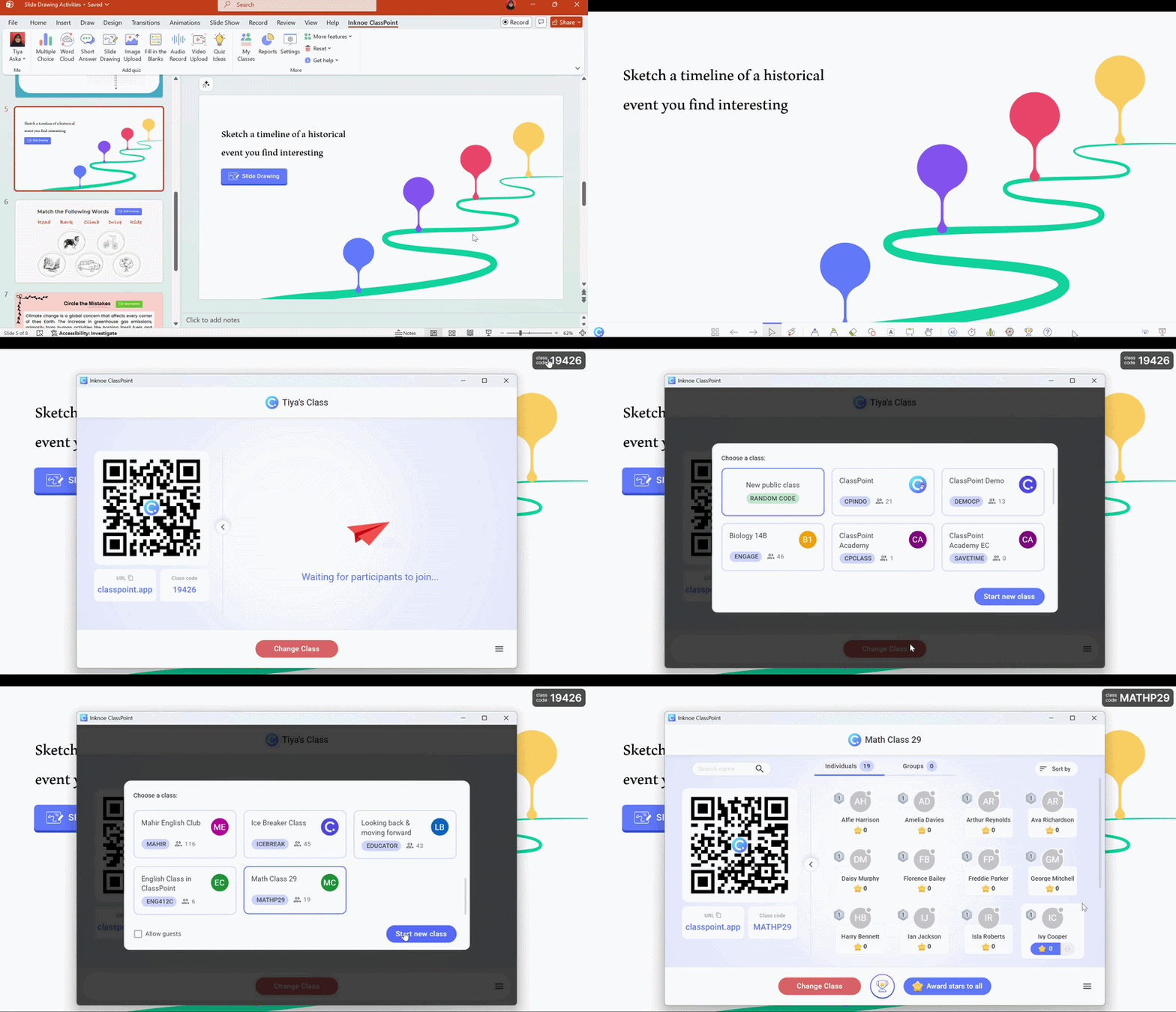
If the same group meets all term and you want recognition to carry across lessons, a private class in ClassPoint keeps one roster and persistent stars or progress across sessions instead of resetting every time you start a new file.
Fast feedback loops
Growth isn’t only a feeling, it’s adjust and try again. Short rounds with quick feedback mirror that rhythm when the point is learning, not only points.
Let quick checks tell you what to reteach tomorrow, not only who “won” today.
Plenty of tools can layer gamification onto what you already teach. You don’t need one app to do everything.
Kahoot! runs synchronized whole-class rounds, with live results that spark discussion. Wayground, formerly Quizizz, gives students more breathing room, it runs self-paced sets students work through on their own time.
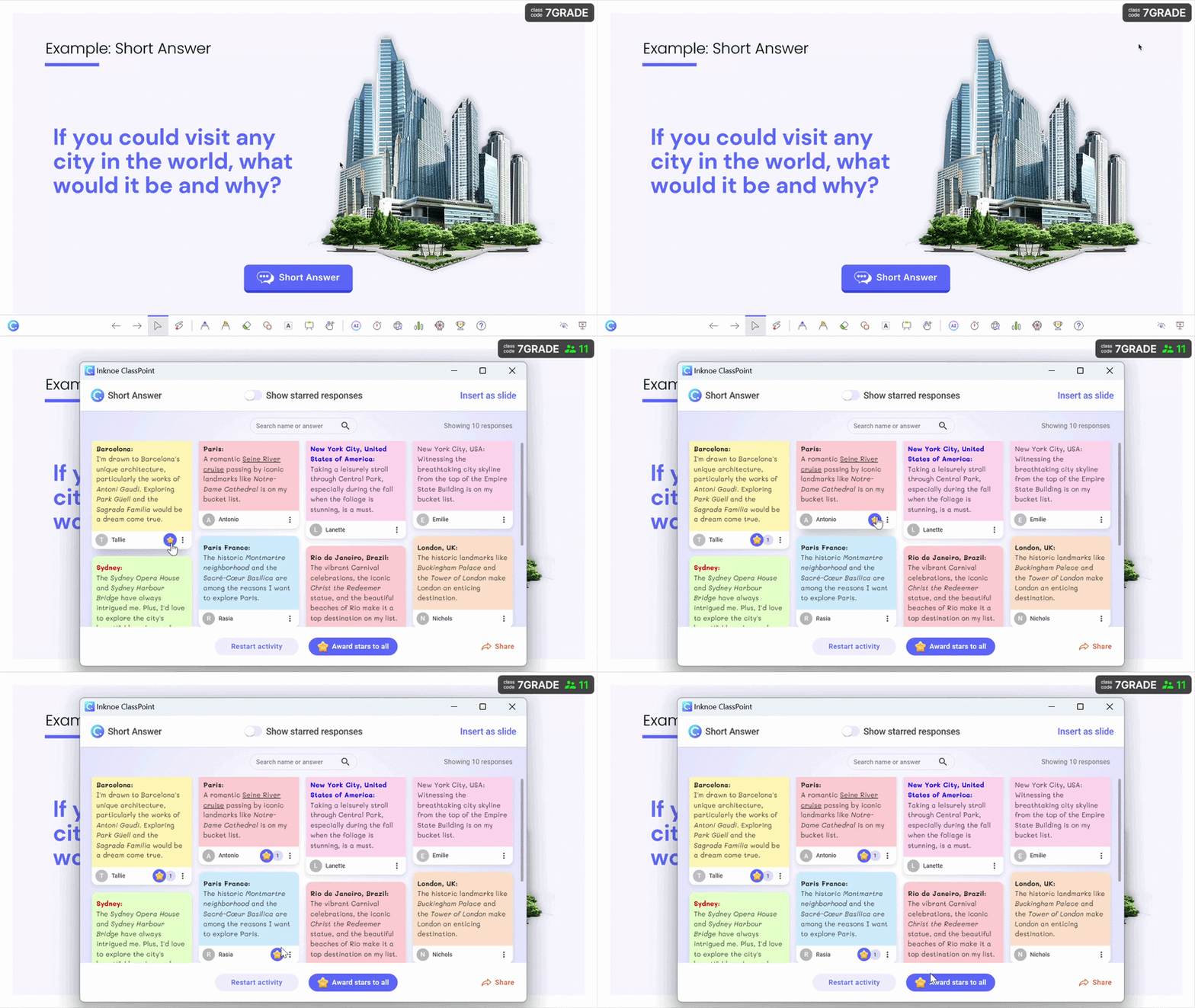
If you teach from PowerPoint, ClassPoint layers live interactive quiz questions and stars onto the slides you already have.
The point isn’t which tool you picked. Growth mindset in the classroom shows up when what you reward and what you say out loud match the habit you want.
Game mechanics that support growth mindset in the classroom
You’ve set the why. The how is three concrete choices: what you reward, what you show on a public board, and whether timers reward speed, the levers that decide whether growth mindset in the classroom holds or quietly loses to default game settings.
Points, stars, and badges: what to reward
Recognition works for growth mindset in the classroom when it tracks behaviors students can repeat (a better strategy, a revision, helping a peer), not only who buzzed first.
If stars or points only follow correct plus fast, you train speed and optics by accident.
Name the behavior when you award: “That star is for the second draft, not for being first.”
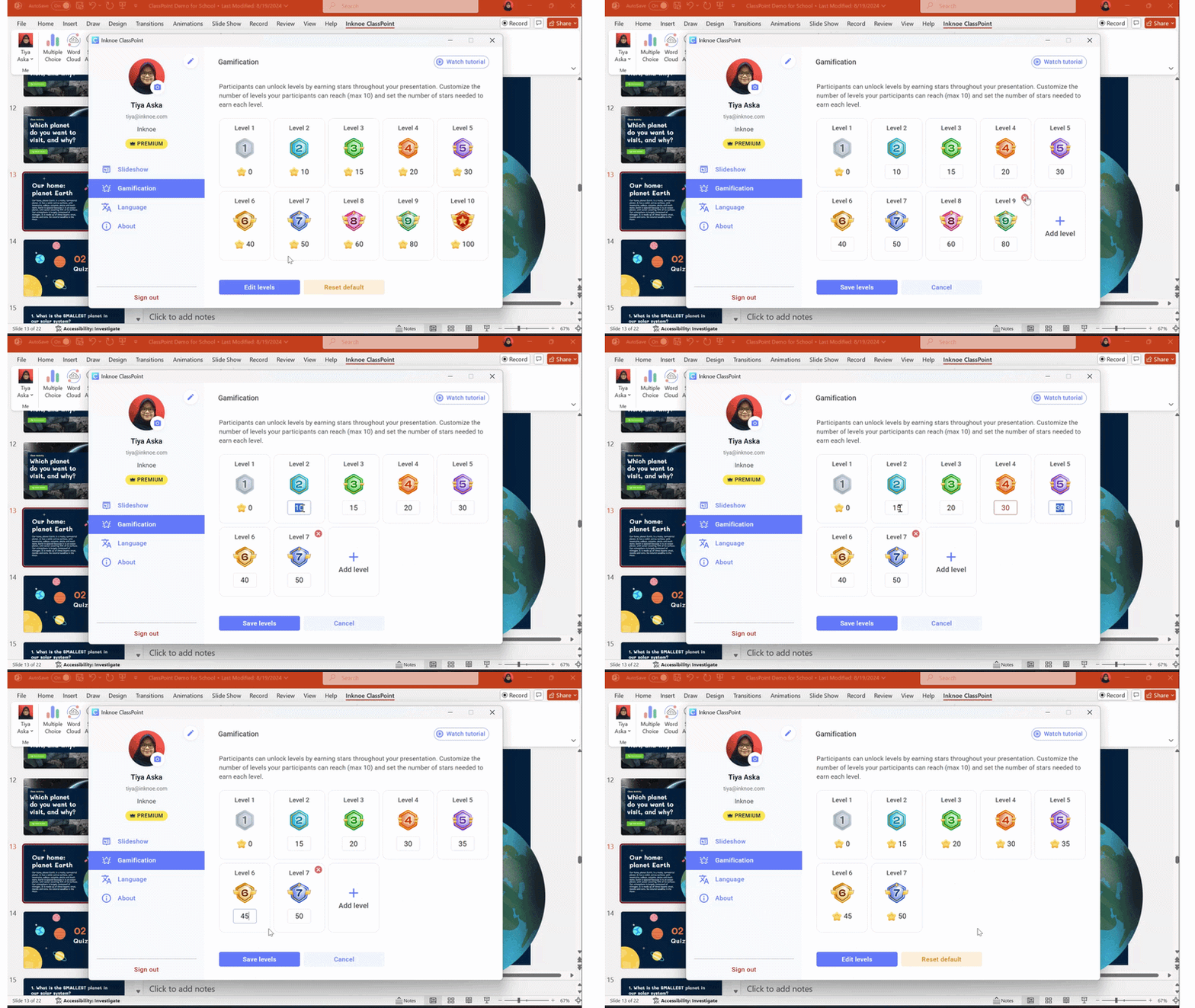
In ClassPoint, stars and custom badges, can track the actions you mark as worth credit—improvement since last round, a thoughtful explanation—not only who buzzed in first. What students see on the slide should match what you said when you gave the award.
Leaderboards and public ranking: guardrails that matter
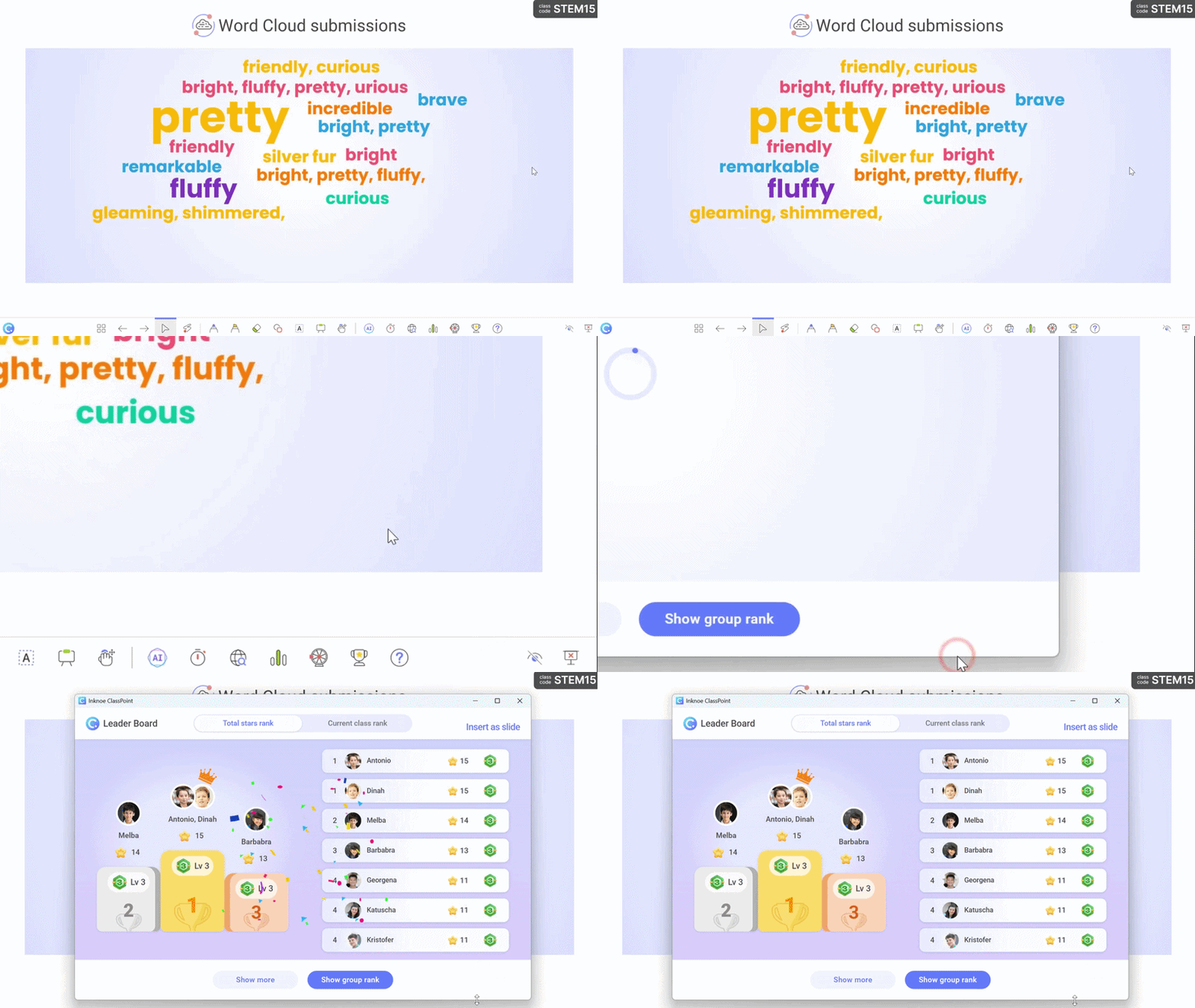
Leaderboards help when they show trajectory (personal best, teams, or a class goal), not only a permanent stack of who’s “on top.”
They hurt when rank feels like a fixed label, especially for students who already fear comparison.
Narrate growth (“most improved since Tuesday”), use team mode, or skip public rank for some tasks.
With live leaderboards in ClassPoint, you can foster growth mindset in the classroom mostly by how you call out movement, use team framing, and turn rank off when the goal is thinking, not competing.
Speed vs think time
Timed rounds are useful for retrieval of something students already practiced.
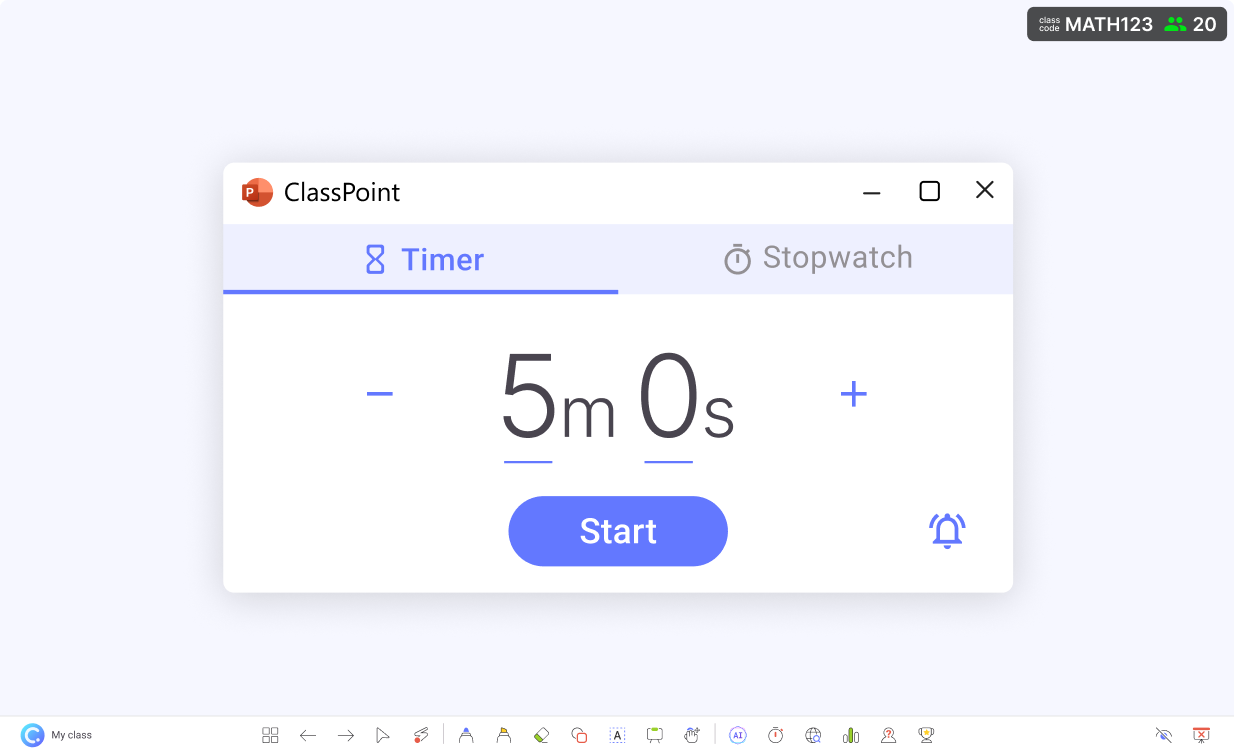
They work against growth mindset in the classroom when speed becomes the only win condition, especially for “explain your thinking” work. Use untimed or longer timers for reasoning while keep short timers for quick checks only.
If you use ClassPoint, you can run them timed slide activities, set the clock to match the skill, not the default.
Want more tactics? You’ve set rules for mechanics; for a broader playbook, see how to gamify your classroom next.
Extrinsic rewards as scaffolding, not the goal
Stars and points are extrinsic by definition. That is not a problem to hide. What matters is whether they scaffold the habits you want, or train students to care only about the treat.
A major review of reward studies in Review of Educational Research summarized evidence that some reward setups can weaken interest in the task itself, especially when the reward feels controlling rather than informative. That is the caution, not a ban on points or badges.
Aren’t stars, points, and badges still extrinsic?
Yes, and honesty helps. Growth mindset in the classroom does not mean “intrinsic motivation only.” It means students link effort and strategies to learning, not only to a prize.
Extrinsic hooks can be the bridge while you build language and habits: praise tied to a move students can repeat, a retry that earns credit, a point for revision instead of only for being first.
If the only story students hear is “collect rewards,” you train a collector mindset. If the story is “this point is because you tried a second strategy,” you are fostering a growth mindset.
Balancing praise, points, and real learning
Use points for behaviors you want to see again. Use praise to name why those behaviors matter. When students can tell you what a point was for without being prompted, the game is working the way it should.
You don’t need to phase out recognition over time. You do need to notice when the scoreboard starts to outshout the learning. If the game is the only reason anyone tries, pause. Teach the task first, then bring the points back.
This is where how to build a classroom point system meets daily teaching: keep rebalancing so what you reward still matches growth and not just who’s loudest or fastest.
When gamification undermines growth mindset in the classroom (or reward fatigue)
Gamification can work against growth mindset in the classroom when the game becomes the story: constant comparison, speed as status, or rewards so loud that the content disappears. None of that requires a villain. It is what happens when defaults run without your voice.
Comparison stress and public ranking
In a study by Almeida et al. on Negative effects of gamification report a systematic mapping in which leaderboards were among the game elements most often tied to reported harm in the reviewed literature—demotivation, worsened performance, and other motivational fallout.
This finding is a reason why you should narrate growth, use teams, hide the board for some tasks, and keep a safe-to-fail tone when someone is wrong in public.
Not every student needs a game
Some students are already maxed out on stimulation, comparison, or screens. Others need dignity more than another layer of optics.
Offer opt-out paths where policy allows: a paper option, a non-timed mode, or a lesson that stays substance-first with light or no scoring. Growth mindset is not “everyone must love the game.”
When to ease off
Gamification loses its pull when it’s on all the time. Leave plain discussion and instruction in your schedule. Not every lesson needs points.
When you notice flat energy or students rolling their eyes at the leaderboard, that’s reward fatigue. Don’t blame the class. Ease off the mechanics for a session or two and let the learning stand on its own. When you bring points back, they’ll mean something again.
The habit you’re building is a love of learning, not a dependency on the game.
Bringing it together
Gamification doesn’t build growth mindset on its own. You do, through what you reward, what you say out loud, and whether students still try when the game isn’t running.
That’s the real test. When the leaderboard is off and the points aren’t on the table, do students still reach for a second strategy? Do they ask for feedback? Do they try again?
If yes, the mechanics are doing their job. If the answer is no, pull back on the game and put more weight on the habit. That’s the rebalancing this whole piece has been pointing to.
Pick one change from above and run it next week. One lever is enough to start.
