
A classroom economy doesn’t fail because students lose interest. It fails because teachers run out of time to keep it alive. And when it dies mid-term, the students who were most motivated are the ones who feel it most.
The concept works. Students earn points for participation, effort, and positive behavior. Those points unlock rewards. Over time, the system builds a culture where contributing to class feels worth something, not just for grades, but in the moment.
What breaks it is the upkeep. The printed money. The tracking sheets. The store that eats your Friday afternoon. The payday you planned for Thursday that never happened. Most classroom economies aren’t abandoned because teachers gave up on the concept. They’re abandoned because the concept required more maintenance than a full teaching week allows.
This guide shows you how to build a classroom economy that doesn’t depend on you holding it together, using ClassPoint stars as the engine that keeps it running, session after session, all term.
Why Do Most Classroom Economies Fall Apart?
The friction kills them, not the students, not the concept.
Teachers who’ve run classroom economies describe the same pattern in almost identical terms: a strong start, a few skipped paydays, a store session that took too long, then a gradual fade that nobody officially ended. One teacher wrote in a ProTeacher forum:
It took time to keep up with this system and at times I would forget to pay students for the week.
Another described a store that needed two or three adults to run within the allotted time. These aren’t edge cases. They’re the norm.
Here’s why that matters. A 1999 meta-analysis by Deci, Koestner, and Ryan found that when extrinsic reward systems become inconsistent, motivation drops faster than if no reward system had been introduced at all. A skipped payday isn’t neutral.
It actively erodes the motivation the system was built to sustain. Students don’t return to baseline. They disengage below it.
The classroom economy didn’t fail. The infrastructure around it did.
What Makes a Classroom Economy Actually Work
The systems that survive a full term share three things: they’re immediate, they’re visible, and they require almost nothing from the teacher to maintain.
The first thing that matters is timing. A payday at the end of the week doesn’t reinforce Monday’s behavior. By Friday, neither the teacher nor the student clearly connects the reward to what earned it. Recognition that happens right away keeps that link intact. Students respond to feedback that’s still attached to what they did.
The second is visibility. Points in a ledger no one looks at don’t create motivation. Students need to see their balance, see it change, and see where they stand. When the scoreboard is visible during class, the economy runs on its own energy. When it’s hidden in a spreadsheet, the teacher has to carry it.
The third is that it has to fit inside a normal lesson. Any system that needs a separate session to function, whether that’s a store day, a weekly tally, or a dedicated payday, will eventually get skipped. And as the Deci research shows, a skipped payday isn’t just a gap. It actively sets motivation back below where it started.
The teachers whose classroom economies last aren’t the ones with better systems on paper. They’re the ones whose systems don’t require anything extra to keep going.
Why ClassPoint Stars Are Built for a Classroom Economy That Lasts
ClassPoint’s star system runs inside PowerPoint during your lesson. You award a star to a student with a single click from the ClassPoint toolbar while you’re presenting. That star is logged immediately, it adds to their running total, and it carries forward into every future session in the same Private Class. There’s no separate ledger to update, no payday to schedule, and no store to run.
ClassPoint stars match all three.
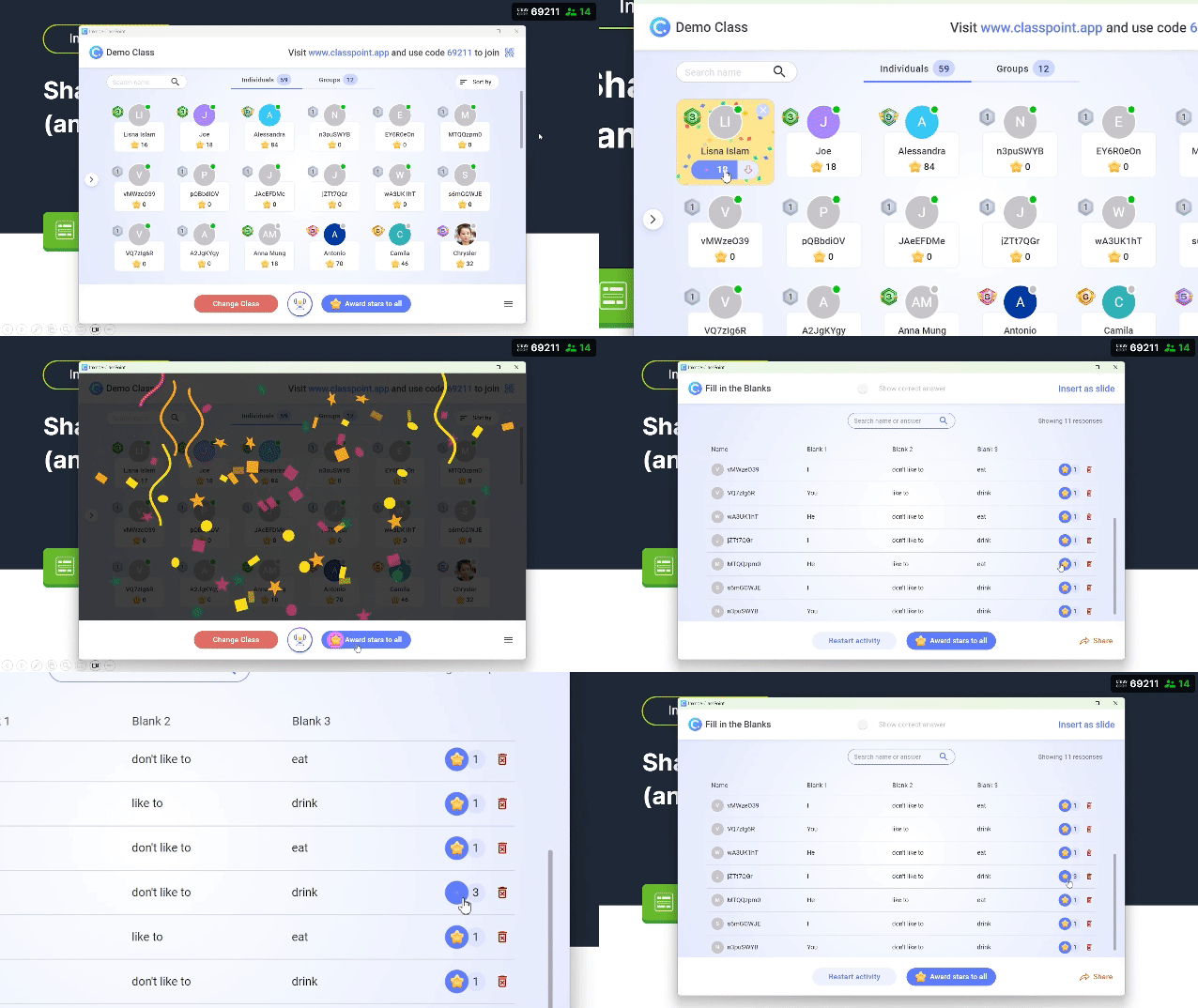
Stars are immediate. You award them the moment a student answers well, asks a good question, or shows effort on a difficult task. The feedback happens in the same breath as the behavior, not three days later.
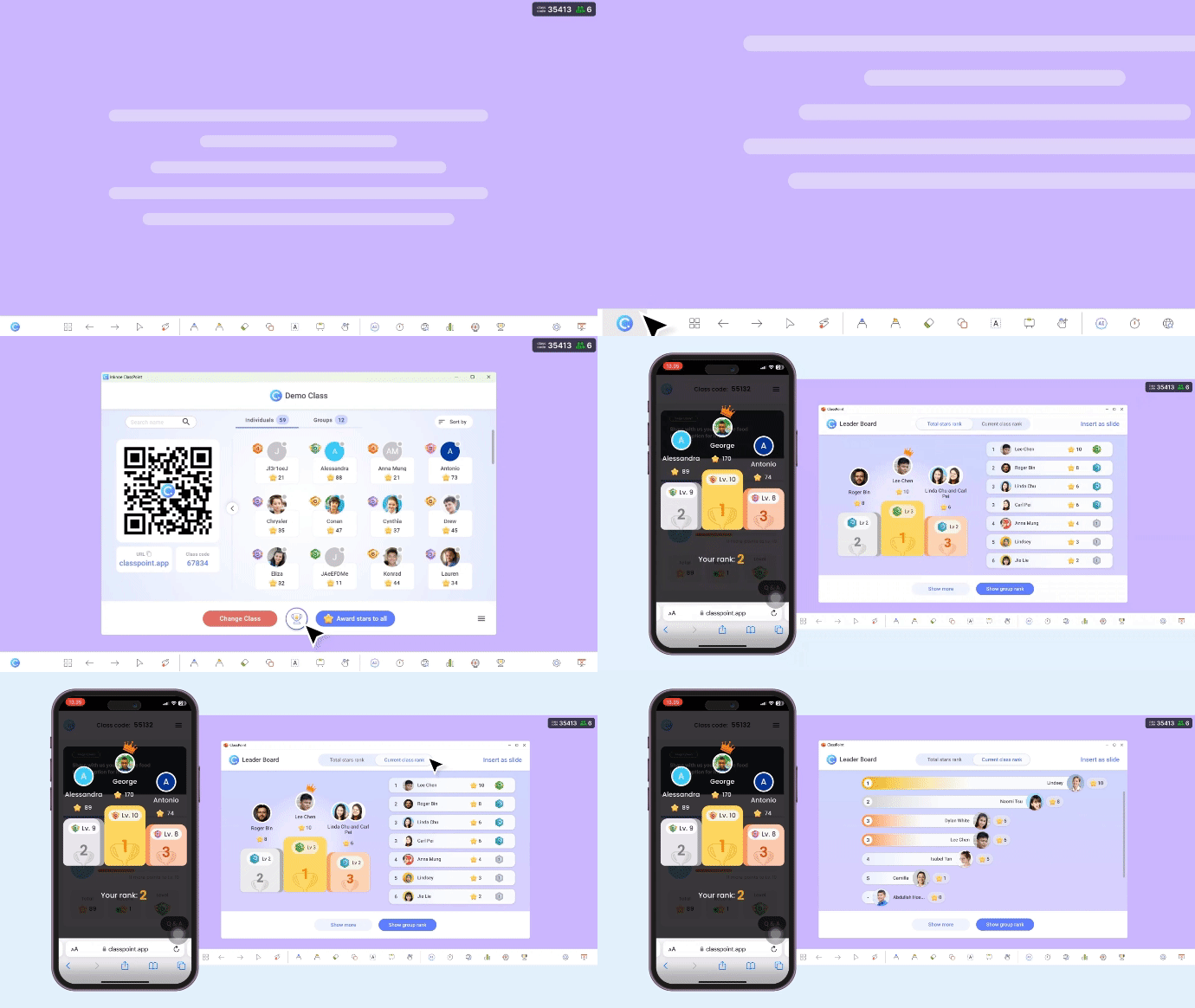
Stars are visible. During class, you can pull up the leaderboard at any point to show where students stand. Students know their total is growing. They can see it move. The economy feels alive because it is updating in real time.
Stars are low maintenance. Once you’ve set up a Private Class, the system runs on its own. Stars accumulate automatically across sessions. You don’t touch a spreadsheet. You don’t run a store. The only thing you do is award a star when a student earns one, which takes about two seconds and happens without breaking the flow of your lesson.
It’s already inside the tool you’re using to teach.
How to Build Your Classroom Economy with ClassPoint
Step 1 — Set Up Your Private Class
A Private Class is what makes stars persistent. Without it, ClassPoint runs in guest mode and every session resets. With it, students’ star totals carry forward automatically from one lesson to the next, all term.
Set it up through the ClassPoint web app: create a class, name it, and add your students. They join using their class code. From that point on, every star you award is saved to their profile in that class. Nothing changes about how you teach. The accumulation just happens.
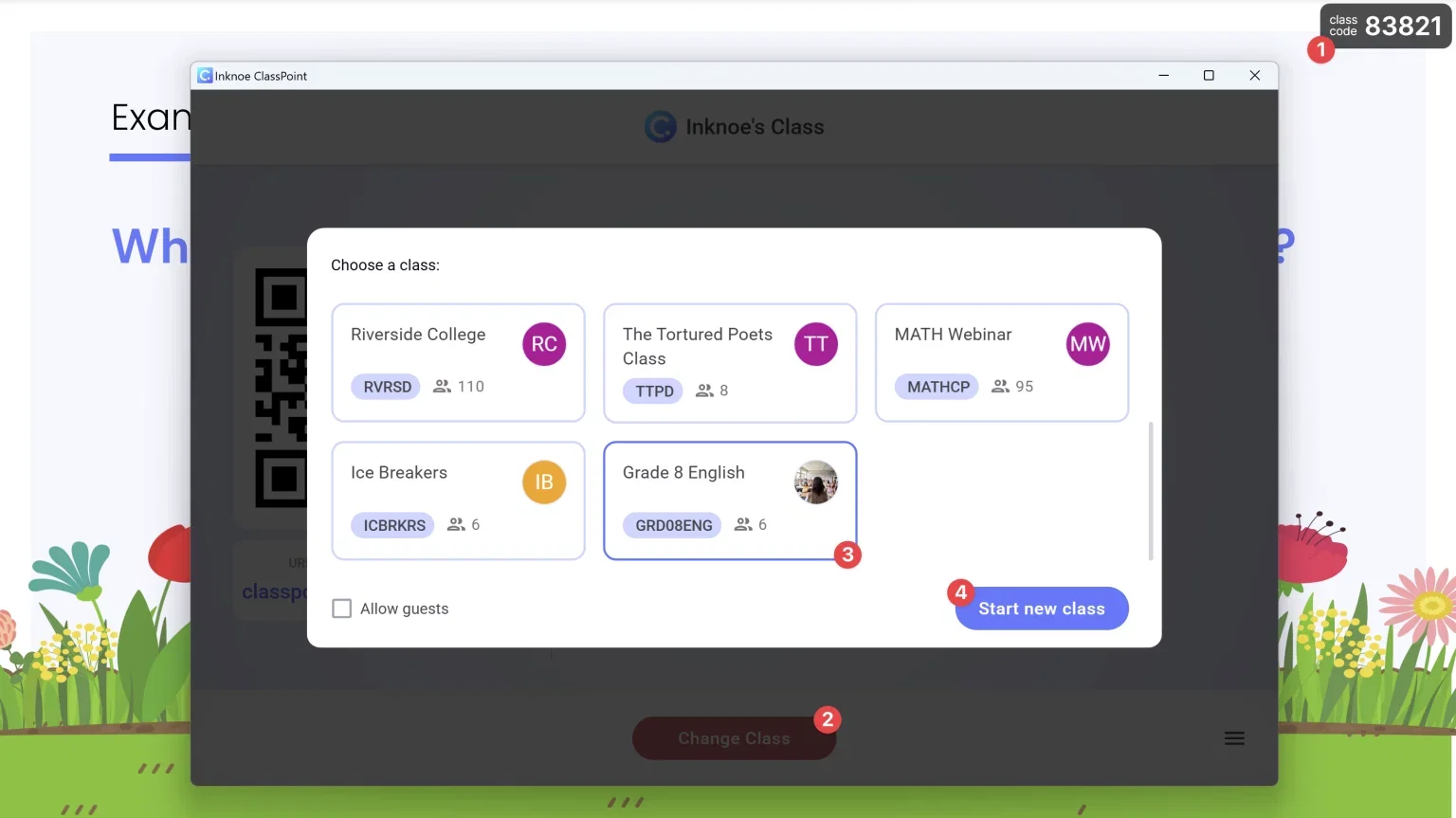
Before you continue: If you haven't set up a Private Class yet, the Private Class setup guide walks through the full process. The rest of this guide assumes it's in place.
Step 2 — Decide What Earns Stars
This is the part that determines whether your classroom economy means anything to students. Stars have no built-in rules. You decide what earns them, which means you need to decide before the first session and communicate it clearly.
Most teachers award stars for a mix of participation, correct answers, effort on difficult tasks, and behavior worth recognizing. The specifics matter less than the consistency. Students need to know what earns a star and trust that the same rule applies every session. One clear rule applied reliably is more motivating than five vague ones applied unevenly. Research on gamification and student mindset confirms that inconsistency undermines the system faster than weak criteria do.
Write the rules down, even informally, and share them at the start of term. Students who understand the system invest in it. Students who find it arbitrary stop trying.
Step 3 — Make It Visible with the Leaderboard
Opening the leaderboard takes one click from the ClassPoint toolbar during slideshow mode. You can pull it up at the start of class to set the tone, mid-lesson after an activity, or at the end as a session close.
Regularity matters more than frequency. Showing it once a week at a consistent moment gives students something to anticipate. Showing it every five minutes turns it into noise. Pick one slot and keep it there. Students will start tracking their own position before you even pull it up.
Step 4 — Add Teams for a Semester-Long Challenge
This step is optional and requires ClassPoint Premium.
If you’re running a longer challenge across a full term, Groups lets you assign students to named teams within your Private Class. Stars earned by individuals count toward their team’s running total, so the competition becomes collective rather than purely individual.
Set it up through the Private Class section of the web app: add team names, assign students, and the leaderboard updates automatically from there.
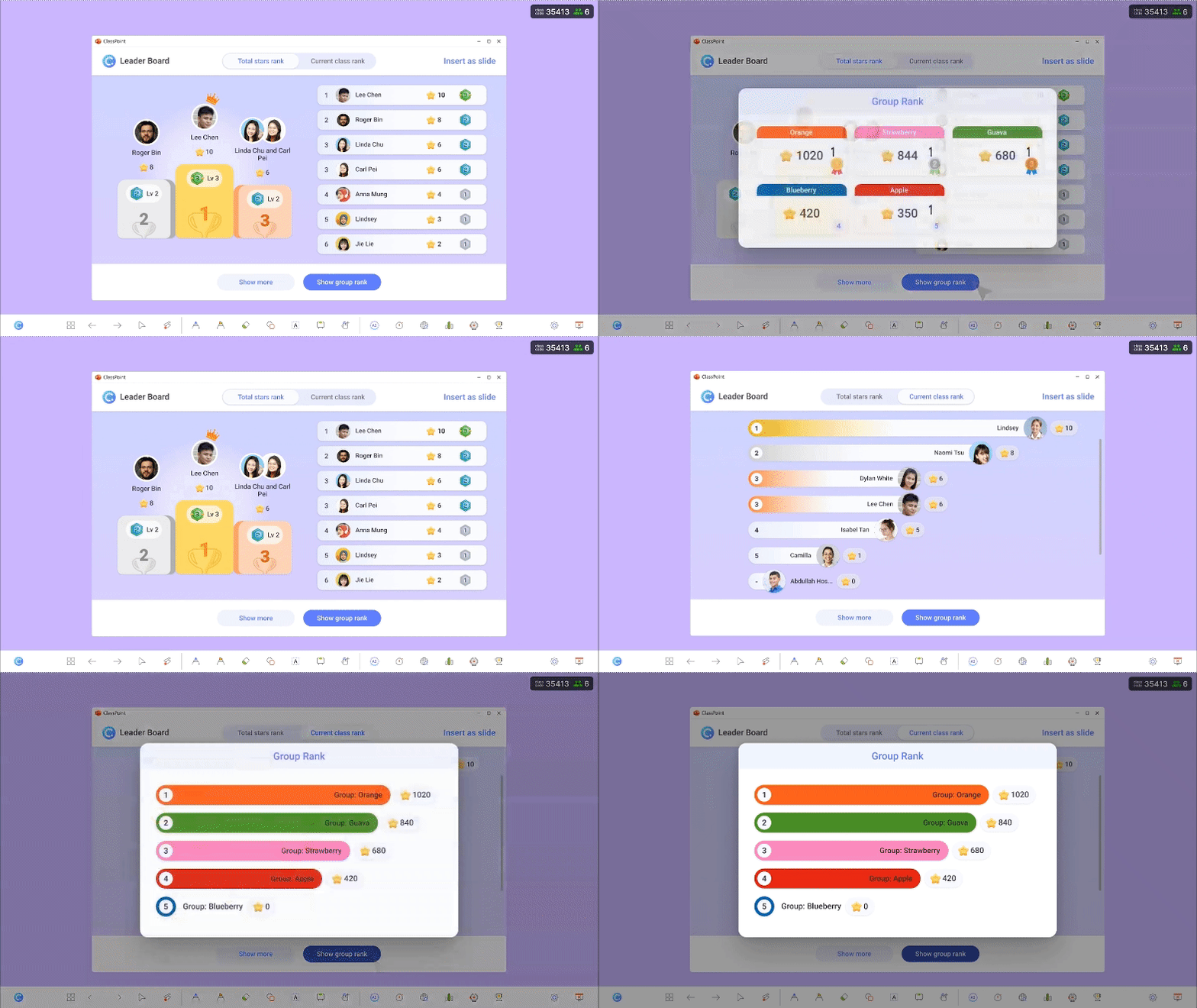
he benefit for a classroom economy is that it broadens who stays engaged. Students who might check out of an individual ranking often stay invested when their points affect their team. Assign teams deliberately rather than randomly. Evenly matched groups sustain the challenge longer.
How Safa British School Made It Work All Term
Safa British School in Dubai started with one teacher adding ClassPoint to their PowerPoint lessons. By the time the peer-reviewed study was published, it had scaled to the entire primary phase, 1,700 students across the school.
The rewards system was part of it from the start. Teachers awarded stars for participation, correct answers, and effort during activities. What kept it running all term was the same thing that keeps any classroom economy alive: it required nothing outside the lesson to maintain. No store days. No printed currency. Stars accumulated automatically and carried forward session to session.
The numbers from the study are specific. 95% of students found the rewards motivating. 97% said they felt more engaged in ClassPoint lessons. 91% of teachers reported higher student engagement compared to lessons without it.
What made it scale was not a top-down rollout. One teacher made it work, the results were visible to other staff, and the system spread because it was easy to replicate. The infrastructure was already there.
Read the full case study: How Safa British School scaled ClassPoint across its primary phase
What to Do When the Novelty Starts to Fade
Every classroom economy hits the same wall somewhere between week 4 and week 8. The initial excitement around earning stars settles into routine, and a few students stop tracking their balance as closely. This is not a sign the system failed. It is what happens when novelty wears off.
The fix is not to add more incentives. Research on sustained motivation distinguishes between novelty-driven engagement, the kind that spikes at the start, and habit-driven engagement, which is quieter but more durable. The goal is not to recreate the opening week. It is to give students something new to aim for inside the same structure.
ClassPoint builds this in. As students accumulate stars, they move through levels and earn badges tied to their progress. The leaderboard shows not just who has the most stars this week, but who has climbed furthest overall. For most students, that shift from collecting points to reaching something is enough to re-engage the system.
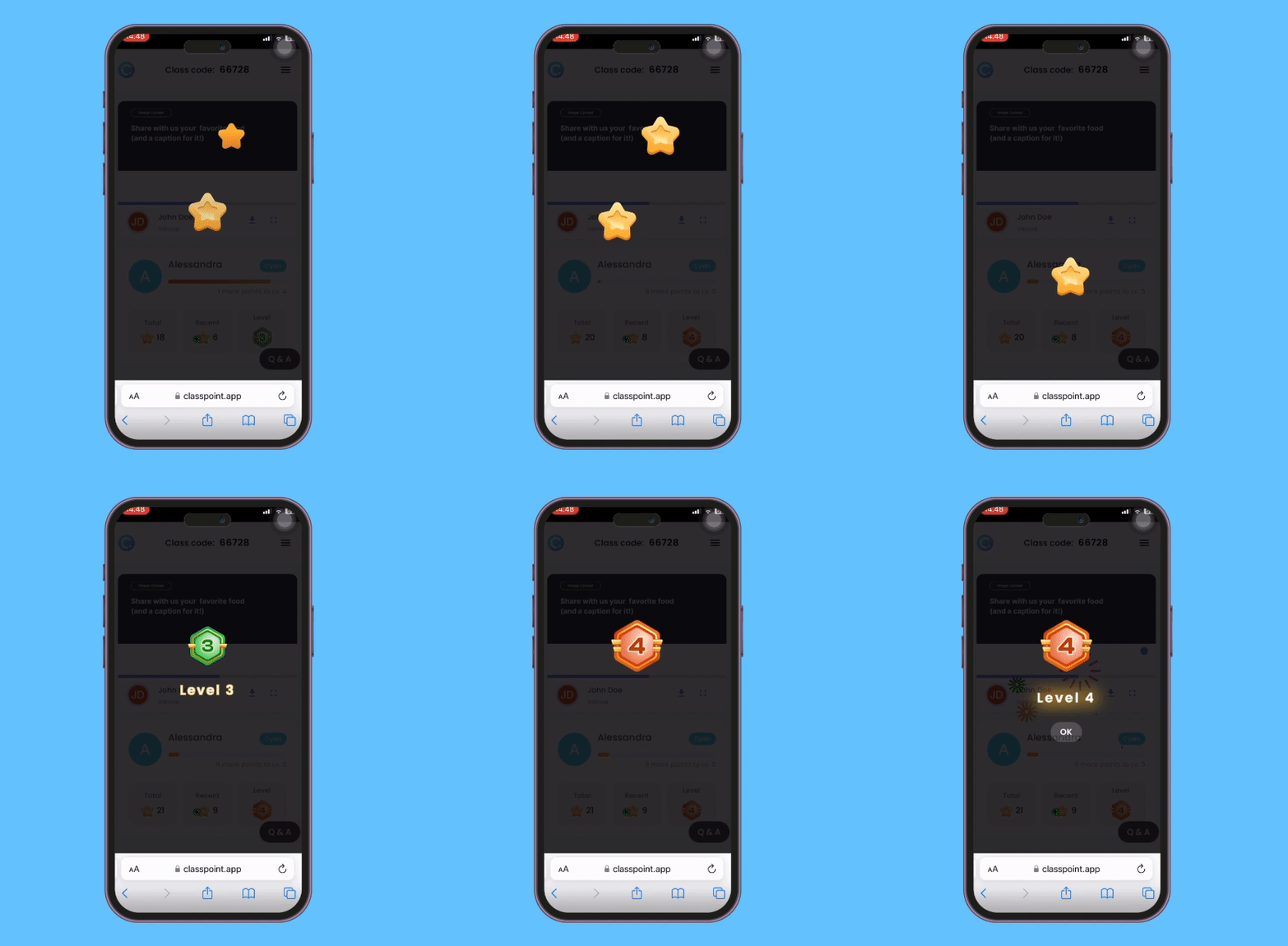
A few teacher adjustments help too. Changing what earns stars by unit keeps the criteria feeling fresh. Effort in a group discussion is different from speed in a retrieval drill, and students notice when the bar reflects that. If you have Groups set up, switching team compositions mid-term resets the competitive dynamic without resetting the whole economy.
The teachers who get a full term out of their classroom reward system usually do one thing differently: they treat the first fade as a design prompt, not a failure
Build Your Classroom Economy Once, Let It Run
The teachers who run classroom economies all year are not doing more work. They are doing less, because the system is designed to run without them carrying it.
That is the shift worth making. Not a new behavior management strategy, not a heavier workload, just a structure that does not depend on you to always keep it alive between lessons.
