IQ scores have been rising steadily for over a century. In the late 1990s, something shifted. In several developed countries, scores stopped climbing. In some, they dropped. Researchers call this the reverse Flynn effect, and Gen Alpha is growing up inside it.
Teachers are already seeing the downstream effects: shorter attention spans, passive participation, and the same small group carrying every classroom discussion. ClassPoint’s own research at Safa British School in Dubai put a number to it. Before the school made any changes, primary teachers described the same pattern every lesson: the same pupils answering, the quiet ones staying quiet even when they had ideas.
Now researchers are watching Gen Alpha closely. The question isn’t whether the trend is slowing. It’s whether the conditions these kids are growing up in could accelerate the reversal. And for teachers, there’s a more practical question underneath all of this: what can you actually do about it?
What Is the Reverse Flynn Effect?
The reverse Flynn effect refers to the observed decline in IQ scores in populations where scores had previously been rising. Unlike the original Flynn Effect, which showed roughly a 3-point increase per decade since the early 20th century, the reverse trend suggests that the factors driving those gains may be stalling, or being offset by new ones.
Research from Norway, Denmark, and the UK first flagged the pattern in the late 1990s. Scores in certain age groups stopped rising, and in some cases fell. More recently, IQ scores in the US dropped for the first time this century, with declines concentrated in verbal reasoning and matrix reasoning among younger populations. [VERIFY: add specific study name and year for this claim before publishing]
For Gen Alpha specifically, researchers are watching two things closely: the effects of heavy screen exposure during early childhood, and the drop in unstructured physical play that previous generations had by default.
The Flynn Effect and Gen Alpha: A Summarized Look at Intelligence Trends
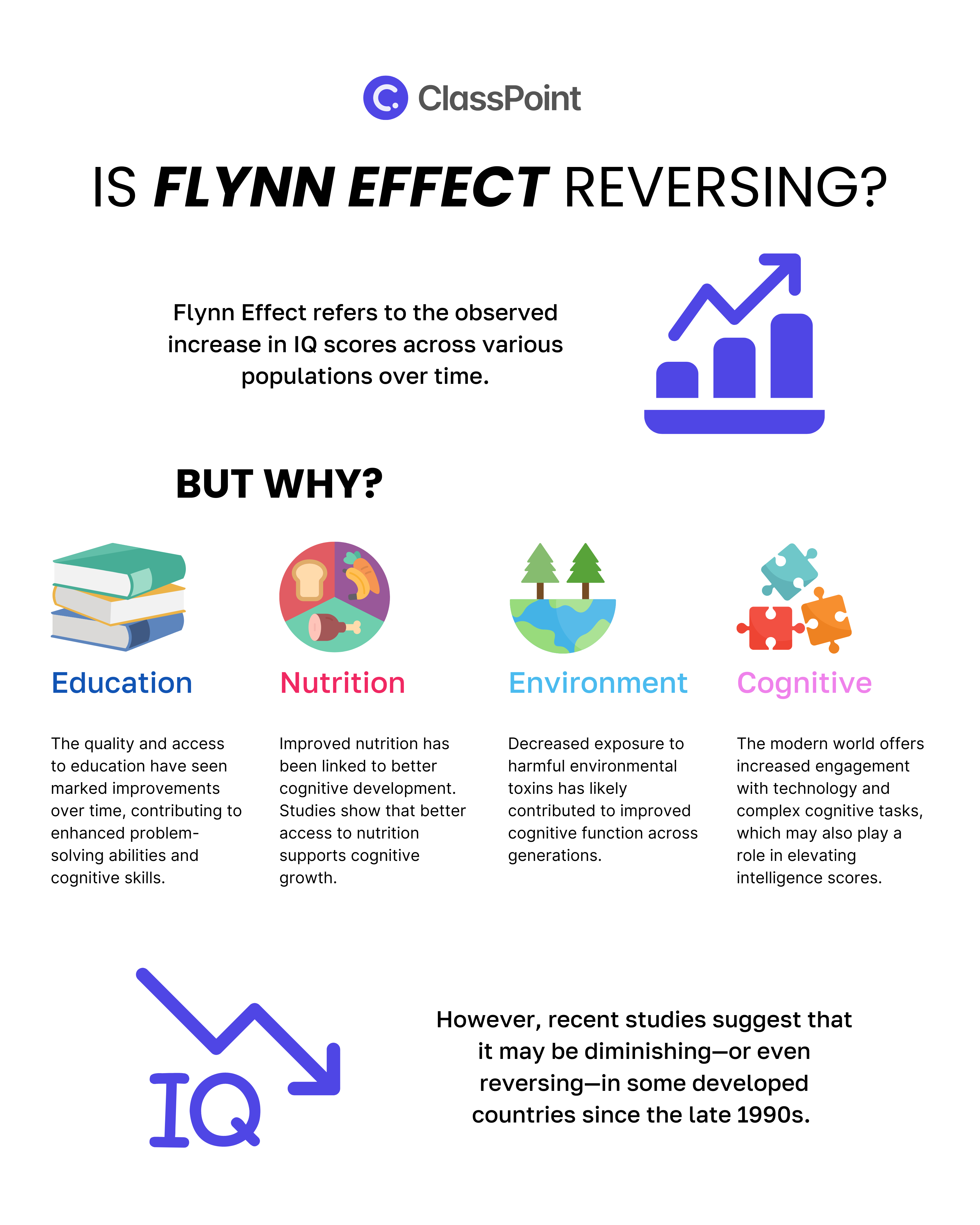
The Flynn Effect refers to the observed increase in IQ scores across various populations over time, first identified by researcher James Flynn in the 1980s. Average IQ rose steadily, with an estimated increase of about 3 points per decade since the early 20th century. As we look to the future with Gen Alpha, it’s worth exploring whether these trends will continue or shift.
Historical Background of the Flynn Effect
James Flynn’s research, published in 1984, revealed a significant rise in IQ scores over several decades. Specifically, he identified a 13.8-point increase among Americans from 1932 to 1978, translating to roughly 0.3 IQ points per year.
The term “Flynn Effect” was later popularized by Richard Herrnstein and Charles Murray in their 1994 book The Bell Curve. Flynn himself noted that if individuals from a century ago were tested today, they would score significantly lower. The gains are real, not just statistical.
Mechanisms Driving the Flynn Effect
Several environmental factors explain the consistent rise in IQ scores:
- Education: Quality and access to education improved markedly over the 20th century, contributing to stronger problem-solving and reasoning skills.
- Nutrition: Better nutrition during early childhood supports cognitive development. Deficiencies in essential nutrients demonstrably affect IQ.
- Reduced exposure to toxins: Decreased environmental toxin exposure, particularly lead, has likely contributed to improved cognitive function across generations.
- Cognitive stimulation: Engagement with increasingly complex media, tools, and tasks may have trained abstract reasoning skills at scale.
The Flynn Effect Gen Alpha Seems to Be Changing Pace From Previous Generations
While the Flynn Effect remained strong throughout the 20th century, IQ scores have started declining in several developed countries since the late 1990s. Countries like Norway, Denmark, and the UK have reported drops in certain age groups.
Despite these trends, Gen Alpha’s average IQ is still higher than that of generations from decades past. The cumulative gains from improved education, nutrition, and environment don’t disappear overnight. But the direction of the curve has changed, and for educators, that matters.
What Makes Gen Alpha Vulnerable to a Reverse Flynn Effect?
While previous generations benefited from the steady rise in IQ scores, Gen Alpha faces unique challenges that may make them more susceptible to a reversal. Here’s what the research points to.
📱 Screen Time and Cognitive Development
Gen Alpha is the first generation to grow up fully immersed in digital devices from birth. While technology can enhance learning in many ways, the overstimulation from constant screen time poses real risks. Studies show that excessive screen use can affect attention spans, memory retention, and critical thinking skills.
| Factor | Potential impact on cognitive development |
|---|---|
| Excessive screen time | Reduced attention span, lower problem-solving capacity |
| Social media consumption | Shallow information processing, reduced face-to-face interaction |
| Digital multitasking | Difficulty focusing on single tasks, impaired memory recall |
Related reading: Students Using AI: How to Teach Around It, Not Against It, practical steps for keeping student thinking visible when AI and screens are part of the classroom.
🏫 Shifting Education Priorities
Educational trends have shifted toward project-based and collaborative learning, with a stronger focus on soft skills like communication and empathy. These changes are valuable, but they may reduce emphasis on the traditional cognitive tasks that IQ tests measure. In some cases, this means less practice in abstract problem-solving, which is exactly what the Flynn Effect historically tracked.
🏞️ The Decline in Physical Activity
The rise of digital entertainment has led to less physical activity and outdoor play among children, which directly affects cognitive development. Studies consistently show that regular physical exercise improves memory, concentration, and problem-solving in children. When kids spend more time in sedentary activities, they miss out on those benefits.
🧠 Mental Health and Learning Capacity
Modern societal pressures, including social media, academic expectations, and the lasting effects of the pandemic, have increased mental health concerns in Gen Alpha. Anxiety, depression, and chronic stress during critical developmental years can significantly hinder cognitive performance, particularly memory and learning speed.
If you're thinking about how to better reach students with diverse learning and emotional needs, this guide on supporting neurodivergent students in your classroom is worth a read.
Factors That Could Continue the Flynn Effect in Gen Alpha
Despite the challenges, certain factors have real potential to sustain or boost cognitive development in Gen Alpha. Here’s how they’re contributing.
1. Advancements in Personalized Learning
You can’t adapt your teaching to what you can’t see. If students are passively sitting through a lesson, you often don’t know who’s keeping up and who’s lost until the test.
The research on the reverse Flynn effect points to passive consumption as part of the problem. Students watching slides isn’t the same as students thinking. After Safa British School added live participation to their existing PowerPoint lessons, 97% of primary pupils reported feeling more engaged, and 98% said they enjoyed lessons. The quiet students started showing up.
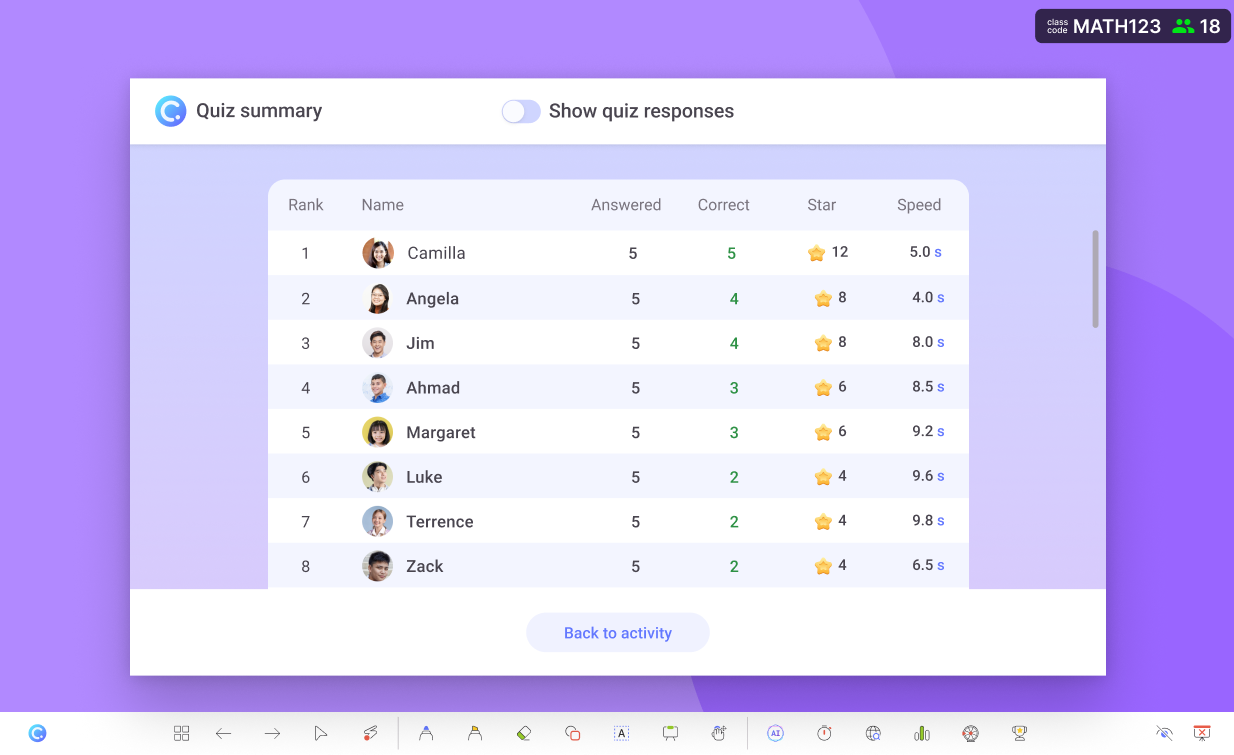
ClassPoint is what their teachers used without the need to rebuilt lessons or migrate to a new platform. It plugs directly into PowerPoint so you can run live quizzes mid-lesson, see instantly which students answered correctly, which guessed, and who didn’t engage, and keep participation going across sessions with gamification features like stars and badges.

That’s the shift the reverse Flynn effect research points to: you get the data to adjust in real time. Students get the cognitive workout of actually responding, not just watching.
2. Enhanced Educational Tools and Resources
Not every student in your class is at the same point, and not every student is affected by the same cognitive risks. Differentiated instruction is the right response, but building separate materials for different students on top of everything you’re already doing isn’t realistic.
Edcafe AI handles the creation side. Take one topic and generate a reading set for comprehension, flashcards for recall practice, and a student-facing chatbot for guided exploration, all from your existing content. Assign different formats to different students based on where they are.
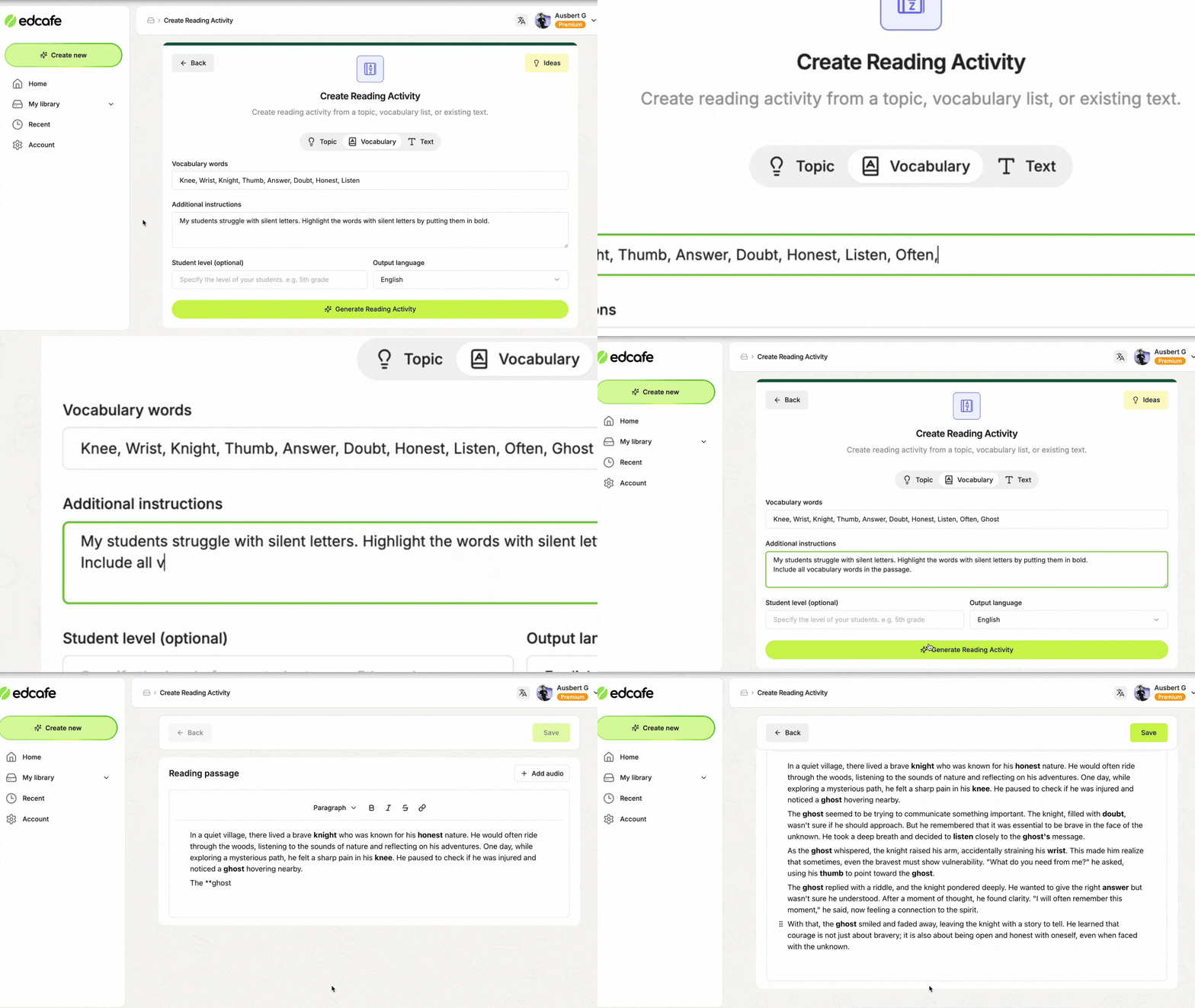
Reports show you how each student interacted with their materials so you know who’s keeping up and who needs more.
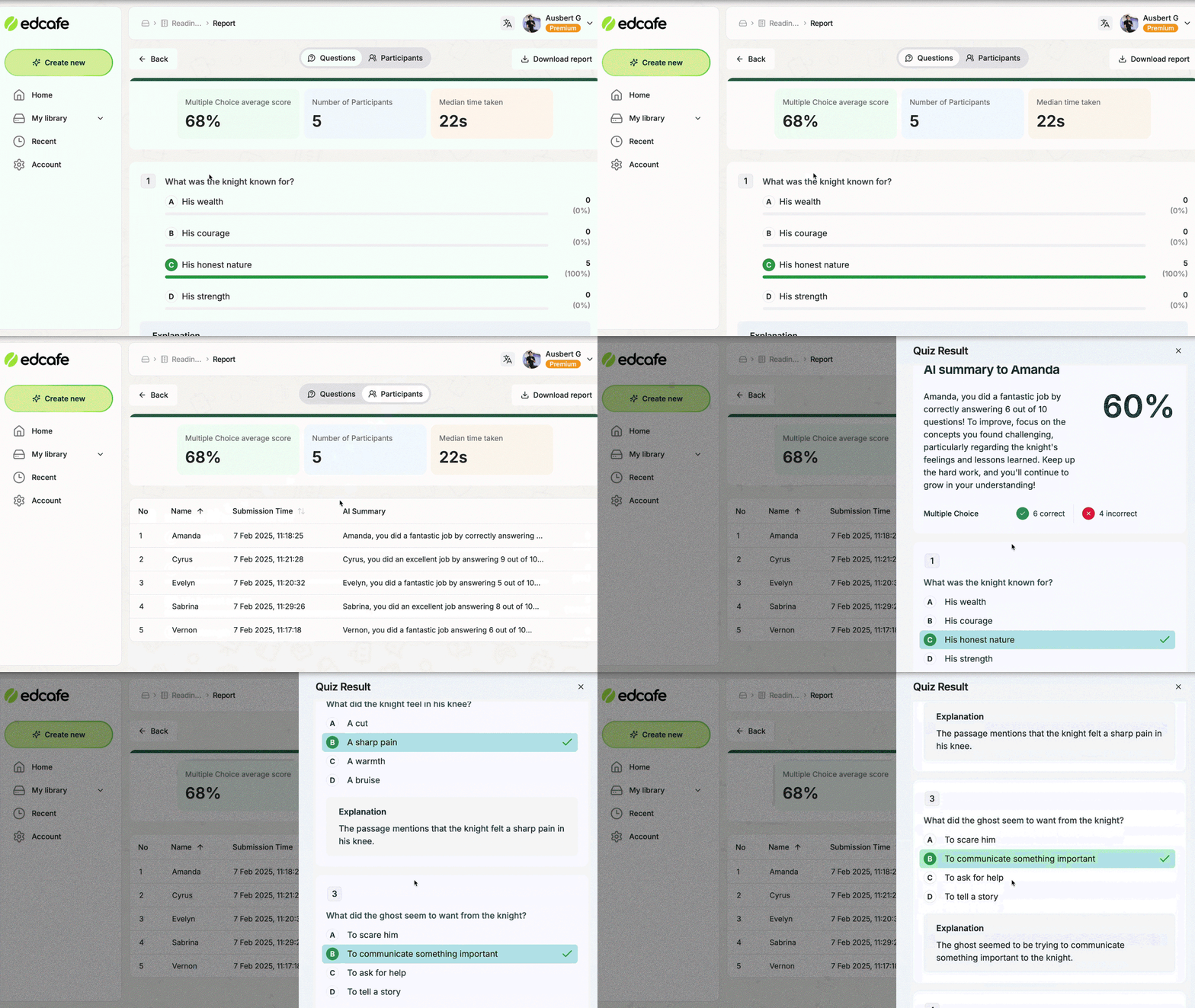
Diverse learning materials
Beyond dedicated tools, access to varied multimedia resources, like videos, interactive simulations, and guided online research, offers students different perspectives and problem-solving pathways. Variety in format keeps students engaged and builds critical thinking.
3. Emphasis on Early Childhood Education
Foundational skill development
Early childhood education programs focused on literacy, numeracy, and social-emotional development provide the cognitive foundation that supports long-term academic success. The earlier those foundations are laid, the more durable they tend to be.
Parental engagement
Parental involvement in early education reinforces learning at home. Parent-teacher communication, educational workshops, and guided at-home activities all contribute to stronger cognitive outcomes.
4. Promotion of Cognitive Stimulation
Active learning strategies
Group projects, hands-on experiments, and problem-based tasks encourage deeper engagement with material. Active learning builds critical thinking and problem-solving in ways that passive instruction doesn’t.
Related reading: How to Create Engaging Lectures with Active Learning, a practical guide for making any lesson more cognitively demanding.
Enrichment opportunities
Extracurricular activities like coding clubs, science fairs, and art programs offer additional cognitive challenges and extend learning beyond the classroom. Proven classroom management strategies can help you make room for these without losing structure.
5. Focus on Mental and Physical Well-being
Encouraging a balanced lifestyle
Regular physical activity and outdoor play support both cognitive and physical health. Schools can integrate movement into daily routines and create activities that combine physical exercise with learning.
Supporting mental health
Addressing mental health needs and providing stress management resources improves cognitive performance. Counseling services, stress-relief programs, and a genuinely supportive classroom environment all make a difference.
Looking Ahead: Intelligence in the 21st Century
As we move further into this century, the concept of intelligence is evolving. Traditional IQ metrics still matter, but there’s increasing recognition of skills that IQ tests don’t capture, and that are essential for success in today’s world.
The Role of Non-IQ-Based Skills
- Emotional intelligence (EQ): The ability to understand and manage your emotions, and empathize with others. In a world where collaboration is essential, high EQ drives better leadership, teamwork, and conflict resolution.
- Adaptability and flexibility: The ability to adjust to changing circumstances and embrace new challenges. As technology and job markets evolve, this will matter more than many traditional academic skills.
- Creativity and innovation: Problem-solving and original thinking are increasingly valued. Giving students room to explore new ideas builds the capacity for real-world innovation.
- Critical thinking and problem-solving: Analyzing information and making reasoned decisions. Both remain essential in academic and professional settings.
What This Means for Your Classroom
Gen Alpha will be fine. They’re growing up with more educational tools, more personalized learning, and more awareness of mental health than any previous generation. The concern isn’t that they’re cognitively behind. It’s that some of the conditions driving the reverse Flynn effect are becoming harder to ignore.
Your classroom is one of the places where that gets corrected. Not by teaching to a test, but by making space for active thinking, physical movement, and the kind of deep engagement that passive screen time can’t replicate. That’s not a new idea. It’s just more urgent now than it’s been in a while.
Start small: pick one strategy from the list above and try it with your next class. See what shifts.
Further Readings on 21st Century Teaching:
