
Can a response tool inside PowerPoint change how EFL students feel about learning, not just whether they participate? That is the question two independent peer-reviewed studies from Qassim University tried to answer, two years apart, in the same classroom.
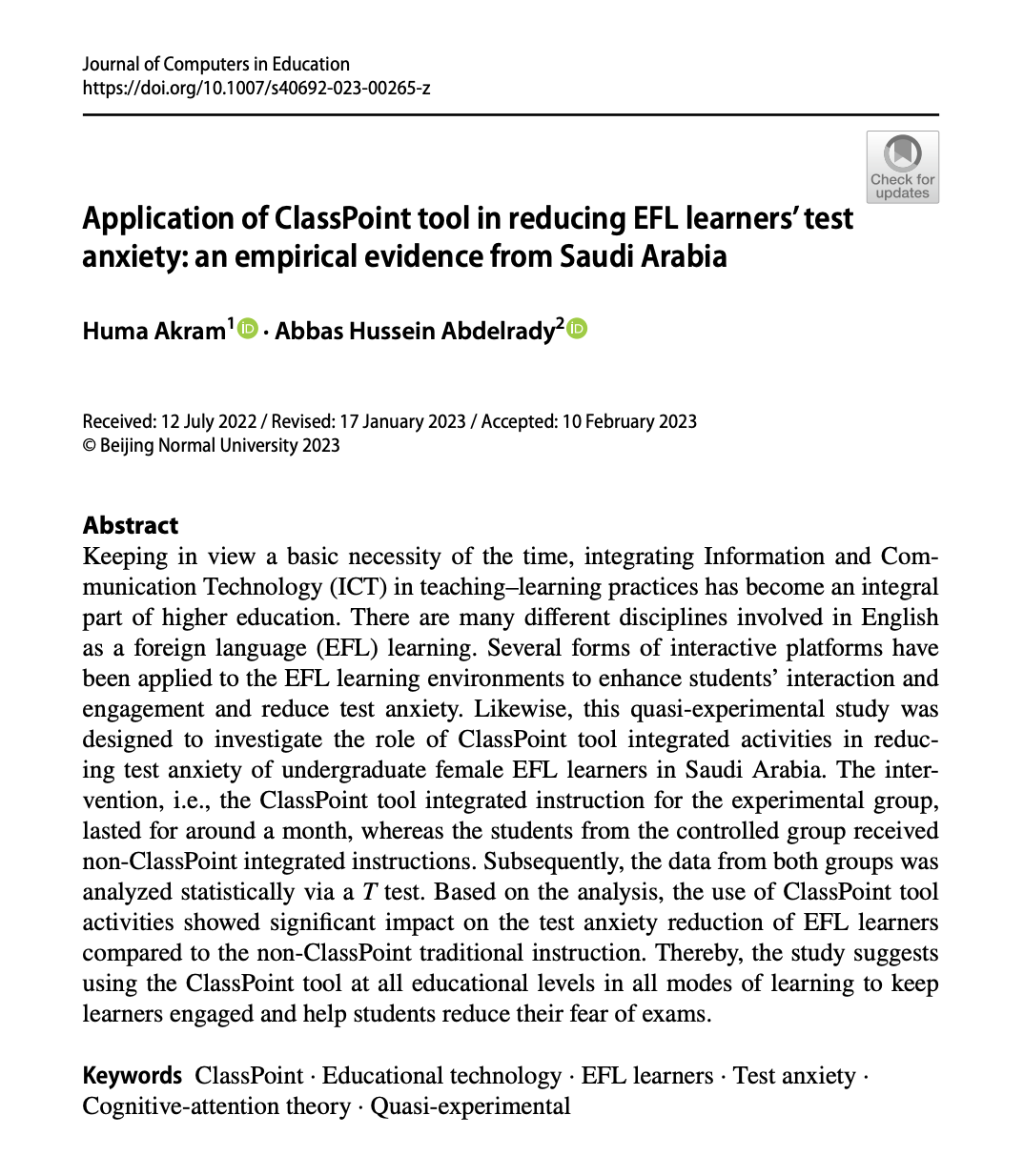
The 2023 study was published in the Journal of Computers in Education and the 2025 study in Acta Psychologica.
This post walks through both studies: what each one set out to find, what the data showed, and where the evidence stops.
The Same Team Ran Two Studies, Two Years Apart
Both papers come from Qassim University in Saudi Arabia, where researchers Huma Akram and Abbas Abdelrady taught Semantics and Pragmatics to EFL undergrads, with ClassPoint running directly inside their PowerPoint slides.
The 2023 study started with a focused question: can ClassPoint reduce exam anxiety in an EFL course? Thirty-four female students were split into two groups, one with ClassPoint in every lesson and one with standard PowerPoint, taught by the same instructor for about a month.
The 2025 study came back with a harder question. If students used ClassPoint for a full semester, would something deeper shift? Not just anxiety before one test, but their confidence across the whole course. Twenty-nine students, same course, surveyed three times from start to end of term.
Two papers, two years apart, both asking what this tool changes about how students feel.
2023: After One Month, Exam Anxiety Dropped vs. the Control Group
Before the month started, their anxiety scores were almost identical: 4.81 in the ClassPoint group, 4.82 in the control.
When the exam arrived, the scores had separated. The ClassPoint group came in at 2.92. The control group held at 4.41.
What the month of ClassPoint lessons had quietly done was turn participation into practice. Students had already:
- Answered questions under conditions that felt test-like
- Seen their results in real time
- Moved through it without the stakes of a real exam
By the time the actual exam came, it felt like territory they had already covered.
That was 2023. The researchers noted it and kept going.
2025: Over a Full Semester, Students Said They Trusted Themselves More
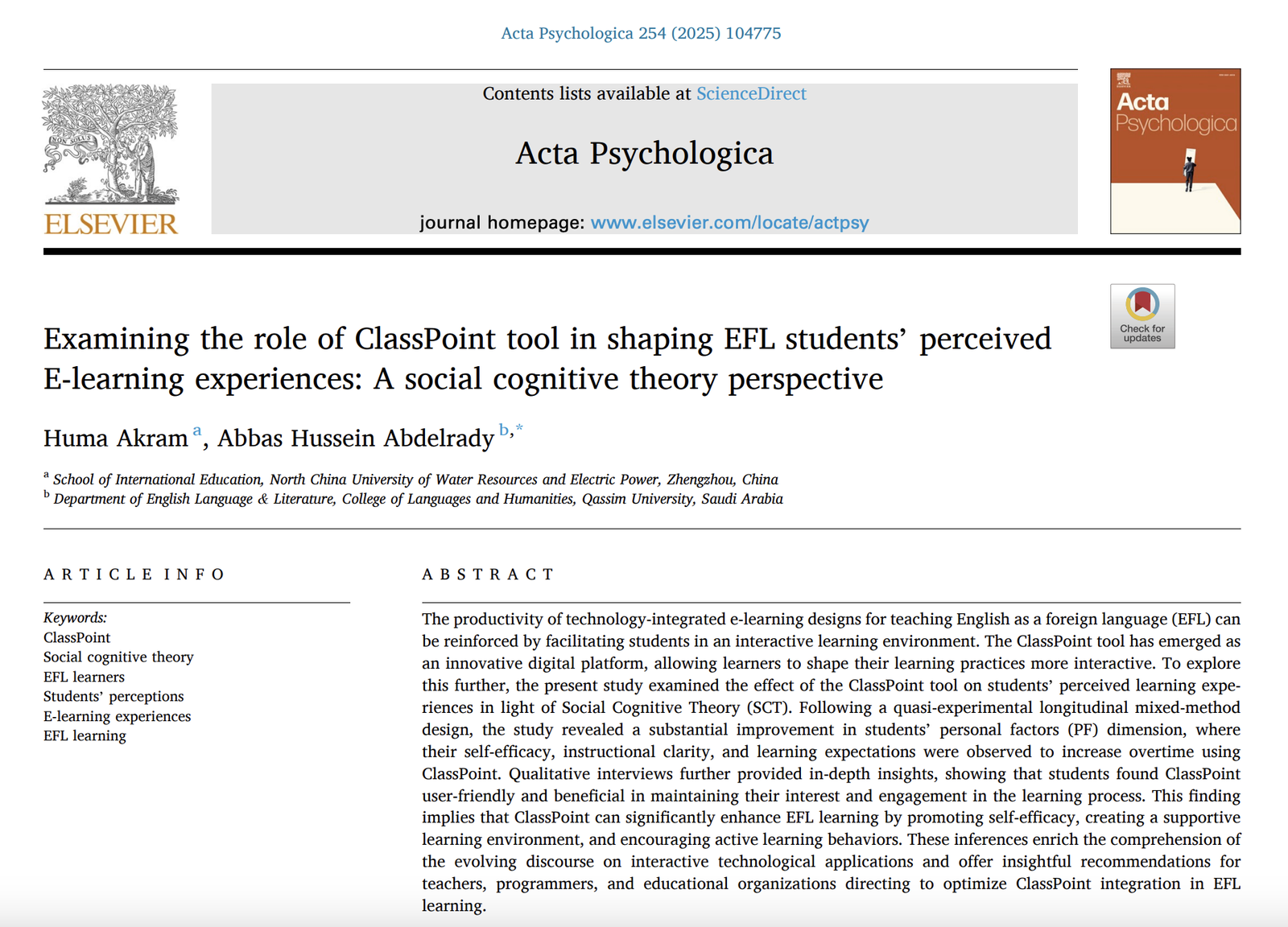
Two years later, the same team ran the study again, this time with no control group. Twenty-nine students, the same Semantics and Pragmatics course, one full semester. They were surveyed three times: at the start, halfway through, and at the end of term.
Confidence was the headline finding: students’ belief in their own ability rose from 2.8 at the start to 3.5 at midterm to 4.2 by end of term. The classroom environment and study habits also improved, but confidence moved furthest.
A typical language class tends to be carried by the students who already feel confident. ClassPoint changed that dynamic:
- Every student answered every question
- Answers appeared on screen alongside classmates’
- Feedback arrived before the lesson ended
A full semester of that, repeated, is what the researchers believe built confidence from the ground up.
For a peer-reviewed look at ClassPoint and participation across 800 first-year students, see the Hong Kong Polytechnic University Study
Why the Anxiety Dropped and the Confidence Rose
Put both studies side by side and the direction was consistent: less fear going into exams in month one, more confidence in themselves by end of semester.
Anxiety dropped because repetition made it familiar
Cognitive-attention theory frames anxiety as a redirection of focus: instead of concentrating on the task, anxious students fixate on negative thoughts about their own performance. The 2023 study found ClassPoint disrupted that.
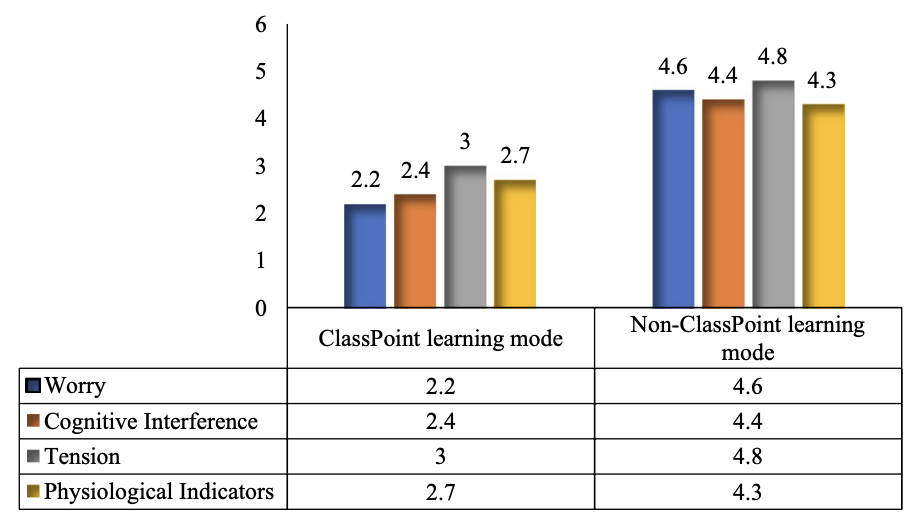
Every component of test anxiety, worry, tension, cognitive interference, and physiological symptoms, was significantly lower in the ClassPoint group than the non-ClassPoint group.
A month of interactive quizzes meant students had already practiced answering exam-like questions repeatedly, in low-stakes conditions.
Every student participated each session, which reduced shyness and built enough confidence that the actual exam felt like familiar territory.
Confidence rose because participation was low-barrier and immediate.
The 2025 researchers attributed the rise in self-efficacy to how ClassPoint structured the experience: it was easy to use, activities were interactive and engaging, and feedback arrived immediately.
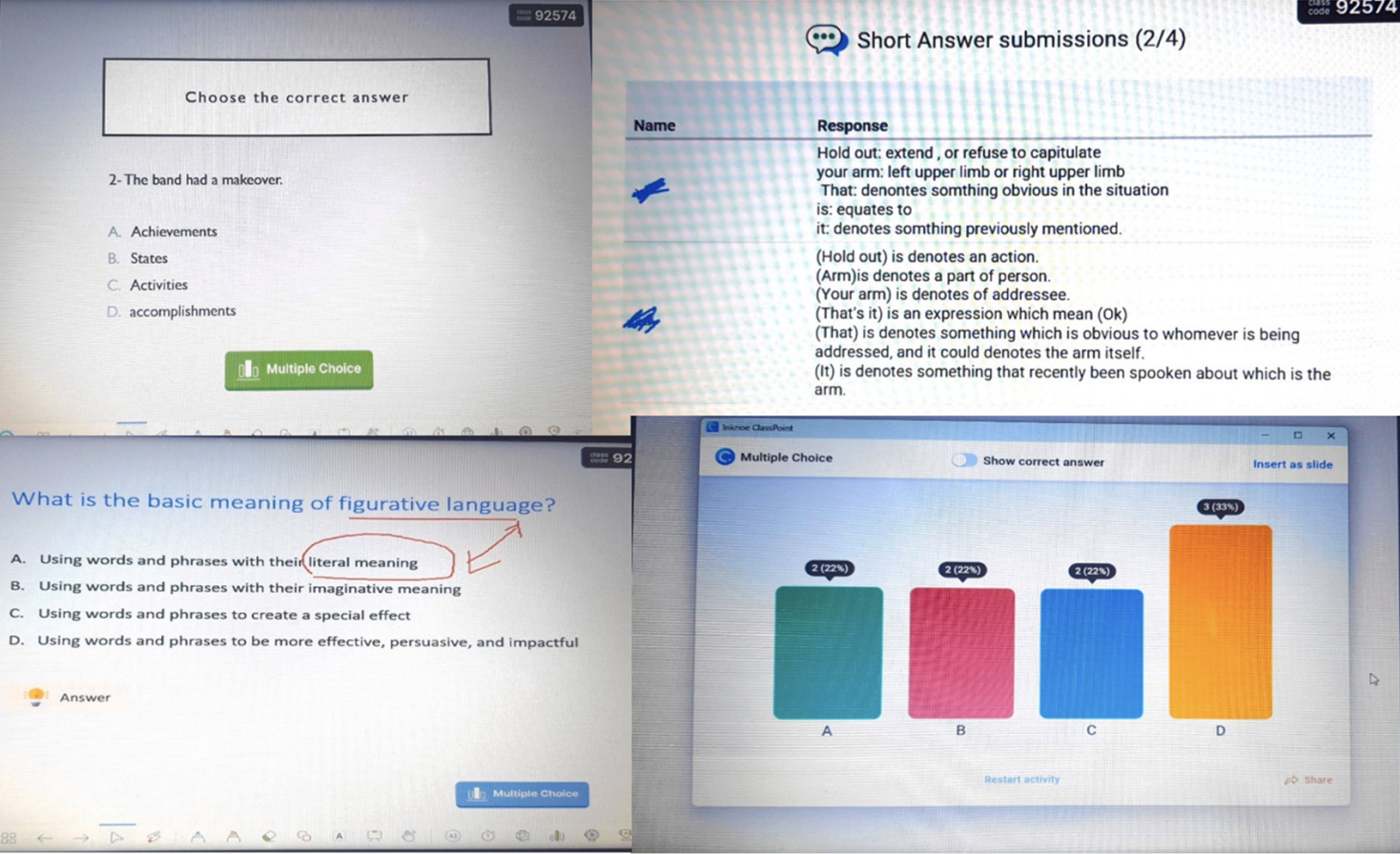
Students who might have stayed passive in a traditional lecture were drawn into participation through quizzes and real-time polls. As one student put it,
“All students get the chance to participate.”
A full semester of that repeated engagement is what the researchers believe built confidence not just in the subject, but in students’ own ability to learn.
In Students’ Own Words
Picture a language class where only the confident students speak up. The quieter ones watch, take notes, and leave without anyone knowing whether they understood anything.
That is what the 2025 interviews described, before ClassPoint. What they described after was different.
On what changed in the room:
“It helps because the teacher gives us feedback immediately and easily, which enhances my learning process, since our answers will be in the slides in front of both of us.”
On who got to participate:
“I sincerely believe that it is the best way to interact with the instructor because all students get the chance to participate.”
On learning from each other:
“ClassPoint allows us more discussion by sharing answers.”
What they described was not a tool they liked. It was a classroom where they had a presence: answers visible, feedback immediate, everyone participating. That is the experience behind the confidence scores.
What the Study Measured, and What It Didn’t
The researchers are upfront about the scope of both studies, and it’s worth holding these alongside the results.
Small groups, one context. Thirty-four students in 2023. Twenty-nine in 2025. One course, one university in Saudi Arabia. EFL anxiety in a Gulf context has cultural dimensions that may not apply elsewhere.
The 2025 study had no control group. Confidence rose while ClassPoint was in use. But other factors cannot be ruled out: the instructor, the cohort, time. The data shows a rise, not a proven cause.
Students rated themselves. Both studies measured perceived confidence and anxiety, not exam scores. But a student who doubts themselves will participate less and arrive at assessments underprepared regardless of actual ability.
Related reading: For a look at what ClassPoint adoption looks like beyond a single course, the Safa British School case study covers how one UAE school rolled it out across the school. Safa British School case study
Conclusion: What Both Studies Point To
Anxiety suppresses participation and stops learning from happening. Both studies suggest ClassPoint broke that cycle.
The anxiety dropped in month one. The confidence built across the semester.
The same dynamic holds across subjects. Teachers who want every student actively involved face a structural problem: voluntary participation always skews toward the already-confident.
ClassPoint gave these researchers a practical way to address it, running directly inside the lessons they were already teaching. That is what both studies point to.
