Welcome back from winter break!
Yeah… no one’s exactly jumping for joy. Students would rather still be in bed. Teachers, too.
But here’s the thing: this week doesn’t have to be productive. It just has to feel okay.
You don’t need a clever hook or a “jumpstart January” plan. What you need are low-pressure ways to bring the room back to life after a long, cozy winter break. Because trying to “get back on track” on day one is exactly what burns everyone out before the week’s even over.
So if you’re looking for a few low-stress things to do that don’t feel like a waste of time, but also don’t require anyone to be at 100% yet, you’re in the right place.

Speaking of 'low-pressure', here are 13 Low-Prep Interactive Classroom Activities Students Love.
1. Keep the door open, but don’t ask them to walk through it yet
Some of them will come in talking, while others won’t say a word. You don’t need to push it.
Write this on the board before they arrive:
- Write about one thing that felt too short
- Sketch what your brain looks like today
- List five things you don’t miss about winter break
- Fold a paper three times and fill each section with anything that comes to mind
- Sit for a bit, look around, and decide when you’re ready to begin
Set out some blank paper or index cards. Let them work through one, or bounce between a few.
But what’s important to communicate is that you’re not looking for a structured output. You’re just helping them re-enter the room on their own terms.
2. Let them shape the pace before you bring back the structure
Instead of laying out a full week of lessons, co-plan the first stretch loosely. Keep it centered on a few broad pieces:
| What You Bring In | What Students Contribute | How to Gather Feedback |
|---|---|---|
| Topics to cover | How they’d like to approach them | Quick handwritten choices |
| Tasks that are required | Where they’d prefer to start | Short anonymous polls or votes |
| Rough sequence or calendar | Pacing suggestions, preferred activities | Group discussions or open slips |
Let them tell you what feels manageable. Not to dictate the plan, but to settle into it with you.
If the concept of giving students autonomy feels new to you, here's a quick on How to Create a Student-Centered Learning Environment That Starts With You.
3. Revisit what came before, but don’t quiz it
After a restful winter break, you need to reconnect.
Instead of a quiz or recap worksheet, hand them back a piece of what you last taught before the break started.
Then, say something like this:
“Look through it. See what feels familiar. Mark up anything that doesn’t. Add comments for what you remember, what didn’t land, what you wish was explained differently.”
Use this checklist to guide them:
☐ Circle anything that feels clear
☐ Cross out anything you don’t remember at all
☐ Add a note where you felt rushed or confused
☐ Suggest one way this could’ve been easier to learn
This helps them reconnect with learning as something they were part of.
4. Bring back collaboration, but take the pressure off the outcome
As we’ve already established from items 1 through 3, low-pressure has to be small.
To get them working together minus the tightness of a task, group them and ask each group to:
- Design a better classroom layout. Make it comfier, calmer, or more focused. Let them sketch it and explain it.
- Write the “break survival guide.” What should students never do the night before school starts again? Make it funny or real.
- Create your group’s “official school day re-entry playlist.” Justify each track. They’ll argue. That’s the point.
Don’t make them present unless they want to. Just let them create, mess around, probably pick fights (not encouraged!), and negotiate ideas with each other again.
You’ll get more insight into where their energy is than any diagnostic could tell you.
Looking to go deeper on collaboration? You might want to explore the 8 Best Classroom Collaboration Tools Teachers Love.
5. Shift focus from participation to presence
You don’t need them to raise hands or speak up right away because most won’t, and that’s not the goal.
Give them chances to respond without drawing attention to themselves. Try one of these:
- Set up an anonymous question box (real or digital). Let them ask anything about this term, the class, or just how to get through January.
- Use a quick-write slip at the end of class: “One thing I hope changes this term.”“Something I’m nervous about.”“A question I don’t know how to ask yet.”
- Have a visual mood check-in at the door: colors, faces, symbols. No talking required.
None of it gets graded. You’re simply just letting them show up at their own speed.
If you’re planning to run these moments on your slides
Most of these activities welcoming back students from winter break work better when they can respond quietly and at their own pace.
If you’re already using PowerPoint to guide the first few days back, ClassPoint makes that part easier.
You can put a prompt on a slide, let students answer from their own devices, and keep everything interactive within PowerPoint without shuffling between tools or collecting stacks of paper.
It keeps the room steady while everyone warms back up.
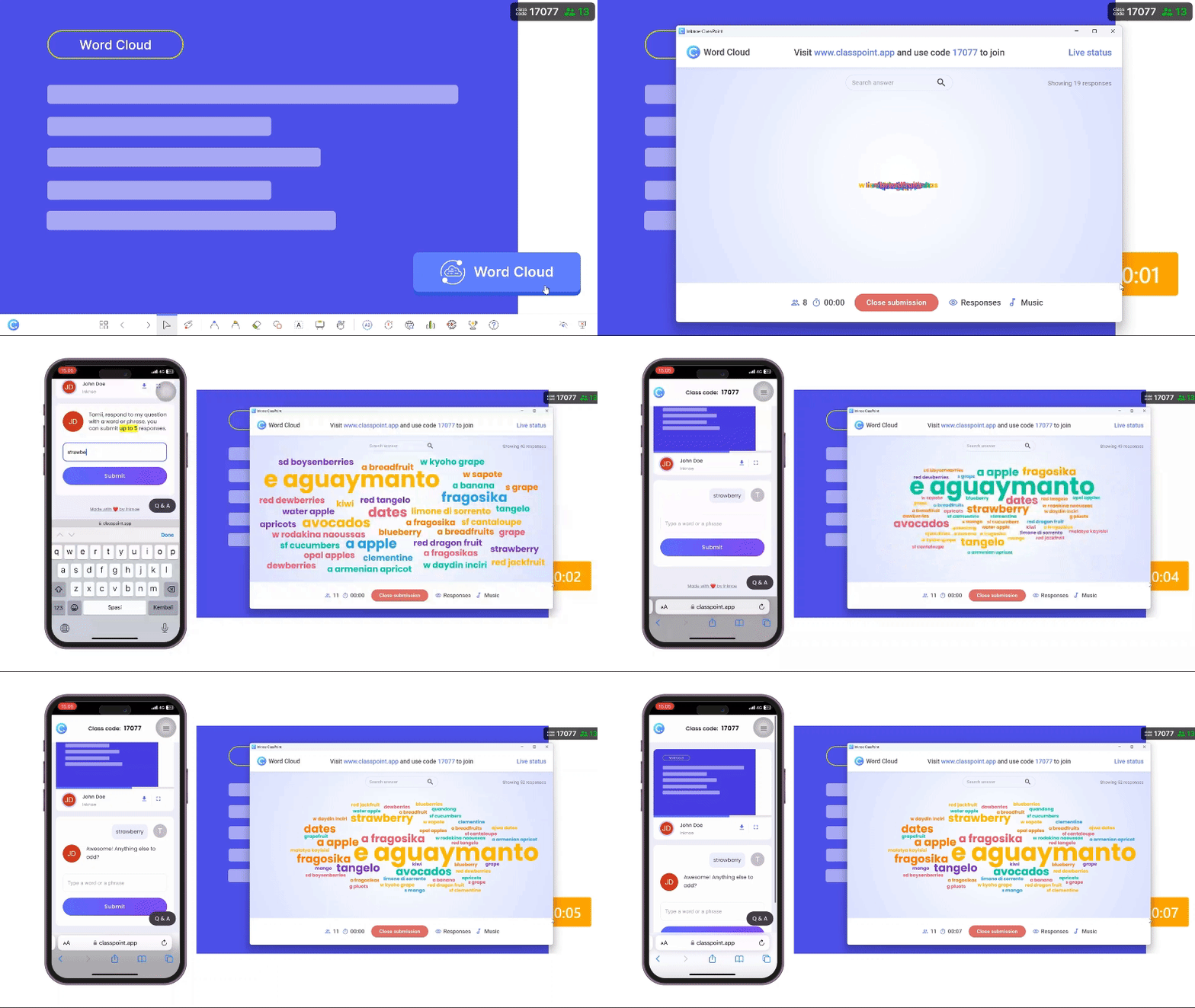
Here are a few ClassPoint tools that fit this week well:
- Short Answer for anonymous written responses when no one wants to raise a hand yet
- Slide Drawing so students can sketch directly on your PowerPoint slides, depending on a drawing canvas you provide them with
- Image Upload for students who prefer showing something instead of explaining it
- Multiple Choice for quick, low-pressure check-ins that feel more like taps than discussions
Nothing pulls them out of the moment. Nothing pulls you out of your slides. And in a week like this, that’s the part that matters.
