
It’s no secret that keeping students engaged and motivated can be tough. Every teacher faces the challenge of balancing classroom expectations while maintaining students’ attention. Often, traditional methods don’t give the kind of results we’re hoping for.
But what if there was a system that could help students stay on track, reward positive actions, and make everyone feel more accountable? A system that’s easy to understand and even easier to implement?
A classroom point system offers the flexibility to create a system that works for both you and your students. You decide how to structure it, what behaviors to reward, and how to track progress. It’s a system you can shape to match your teaching style, and your classroom culture.
In this guide, you’ll learn how to build your own classroom point system. You’ll discover how to make it fair, and effective, so your students remain engaged and motivated to take ownership of their learning.
What Is a Classroom Point System and Why Design One?

A classroom point system is a flexible tool that helps you track student behavior and performance through points. Students earn points for positive behaviors, completing tasks, or contributing to class discussions. These points can then be tied to rewards or used to measure overall progress.
But a classroom point system is not a one-size-fits-all solution. It’s something you design based on what motivates your students and what behaviors you want to encourage. The beauty of designing it yourself is that you can tailor it to fit your unique classroom dynamics.
When you’re tuning what points mean, not just how many, this guide ties gamification to growth mindset in the classroom.
Why Design a Classroom Point System?
- Motivation: A well-structured point system keeps students motivated by offering a clear path to rewards. It gives them tangible goals to work toward and creates a sense of achievement when they reach those goals.
- Accountability: A point system holds students accountable for their actions and their progress. It’s a way to track growth and reinforce good habits over time.
- Engagement: When students can see how their actions directly affect their success, they become more engaged in their learning process. A classroom point system makes learning feel interactive and rewarding.
Now that we’ve established what a classroom point system is, let’s dive into how to create one tailored to your needs. We’ll explore how to design a system that fits your classroom’s dynamics, keeps students motivated, and helps you manage behavior more effectively.
Measuring is just as important as implementing. Here's a guide on How to Measure Student Engagement During Classroom Presentations.
1. Define What Wins Points in Your Classroom
The first step in building a successful classroom point system is deciding what behaviors will earn students points. This gives your system structure and transparency, so students always know exactly what is expected of them.
Be specific with your criteria. The more precise you can be about the actions that will earn points, the more effective your system will be. Here are some examples of behaviors you might want to reward:
- Active Participation – Answering questions, joining discussions, or contributing to group work.
- Timely Completion – Turning in assignments on time or completing classwork.
- Positive Behavior – Staying on task, following instructions, and being respectful.
- Team Collaboration – Helping others, working well in groups, and offering constructive feedback.
- Leadership – Taking initiative, organizing group tasks, or mentoring peers.
When these actions are clear, your students will have a roadmap to success and know how their actions contribute to their progress.
To better manage student behavior, here's a list of The 8 Best Interactive Classroom Behavior Management Tips.
2. Create a Tiered Point System That Promotes Progress
A tiered point system not only rewards different levels of effort but also helps guide students toward higher achievements. By incorporating multiple tiers with varying point values, you show students that more challenging tasks and greater efforts yield greater rewards.
Here’s an advanced tiered point system that incorporates behavior, effort, and achievement:
| Tier Level | Activity/Behavior | Point Value | Purpose/Outcome |
|---|---|---|---|
| Tier 1: Basic Engagement | Answering a question (correct or thoughtful) | 1-2 points | Reinforces participation, encourages everyone to speak up, even if answers aren’t perfect. |
| Completing classwork or homework (on time) | 2 points | Builds consistency and accountability. | |
| Tier 2: Positive Behavior | Helping a peer without being asked | 3-4 points | Encourages leadership, cooperation, and kindness. |
| Staying on task during independent work | 3 points | Strengthens focus and self-discipline. | |
| Tier 3: Initiative & Leadership | Leading a group discussion or activity | 5 points | Recognizes leadership, initiative, and collaboration. |
| Volunteering to present work to the class | 5 points | Builds confidence and public speaking skills. | |
| Tier 4: Exceptional Achievement | Completing a challenging project ahead of time | 8-10 points | Recognizes above-and-beyond effort, encourages academic excellence, and rewards students for pushing themselves further. |
| Going above and beyond in creativity or effort | 8-10 points | Encourages creativity and extra effort. | |
| Tier 5: Mastery & Innovation | Designing and leading an independent project | 12-15 points | Fosters innovation, ownership of learning, and initiative. |
| Teaching or explaining a concept to others | 12-15 points | Reinforces understanding and encourages peer teaching. |
Guiding Principles of Your Tiered System
- Start with Clear Definitions: Make sure your students understand the difference between basic participation and high-level achievement.
- Reward Progress: The goal is not just to reward “good students,” but to give every student the chance to rise through the tiers based on effort and initiative.
- Consistency is Key: Apply the same criteria to everyone and be clear about how much each task is worth.
3. Level Your Classroom Point System with Consequences
To maintain fairness and consistency, your classroom point system should include consequences for disruptive behavior. These consequences should be directly tied to the specific actions you want to discourage.
Here’s a simple way to structure consequences, balancing both positive rewards and accountability:
- ✅ Completing Homework – +2 points
- ✅ Helping a Peer – +3 points
- ✅ Active Participation – +1 point
- ✅ Helping in Group Tasks – +3 points
- ✅ Completing Homework Late (but with effort) – +1 point
- ❌ Late to Class – -1 point
- ❌ Interrupting Others – -2 points
- ❌ Disrespecting the Teacher – -5 points
- ❌ Disruptive Behavior (e.g., talking over others) – -5 points
- ❌ Repeated Failure to Follow Instructions – -3 points
Clear consequences help students see the direct impact of their actions. By pairing points lost with specific behaviors, you maintain a sense of fairness and consistency.
4. Make Point Tracking Transparent and Motivating
A transparent point system keeps students motivated because they can see their progress. It also helps them understand how their actions contribute to their success. Transparency can take many forms, whether it’s a visible chart on the wall or a digital leaderboard.
To ensure this, create a system where students can check their points regularly. This could be as simple as updating a classroom chart or, for an even more interactive experience, using ClassPoint.
ClassPoint lets you gamify your classrooms with a point system that makes use of stars, levels & badges, and a leader board. This not only helps keep them on track but also increases their investment in the process. Plus, gives a little friendly competition among them.
Speaking of gamification, here's a scannable guide on How to Gamify Your Classroom with Practical Ideas That Work.
Want to see a fully built-out point system in action? Check out How to Build a Classroom Economy That Lasts with ClassPoint, a step-by-step guide to running a rewards system that survives the whole term.
Bonus: Set Up Your Classroom Point System with ClassPoint
When it comes to making a classroom point system truly engaging, technology can be your best ally. PowerPoint presentations are already a go-to for classroom teaching. Why not take that a step further and use ClassPoint to supercharge your classroom point system?
ClassPoint is a powerful platform that allows you to integrate interactive elements, track student progress, and gamify the learning experience, all within your PowerPoint presentation.
Here are some ways ClassPoint can help you set up and enhance your classroom point system:
- Gamification Tools: Use stars, levels, and badges to reward students for their effort and achievements. As students accumulate points, they can earn different badges or level up, making progress tangible and motivating them to keep going.
- Leaderboards: Show students how they’re doing with a live leaderboard. Display point totals and rankings in real time, creating a sense of friendly competition.
- Interactive Quizzes: Incorporate interactive quizzes that give students points for correct answers. Quizzes can be built into your lessons seamlessly, helping to reinforce learning while awarding points in the process.
- Engagement Boosters: Use the Name Picker to randomly select students for tasks, questions, or challenges. This ensures everyone has a fair chance to participate and rewards active engagement.
- Point Accumulation Across Sessions: With ClassPoint, you can accumulate points over multiple sessions. This means your classroom point system isn’t just limited to a single class. Points earned from different lessons can be tracked, adding up over time and allowing for long-term rewards.
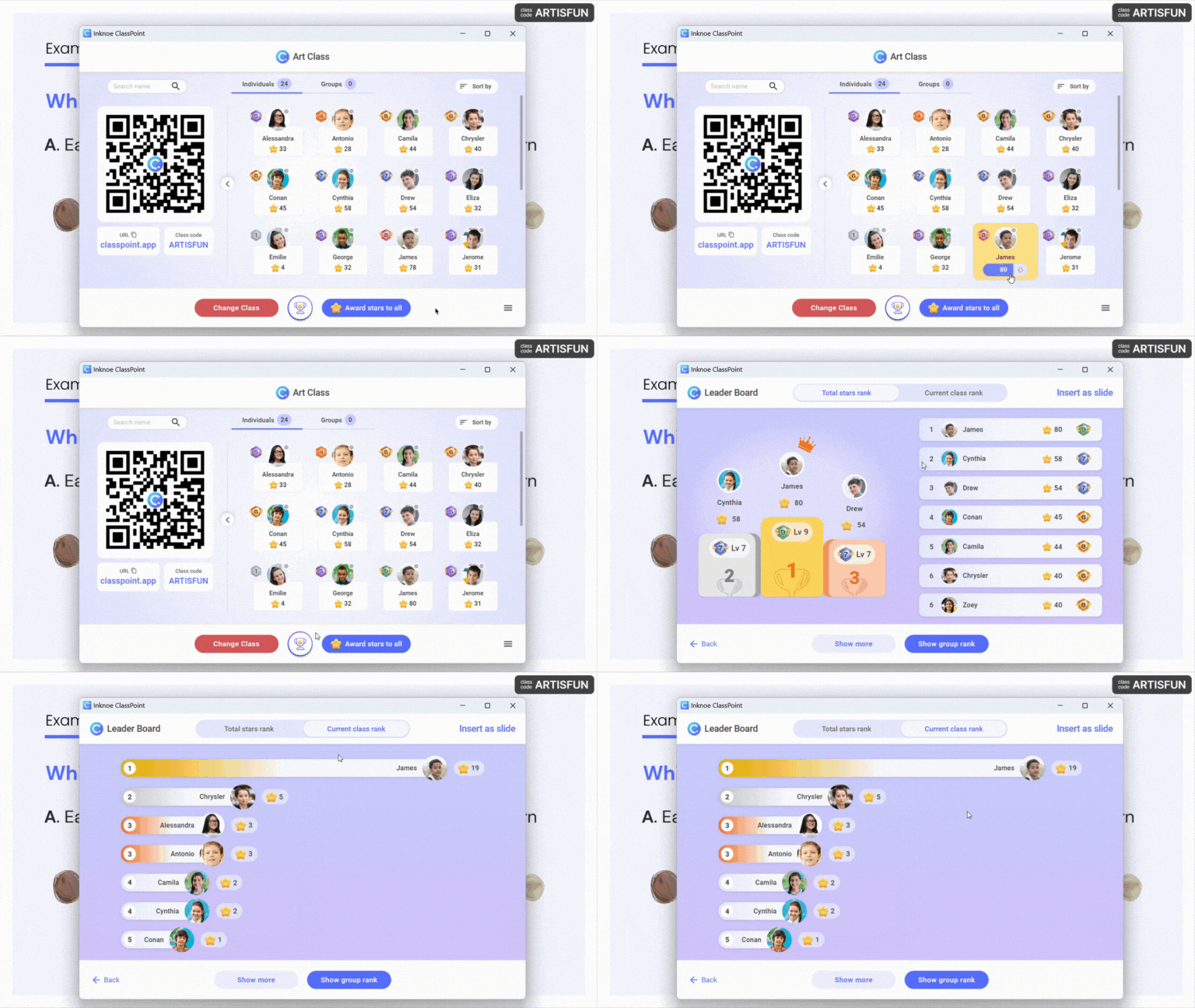
By combining ClassPoint’s interactive features with your classroom point system, you create an environment where students are actively engaged.
