
No two classrooms ever look the same.
One day you might teach a group that’s a little more enthusiastic than usual, and the next, you encounter quiet faces who speak carefully. Every student learns differently, and that is the heart of teaching diverse learners.
When we talk about diversity in the classroom, it’s all tied to how students think, and show understanding. Some learn best through visuals, some through movement, and others through stories or discussion. Managing all of this at once can feel like balancing many small worlds inside one room.
The truth is, classroom diversity is not a problem to fix. Instead, it is a strength to use. When teachers design lessons that welcome different ways of learning, students begin to see themselves as part of the entire classroom process.
Teaching diverse learners well starts with knowing what helps them take part, no matter their pace or background. The following strategies show how you can create lessons that include every learner.
1. Start by knowing your learners
Every class begins as a group of names on a list, yet teaching becomes meaningful only when those names start to represent real learning patterns.
Start with patterns you can see in action. Notice which students take time to respond after questions and which ones jump in early. Watch how they use space, how they organize materials, and how they react when tasks become complex.
Knowing your learners also means paying attention to context. A student who struggles to focus might be balancing two languages at home. Another who finishes quickly might need more depth rather than more work. True understanding comes when you match what you see with the environment that shapes it.
“Every student can learn, just not on the same day or in the same way.”
— George Evans
2. Vary how you present information
Diverse classrooms thrive when lessons speak to more than one way of learning.
The goal is to think of content as something that can live in more than one form. A topic can begin with a short visual example and continue with a guided discussion. A concept can be explored through demonstration and then written reflection. The more students see an idea from different angles, the stronger their understanding becomes.
Here are ways to bring variety into daily teaching:
- Show ideas visually through pictures, charts, or slide drawings that make abstract concepts visible
- Explain through sound by reading aloud, playing short recordings, or using brief oral summaries to reinforce meaning
- Let students build or act through models, quick demonstrations, or role-play moments that turn ideas into action
- Provide written anchors such as outlines, key terms, or captioned slides for learners who prefer structure
3. Differentiate tasks by choice
Choice is one of the strongest ways to support a diverse classroom. When students decide how to show what they know, they take ownership of learning. This also gives teachers a clear view of how each student understands content.
Differentiating through choice works best when the options are purposeful. Each choice should match the same learning target but allow different ways of thinking. Students feel included because the task reflects how they learn best while still holding everyone to a shared standard.
| Learning Goal | Choice Options | What Teachers Learn from It |
|---|---|---|
| Summarize key ideas from a lesson | Write a short paragraph or record a one-minute voice note | Reveals language confidence and understanding of main ideas |
| Apply a concept to real life | Create a drawing or short slideshow connecting the topic to a real example | Shows transfer of learning and ability to connect ideas |
| Reflect on a problem-solving process | Complete a written reflection or join a short group discussion | Highlights reasoning skills and comfort with verbal vs. written expression |
ClassPoint supports this by letting teachers embed interactive questions within slides, so each student can respond in the way that fits them best. Stick around until the end to find out more.
4. Build peer learning opportunities

Diverse classrooms grow stronger when students learn from one another. Each learner brings a different kind of understanding to the room, and sharing that knowledge helps everyone progress.
To make it effective, keep peer activities structured. Here’s a quick checklist:
✅ Set a shared goal. Make sure everyone understands the task and what the group needs to achieve.
✅ Assign simple roles. A timekeeper and a note-taker are enough to keep teamwork organized and balanced.
✅ Model feedback. Teach students to respond with questions or observations instead of quick judgments.
✅ Reflect together. End by asking what helped them work better and what they learned from others.
Check out our Basics on Cooperative Learning: Key to Effective Student Teamwork.
5. Check progress often, quietly
Teaching diverse learners means recognizing that progress looks different for everyone. Frequent, low-pressure checks help teachers see where students stand without making them anxious.
Short, quiet assessments may help adjust instruction in real time. These checks make classroom diversity easier to manage because they show what’s working for each type of learner.
Simple ways to check understanding during lessons:
- Quick polls to see who feels ready to move forward and who needs more review
- Short written reflections where students share one thing they learned or one question they still have
- One-minute responses after a new concept, either on paper or through interactive slides
- Exit questions that help students summarize key ideas before leaving class
Frequent feedback keeps learning continuous and inclusive. With the right classroom technology tools, teachers can mobilize the right assessments, making it easy to adjust the next step for every learner.
6. Create a classroom rhythm that feels safe
Teaching diverse learners goes beyond lesson design. It includes creating a rhythm where every student feels secure enough to try. A safe classroom allows mistakes without embarrassment and values effort as much as success.
A consistent flow of routines, and open discussion builds this kind of atmosphere. Greeting students, celebrating small wins, and ending lessons with reflection set a pattern that students can trust.
Technology can play a part here too. Tools like ClassPoint support this rhythm by giving every student a voice through polls, visual responses, or name pickers that distribute turns fairly. Let’s take a closer look.
How ClassPoint Supports Teaching Diverse Learners
PowerPoint is one of the most familiar tools in education. Yet, traditional slides often keep students as silent observers. When classrooms are full of diverse learners, this format limits participation to those who already feel confident speaking out.
This is where ClassPoint fits naturally into teaching. It works inside PowerPoint, turning slides into spaces for feedback, and real-time participation.
Teachers can teach as they always have while inviting students to join in through their own devices. Every student has a chance to respond, even those who prefer quiet participation or visual expression.
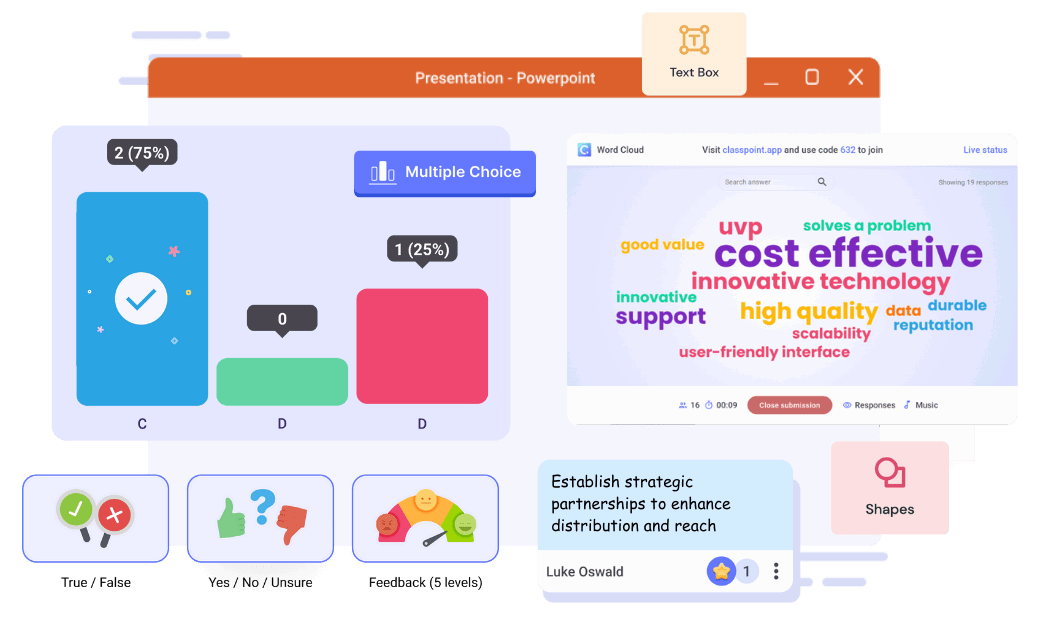
ClassPoint tools that help support diverse classrooms
- Interactive quizzes let teachers collect instant answers from all students. Multiple choice, short answer, and word cloud formats cater to different comfort levels and response styles.
- Quick Poll provides a fast, low-stakes way to check how students feel about a topic or concept before moving on.
- Image Upload and Slide Drawing allow visual or kinesthetic learners to show understanding through sketches or photos rather than text alone.
- Name Picker ensures equal participation by randomly selecting students to answer, giving everyone a fair voice.
- Gamification features add healthy motivation, recognizing not only accuracy but also effort and consistency.
- Annotations and Whiteboard tools support on-the-spot explanations, helping teachers adapt to learners who need clearer visuals or extra reinforcement.
