
There are more ways to use ClassPoint than most teachers realize. It started as a tool for adding quick quizzes to PowerPoint slides, but it’s grown into something you can use for brainstorming sessions, language practice, group challenges, formative assessment, and exit tickets, all without leaving your presentation.
If you’re new to ClassPoint, this is the fastest way to get a picture of what’s possible. If you’ve been using it for a while, there’s a good chance a few of these will be new to you.
This guide walks through 30 ways to use ClassPoint in your classroom, starting from the essentials and moving into the features worth exploring next.
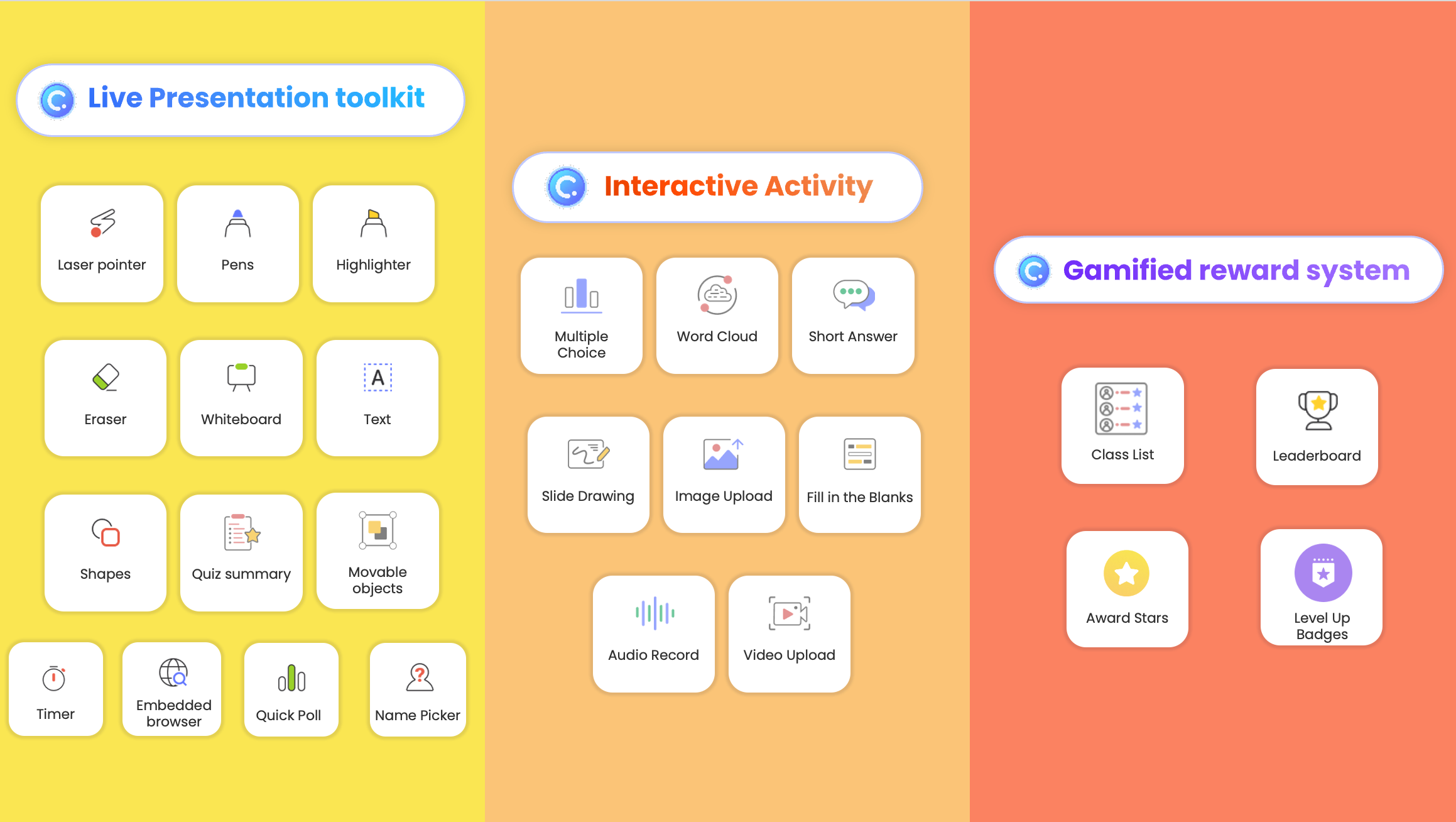
30 Ways to Use ClassPoint in the Classroom
1. Streamline Lesson Planning with AI
ClassPoint AI does three things: it generates quiz questions from your slide content before class, analyzes student responses during class, and sends you a session recap when it’s done.
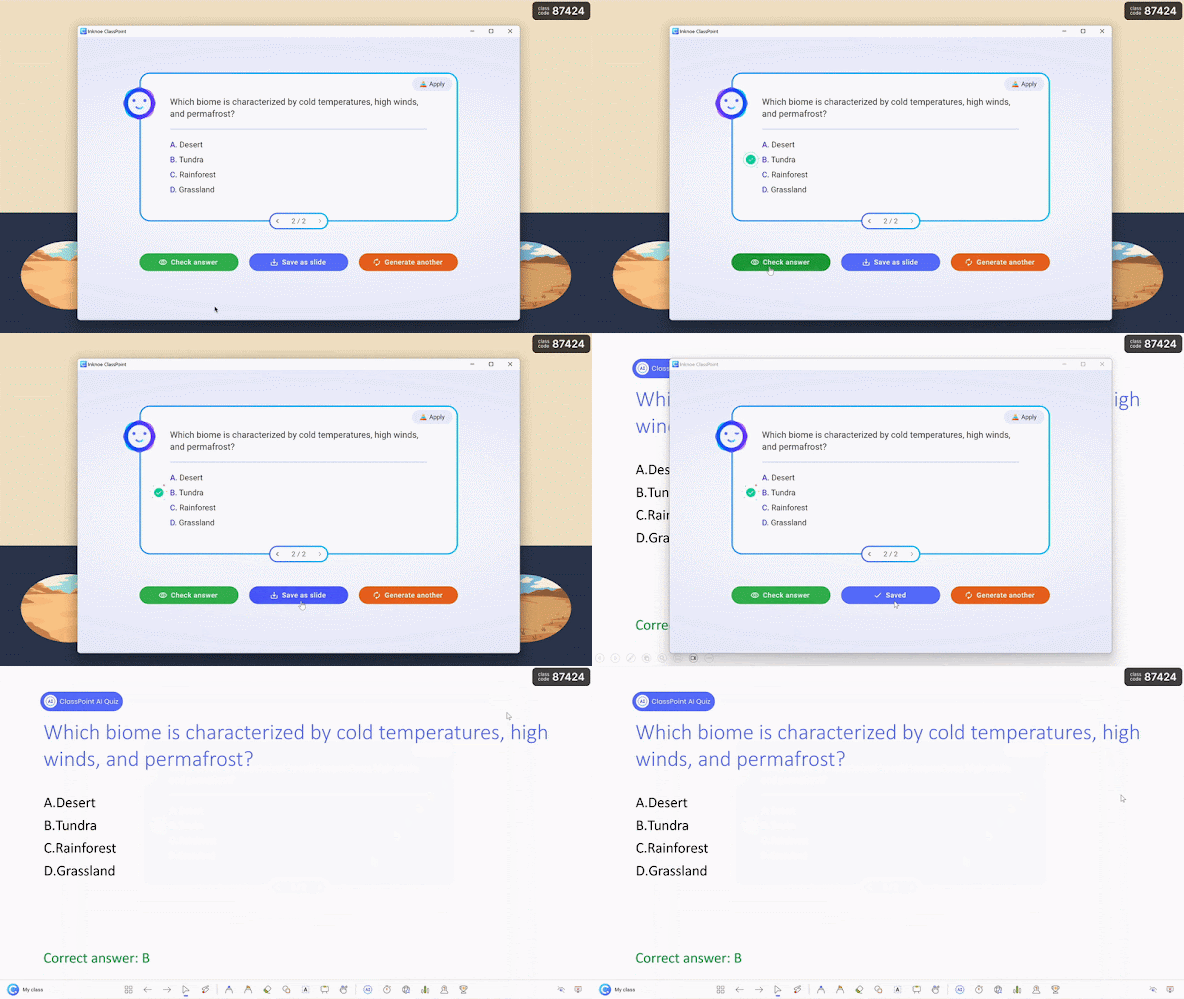
For question generation, point it at any slide and choose the question type and Bloom’s taxonomy level. It writes the questions and inserts them as new slides ready to present.
After a Short Answer activity, the AI Insights feature reads through student responses and groups them by theme, so you don’t have to read 30 answers individually to spot where the class got stuck. After class ends, you’ll get an AI Summary Email with response data and top performers from the session.
Tools used:
- ClassPoint AI
Tip: Use AI-generated questions for spontaneous understanding checks mid-lesson. You don't need to have prepared them in advance. Point ClassPoint AI at whatever slide you're on and launch a question on the spot.
2. Build and Teach Using Timelines
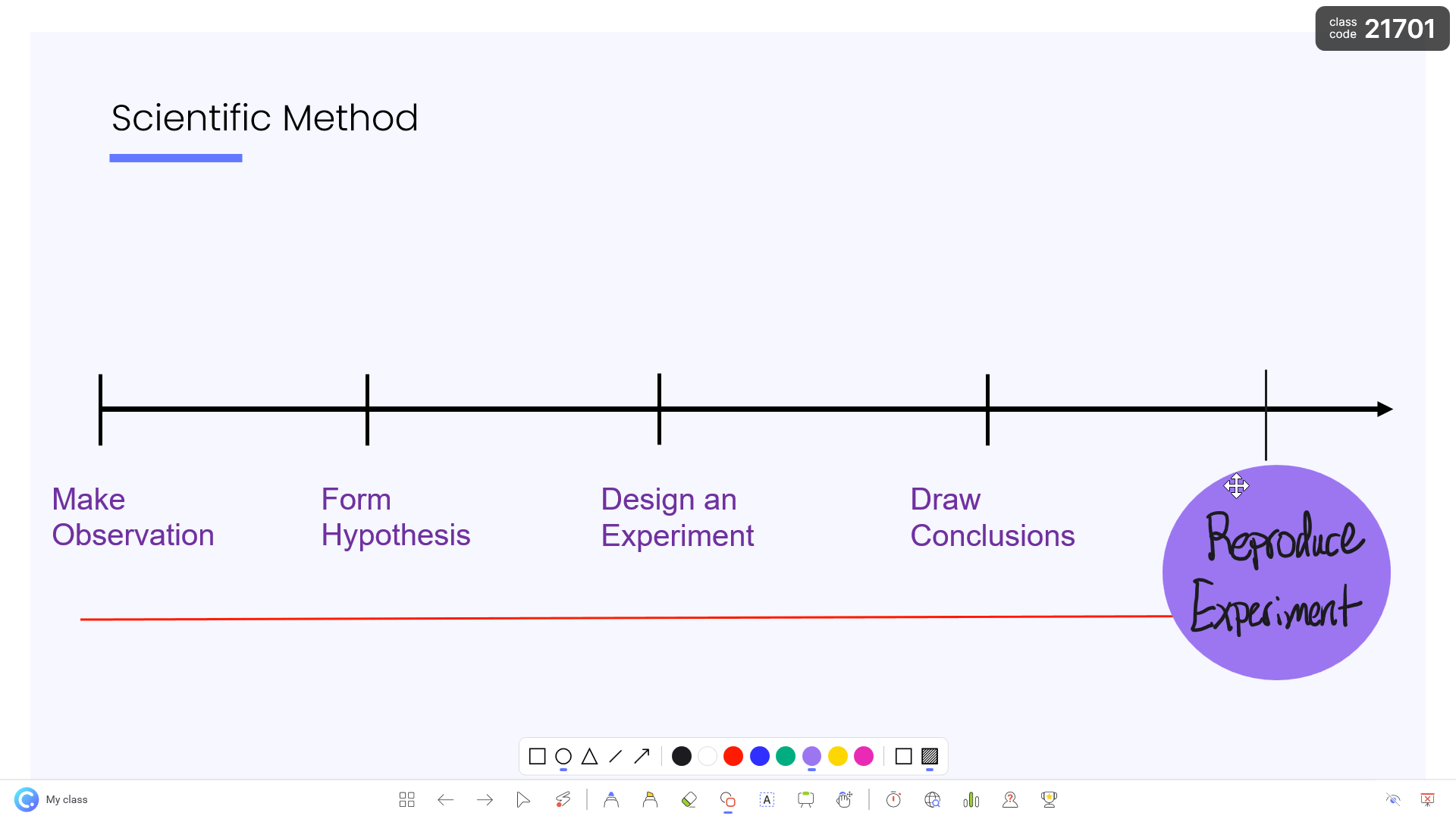
Add a blank whiteboard slide and use ClassPoint’s annotation tools and shapes to build a timeline directly in your presentation. You can construct one from scratch during class, or pre-create it with deliberate gaps and use Fill-in-the-Blanks for students to complete it as you teach.
Tools used:
- Whiteboard backgrounds
- Annotations
- Fill-in-the-Blanks
Expert tips:
- Monitor the Live Status to ensure all students have submitted a response during interactive questions.
- Use the Name Picker to randomly call on a student to complete the blanks on the board, which keeps everyone paying attention since anyone might be picked.
3. Incorporating Revealing, Matching, and Sequencing Activities

Drag and Drop lets you move any object around your slide during a live presentation, which makes it useful for activities built around revealing, matching, or sequencing. Students can watch relationships and processes play out visually rather than reading about them.
Tools used:
- Draggable Objects
Expert tip:
- Use Drag and Drop to run matching, sorting, and reveal activities in class. ClassPoint has a dedicated guide with 8 classroom activity ideas worth bookmarking.
4. Stimulate Creative and Interactive Discussions
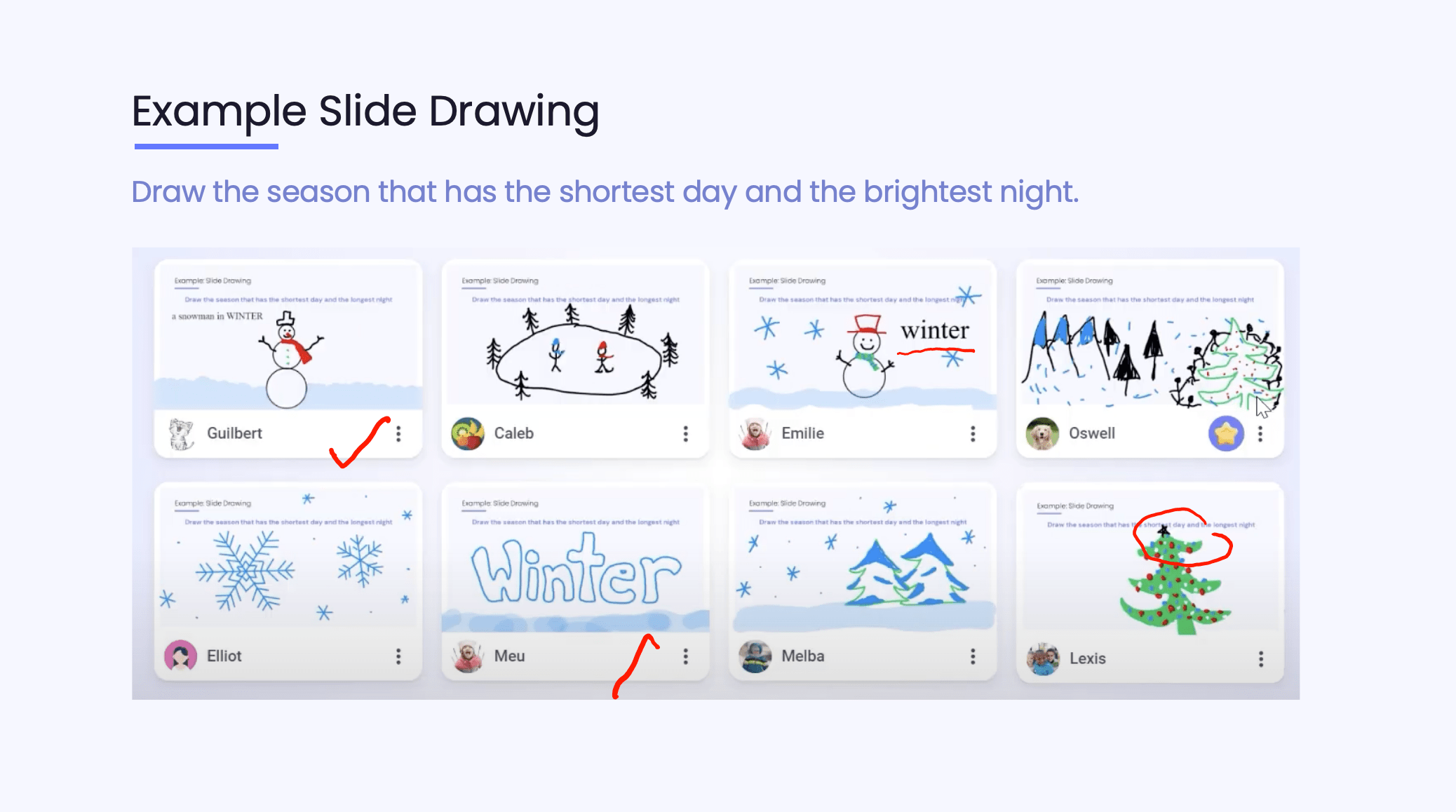
Open a whiteboard slide and annotate in real time as the discussion develops. ClassPoint has subject-specific templates so you’re not starting from a blank page. You can also pull student responses from a quiz you just ran directly onto a slide and annotate on top of them, which is useful for corrections or highlighting strong answers.
Tools used:
- Annotations
- Whiteboard Slides
- ClassPoint AI
Expert tips:
- Use ClassPoint AI to generate questions based on your slide to help prompt deeper discussions.
- Use Name Picker and Timer to pair or group students for more in-depth discussions.
5. Voting, Polling, Opinions and Surveys
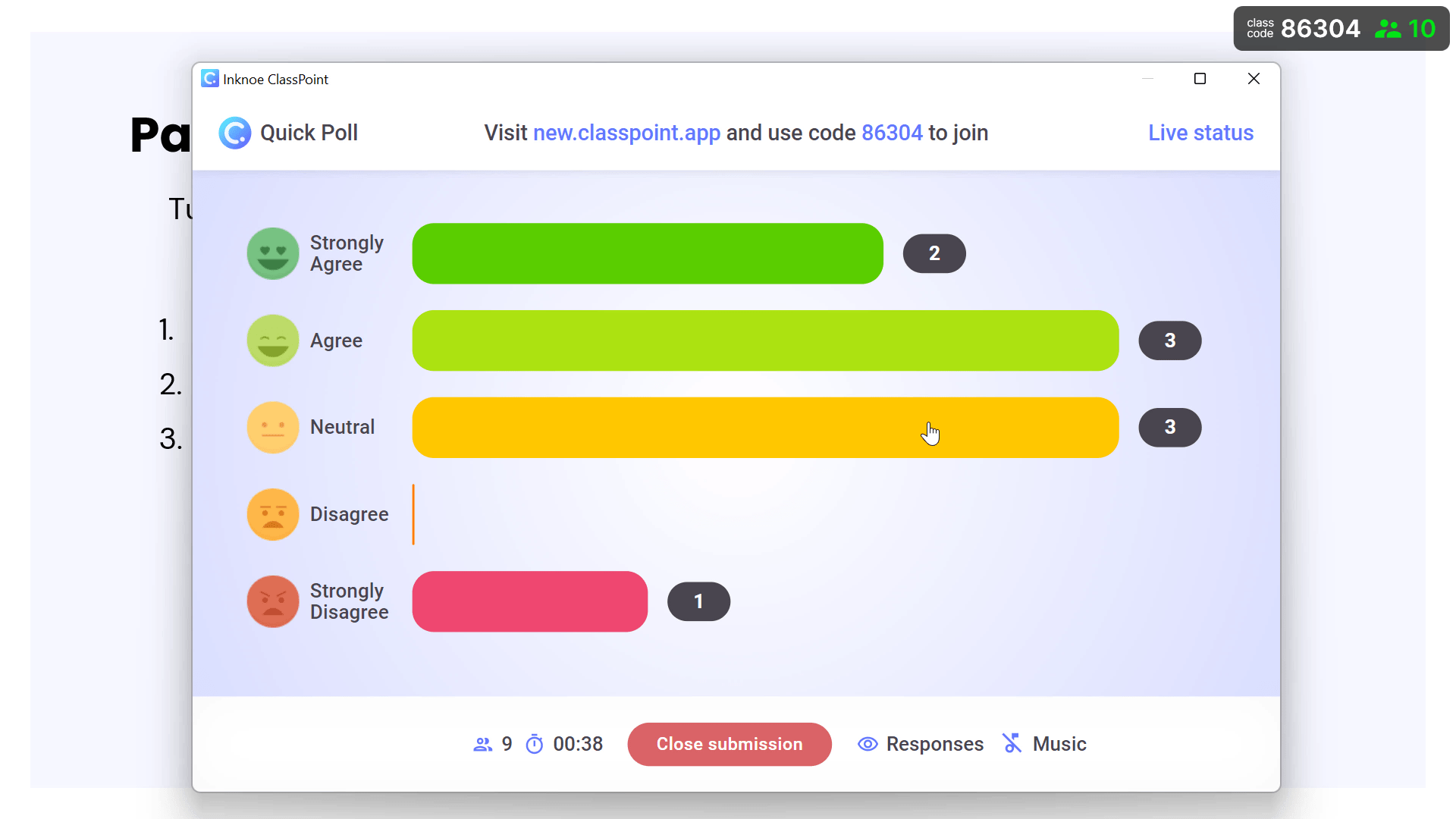
Quick Poll launches without any setup. ClassPoint has pre-set templates you can access mid-lesson to collect opinions, take a show of hands, or gauge where the class stands on a topic. For more structured surveys, other interactive question types give you more control over format and responses.
Tools used:
- Quick Poll
- Interactive Quizzes
Expert tip:
- Run a Quick Poll at the start of a lesson to gauge prior knowledge, then run the same one at the end. It shows students how their thinking shifted and gives you a clear before-and-after.
6. Game-based Learning in PowerPoint
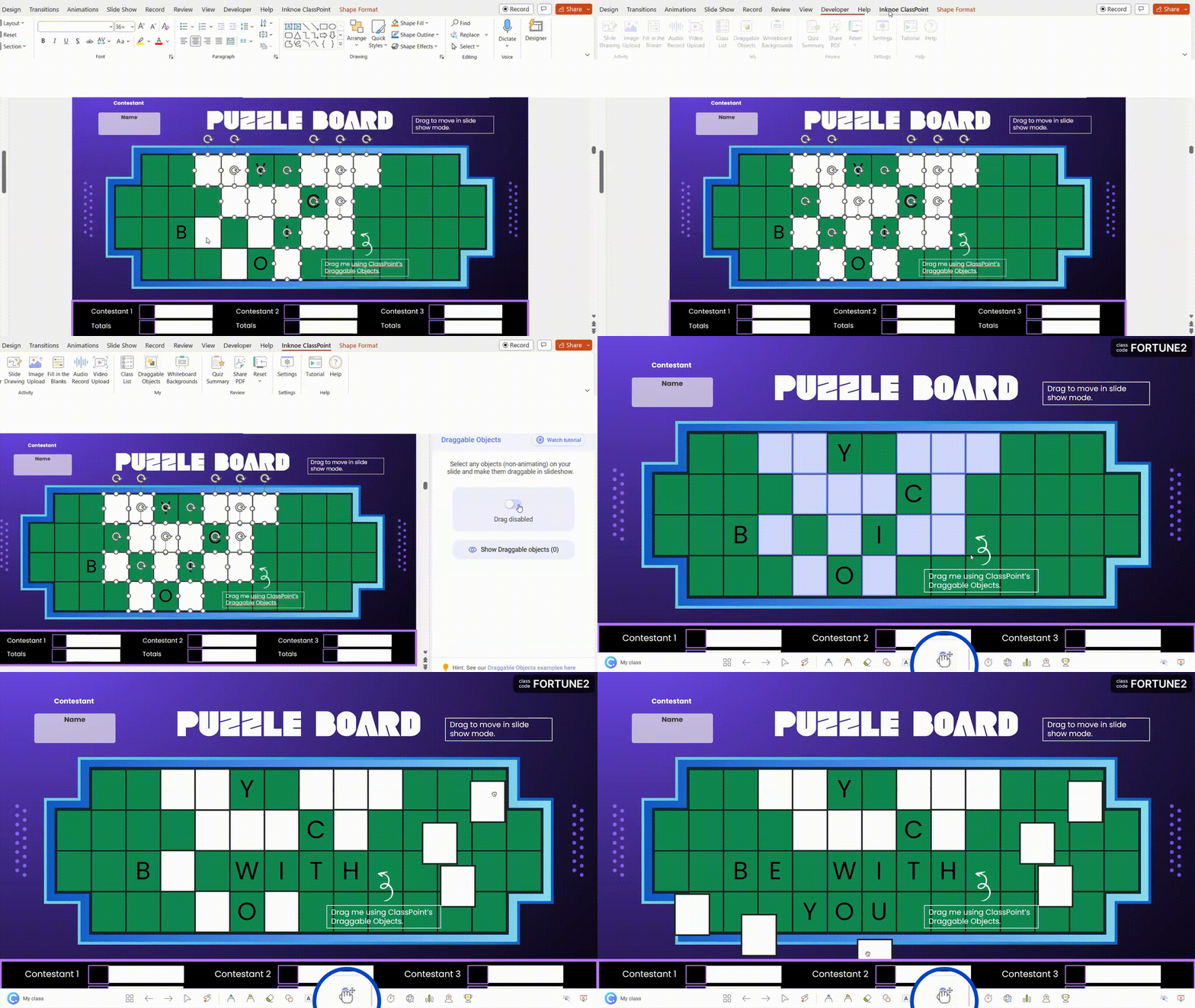
You can recreate classroom favourites like Wheel of Fortune, Family Feud, and Jeopardy directly inside PowerPoint using ClassPoint’s interactive tools. Games work well for review sessions because they test retention without feeling like a test.
Tools used:
- Interactive Quizzes
- Draggable Objects
- Name Picker
- Timer
- Gamification features (Award Stars, Levels and Badges, Leaderboard)
Expert tip:
- To easily reuse your PowerPoint file throughout each unit, save it as a template. When saving your presentation, opt for the .potx format instead of the standard .pptx. This will allow you to efficiently access and reuse the template for various units.
7. Motivate Students Over Time with Stars, Levels, and Badges
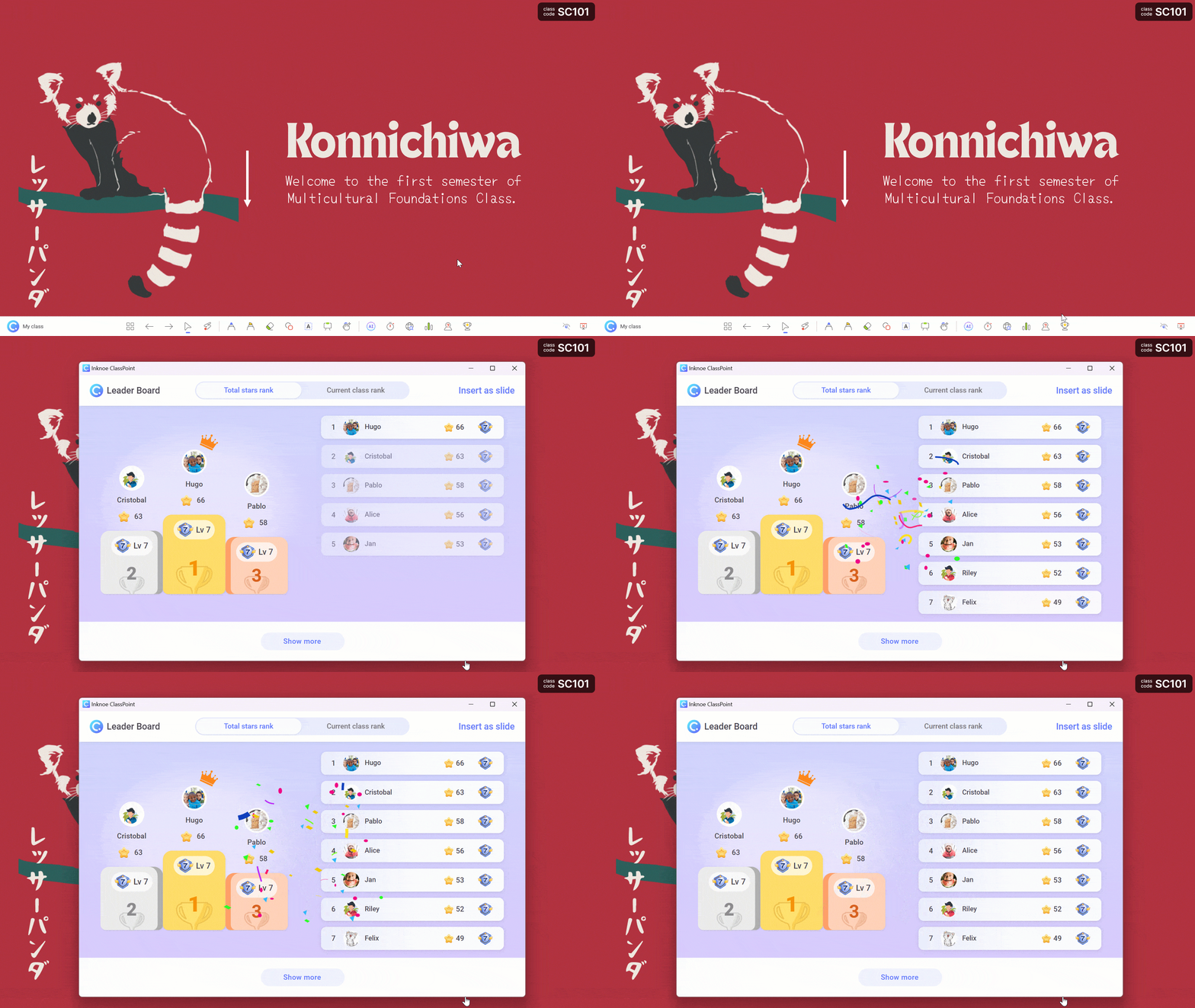
Stars, levels, and a leaderboard give you a persistent motivation layer that runs across your entire lesson. As students earn stars, they level up through badges you can customize to fit your classroom. The number of stars required to reach each level is adjustable, and the leaderboard can be revealed at any point to show standings.
Tools used:
- Award Stars
- Levels & Badges
- Leaderboard
Expert tips:
- Set up levels and badges once at the start of a term. They carry across every lesson automatically as students earn stars. You don’t need to configure anything again mid-semester. If you want to think through how points and badges shape student mindset, this guide on gamification and growth mindset is worth reading alongside it.
- Use the ClassPoint timer in conjunction with in-class activities, and interactive questions to add a layer of excitement and urgency.
8. Highlighting Key Points

ClassPoint’s annotations save directly onto your slide, so anything you highlight, circle, or write during the lesson stays there when you come back to it. You can add shapes, text boxes, pens, and highlighters in slideshow mode without breaking the flow of your presentation.
Tools used:
- Annotations
- Shapes and Text Boxes
- Laser and Spotlight
Expert tip:
- Use the ClassPoint Laser and Spotlight to focus on specific slide information. Access the spotlight by clicking on the Laser on the ClassPoint toolbar, then clicking the ‘S’ key on your keyboard.
9. Mind Mapping and Concept Mapping
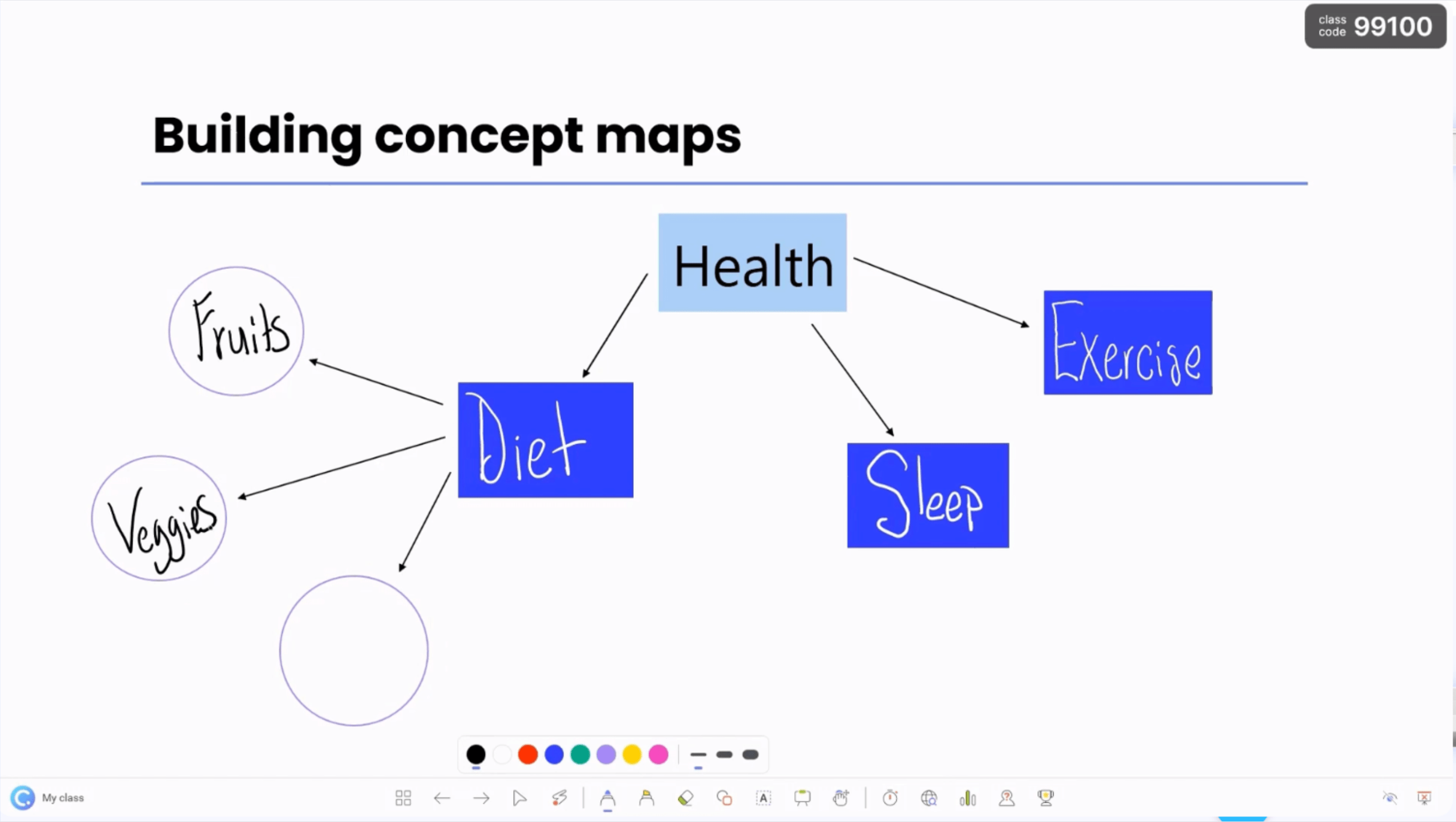
Use a whiteboard slide with ClassPoint’s annotation tools to build a mind map or concept map as a class in real time. Students can see it develop on screen as the discussion unfolds, which is more useful than a pre-made diagram they didn’t help create.
Tools used:
- Whiteboard Backgrounds
- Annotations
- Slide Drawing
- Image Upload
Expert tip:
- For students to work on their own mind maps, you can use the Slide Drawing question feature within ClassPoint, prompting them to construct a mind map on their student devices. Alternatively, students can hand-draw their mind maps on paper and then upload an image of their creation using the Image Upload question type.
10. Implement Flipped Classroom Aspects
ClassPoint fits into a flipped classroom at both ends. Before class, use Share PDF to distribute your slides or annotated notes directly to students. When they arrive, interactive quizzes and AI-generated questions let you quickly check what they absorbed before moving into deeper work.
Tools used:
- Interactive Quizzes
- Share PDF
Expert tips:
- Before Class: Share lecture and reading materials with your students using ClassPoint’s Share PDF feature. You can also conduct an online quiz with your students.
- During Class: Facilitate discussions, problem-solving sessions, or hands-on activities to deepen understanding using Interactive Quizzes or AI-generated quizzes.
11. Brainstorming Sessions
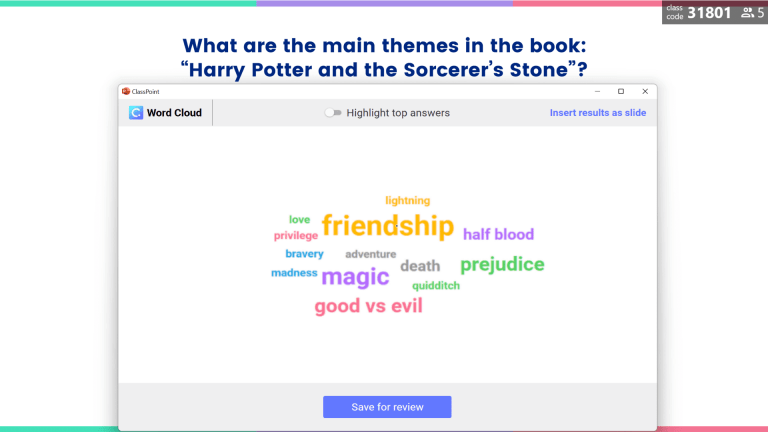
Word Cloud is well suited for brainstorming because it visualizes the whole class’s input at once. Common ideas appear larger and outliers are still visible. Launch it directly in PowerPoint and students see their responses populate in real time.
Tools used:
- Word Cloud
Expert tip:
- The top responses will be highlighted and shown to offer you a clear idea of the distribution of student ideas. This information can be inserted as a slide, enabling you to add supplementary notes and details following a discussion.
12. Receive Visual Responses from Students
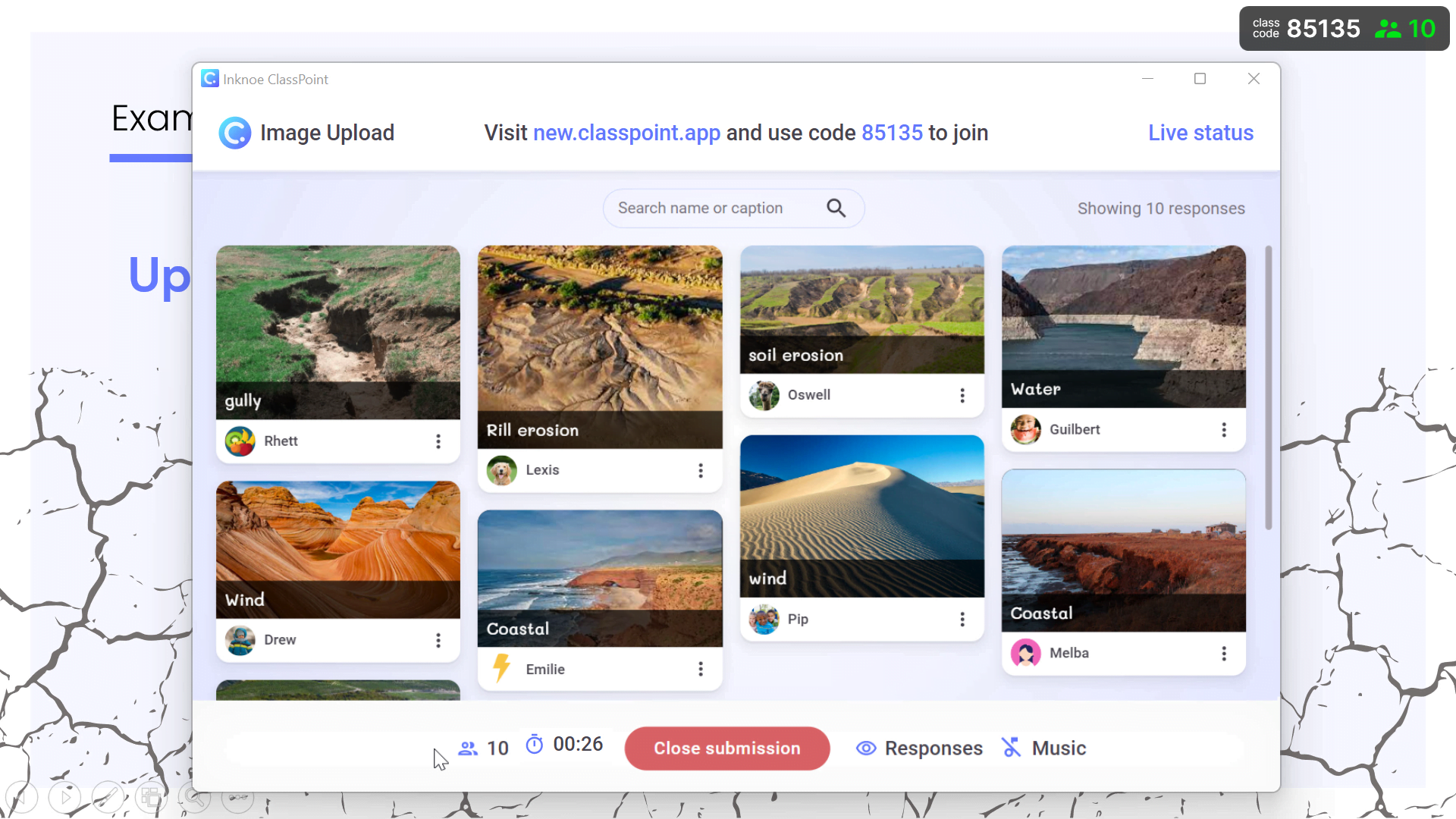
Not every answer is best expressed in words. Slide Drawing lets students draw directly on a shared slide and submit it. Image Upload lets them photograph their work or find a relevant image from their device. Video Upload lets them record or send a pre-recorded clip. All three show up in your response view during the lesson.
Tools used:
- Slide Drawing
- Video Upload
- Image Upload
Expert tips:
- Encourage students to provide a caption along with their Video and Image uploads, facilitating easy identification by using the search bar to locate submissions based on names or keywords in their captions.
- To ensure a comfortable environment for students submitting their visuals, consider the option to hide participant submissions.
13. Encourage Music Appreciation and Learning
Audio Record lets students submit a performance or spoken response directly from their device during class. For music lessons, students can record themselves playing, singing, or reciting while the notation or reference material is on the slide in front of them. Add music sheets, listening prompts, or reference audio as standard PowerPoint elements on the slide, then launch the Audio Record question for students to respond.
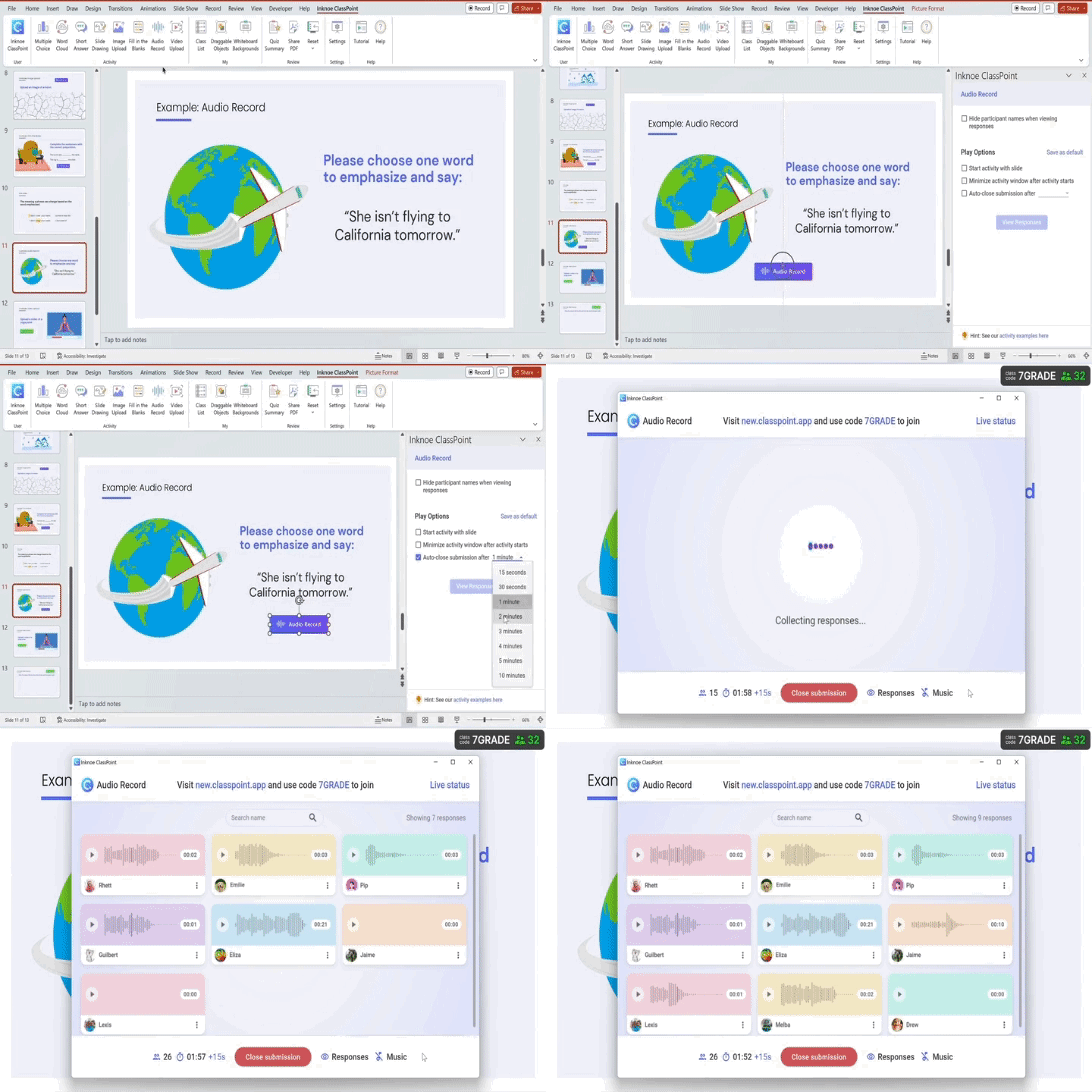
The same approach works beyond music: oral presentations, poetry recitation, or any subject where hearing the student matters more than reading their answer.
Tools used:
- Audio Record
Expert tip:
- Award Stars to any audio submission you want to revisit, then sort by starred responses for easy review. It also gives students visible recognition in the moment rather than after you’ve gone through everything privately.
14. Run Formative Assessments with Automatic Grading
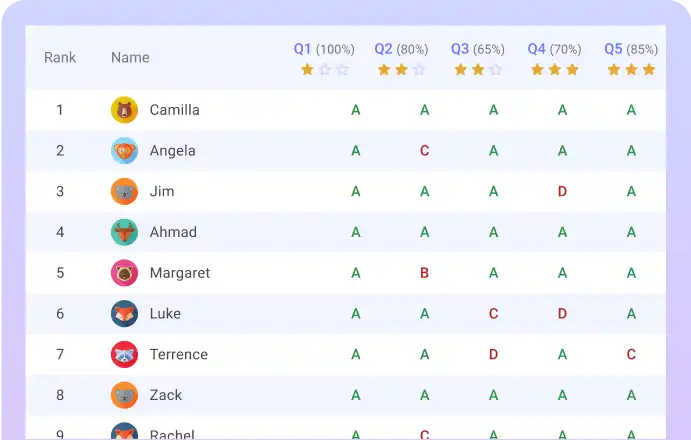
Multiple Choice with Quiz Mode turned on grades responses automatically and shows you results in real time. You can see at a glance which answer options tripped students up, and adjust what you cover next without waiting until after class to find out. How to Check for Understanding covers eight strategies worth pairing with this if formative assessment is something you’re actively working on.
Tools used:
- Quiz Mode
- Multiple Choice Questions
Expert tips:
- Quiz Mode also lets you set different point values per question, useful if you want harder questions to count for more than straightforward recall ones.
- Export data and analytics to Excel format by clicking on “Quiz Summary” at your PowerPoint ribbon, next to ClassPoint’s Share PDF feature.
See it in practice A Grade 9 algebra teacher in the Philippines restructured lessons around ClassPoint’s multiple choice questions, short answer, and polls, running frequent checks instead of waiting for end-of-unit tests. Read how they set it up.
15. Motivate Students with Competitions
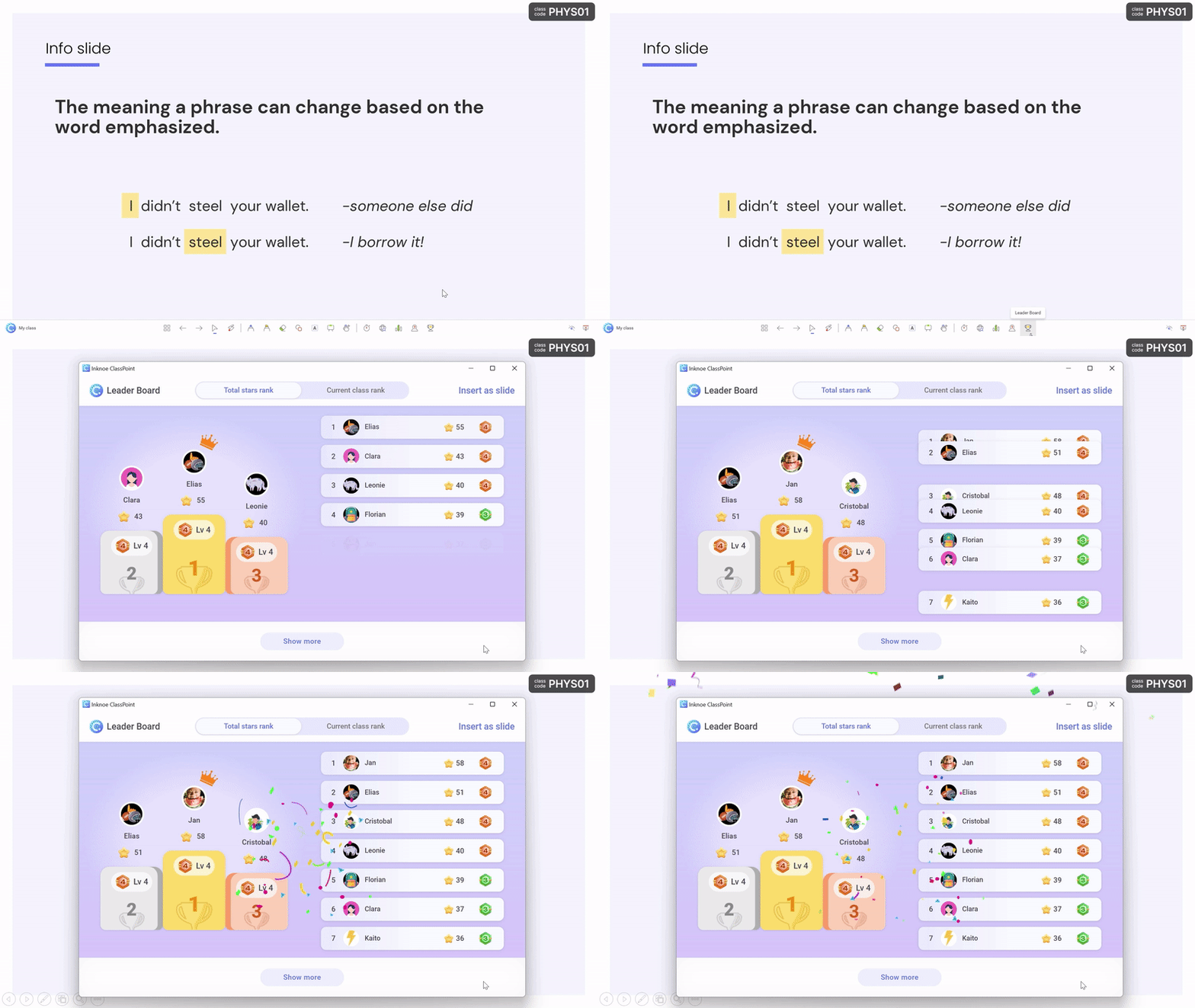
Quiz Mode scores and ranks students based on their answers, with faster correct responses earning more points. Reveal the leaderboard after a round and you’ll usually get a reaction. Students want to see where they stand.
Tools used:
- Quiz Mode
- Leaderboard
- Interactive Quizzes
Expert tip:
- Use a Private Class to track scores across the whole term, not just one session. At the end of a unit or semester, reveal the cumulative leaderboard. Students who engaged consistently throughout will show up at the top.
16. Capstone Projects in PowerPoint
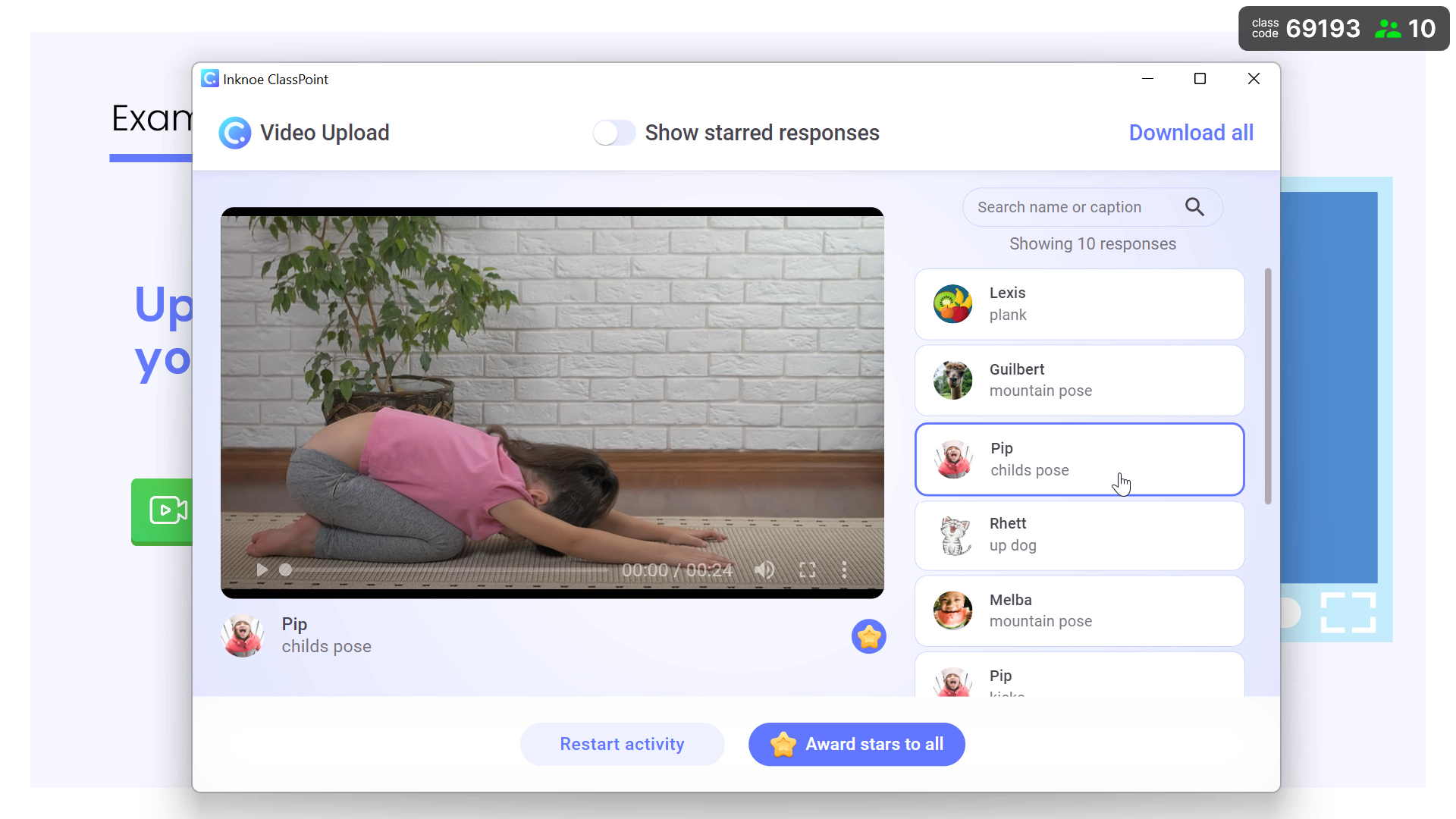
Students can submit capstone projects as videos directly through ClassPoint’s Video Upload, which means you can play their work back to the class from the same presentation you’re teaching from. After each presentation, switch to annotations to take notes or give live feedback without opening another tool.
Tools used:
- Video Upload
- Annotations
Expert tip:
- Download the video responses for further review and analysis after class, then easily delete the responses using the “Reset” button located within the ClassPoint tab in PowerPoint.
17. Icebreakers at the Start of a Lesson
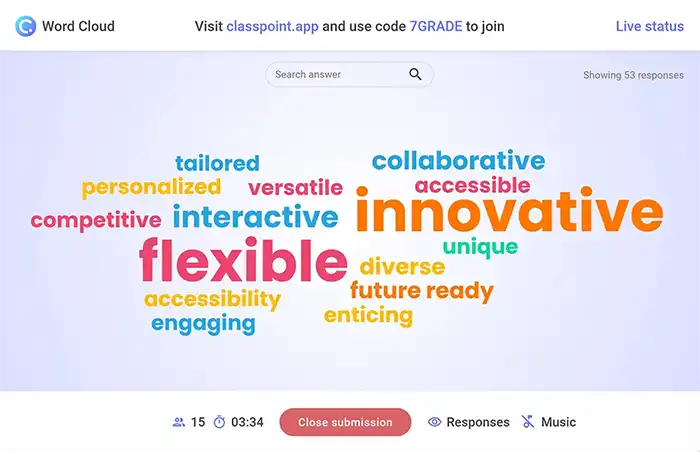
A Word Cloud or Multiple Choice question at the start of class takes about 30 seconds to launch and gets everyone responding before the lesson begins. Word Cloud works well for gathering initial thoughts or feelings on a topic. Multiple Choice works well for a quick temperature check or a low-stakes opinion poll to set up the day’s content.
Tools used:
- Interactive Quizzes
Expert tip:
- Click on a Word in the Word Cloud Response Window or a Multiple Choice bar to see who has submitted the answer. This insight allows you to engage students by discussing their choices in more depth, encouraging them to share their thoughts and perspectives.
18. Give Instant Feedback and Rewards
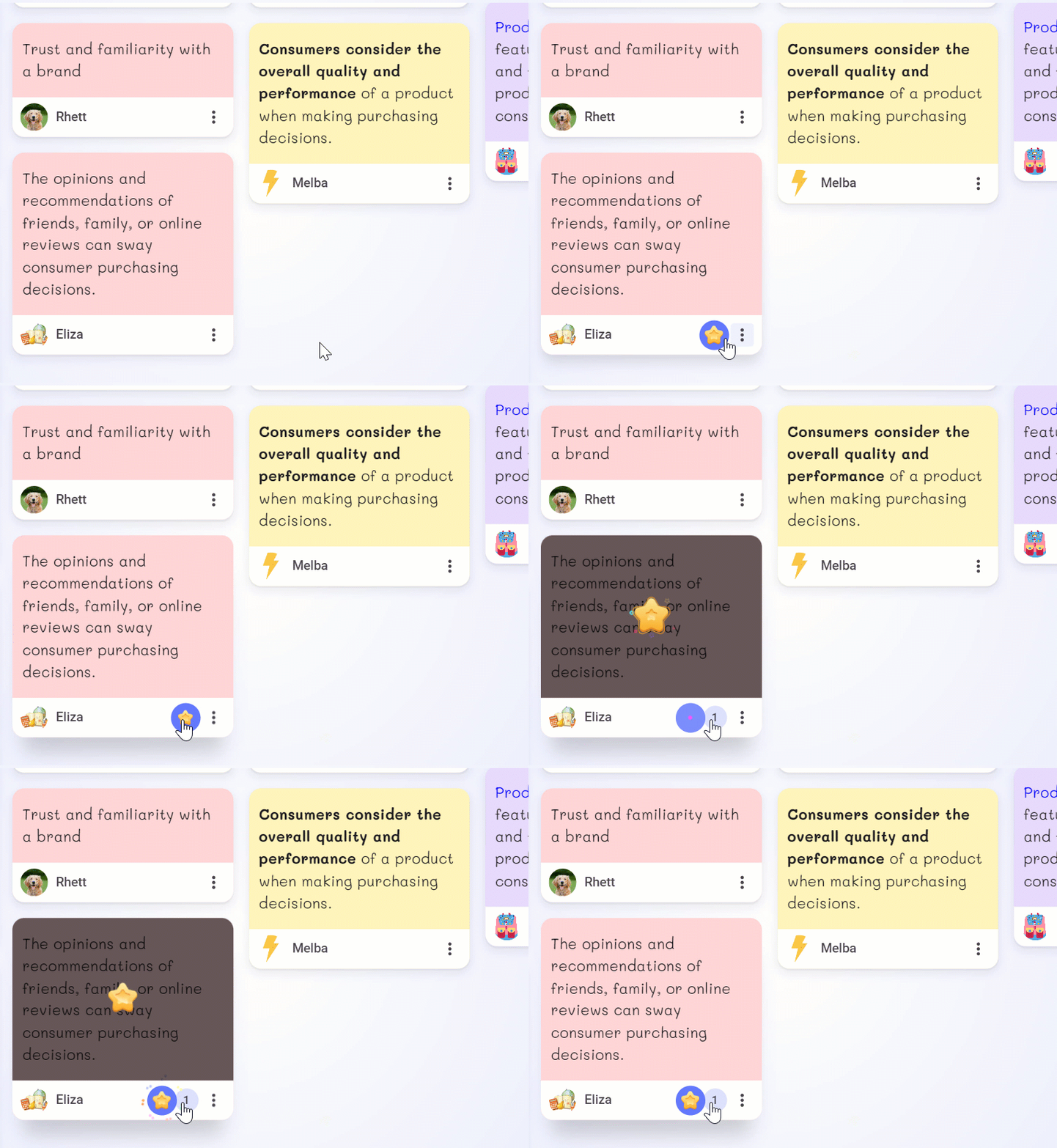
Award Stars gives students feedback in the moment rather than at the end of the week. A star awarded during class tells a student their answer or contribution was worth recognizing, something a grade returned three days later doesn’t do as well.
Tools used:
- Award Stars
- Interactive Questions
Expert tip:
- Use stars for more than correct answers. Award them for asking a good question, helping a classmate, or showing effort on a difficult task. It broadens what students see as worth doing.
19. Initiate Dynamic Group Discussions and Activities
Organize students into groups within your Private Class and have them earn stars collectively or individually for their team. The Name Picker’s Auto Pick mode randomly assigns students to groups, and the Timer keeps activities moving without you having to watch the clock.
Tools used:
- Private Class
- Name Picker
- Timer
Expert tip:
- Minimize the timer during activities so students can still see the slide content. Switch to full screen when you want the countdown to be the only thing visible, useful for timed challenges where you don’t want distractions.
20. Run Semester-Long Team Challenges with Groups
Groups is a ClassPoint Premium feature that lets you cluster students into named teams within your Private Class, with each team accumulating stars collectively across sessions. Because the points carry over from lesson to lesson, it sustains a team challenge all term rather than resetting after each class.
Set it up through the web app: open your Private Class, go to Groups, add a team name and color, and assign students. From then on, stars you award to individual students count toward their team’s running total. Display the leaderboard at any point during class to show where teams stand. The Private Class setup guide walks through the full configuration if you haven’t done it yet.
Tools used:
- Groups (ClassPoint Premium)
- Private Class
- Leaderboard
Expert tip:
- Assign students to teams deliberately rather than randomly. Pairing stronger and quieter students across groups keeps the competition balanced. Teams that feel evenly matched tend to stay engaged well past the first few weeks.
21. Practice Problem-Solving and Critical Thinking
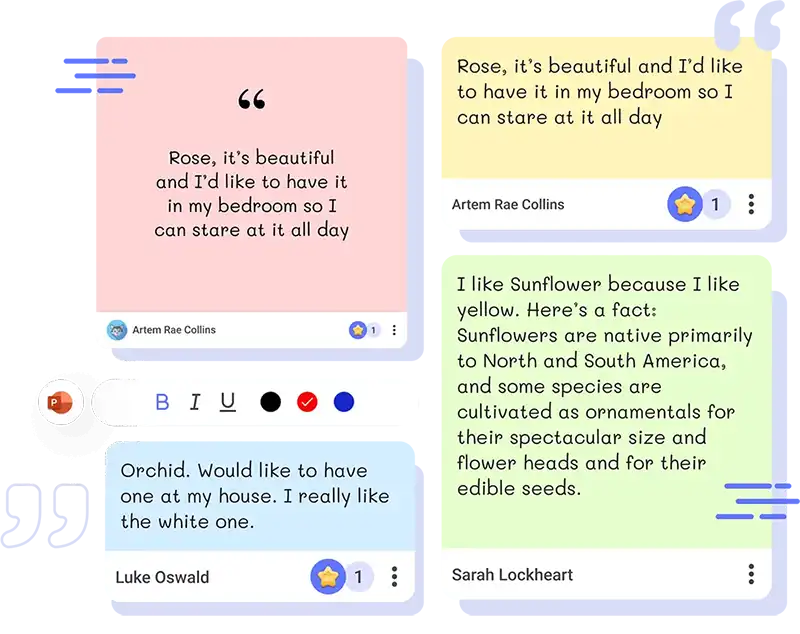
Short Answer questions work well for activities where there’s no single correct answer to display publicly: classroom debates, think-pair-share exercises, or open-ended analysis tasks. Students articulate their responses clearly and concisely, and you can see every answer in one view without calling on individuals.
Tools used:
- Short Answer
Expert tips:
- Use the search bar to search for important words or phrases within students’ answers, and award stars to those who incorporated those significant words or phrases in their answers.
- Use ClassPoint’s timer for a more focused teaching session.
22. Encourage Objective Peer Assessments
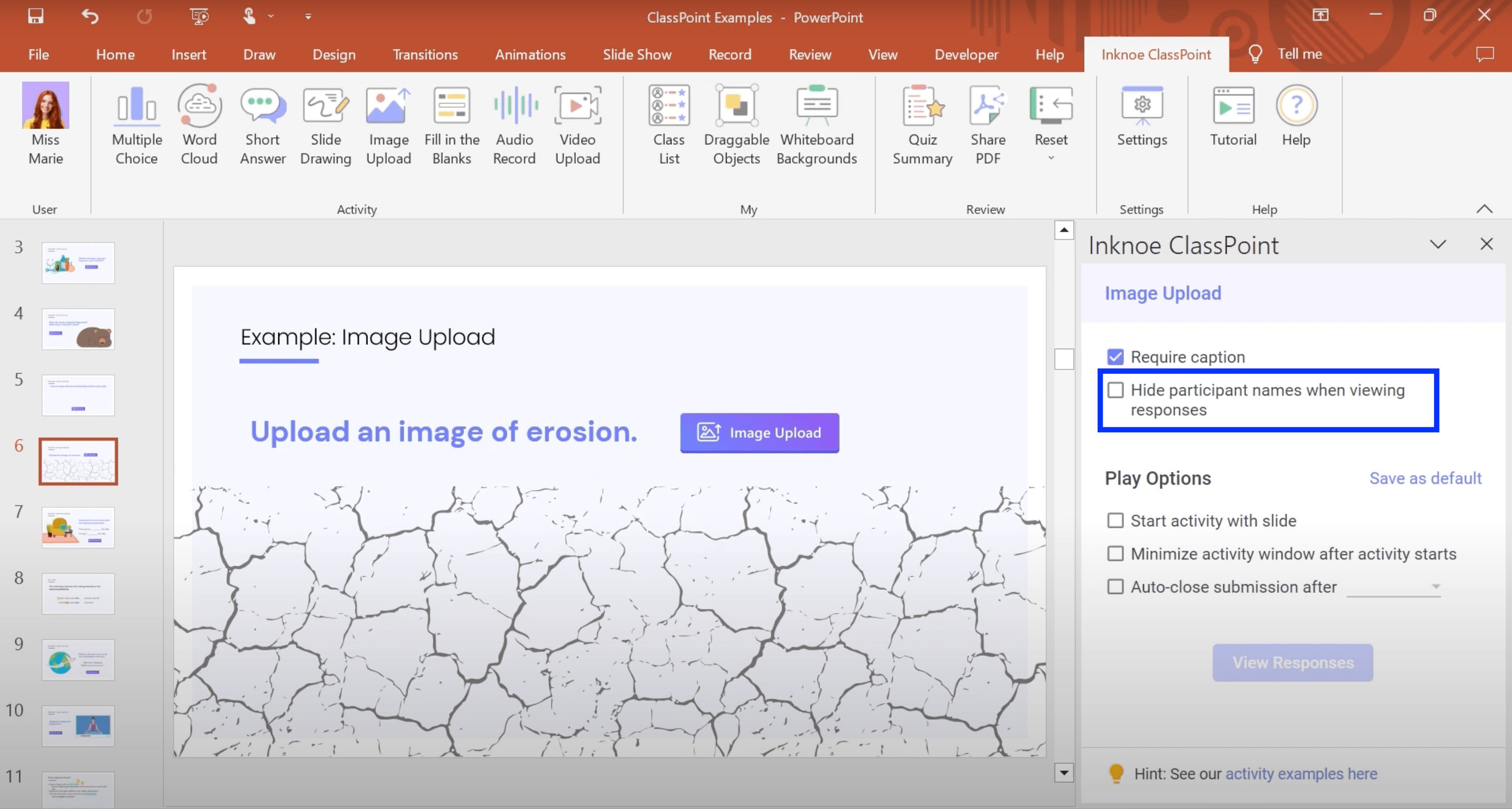
Hide student names in ClassPoint’s response settings and the class can review and discuss submissions without knowing who wrote what. It removes the social pressure that usually makes peer feedback awkward, especially with written or drawn responses.
Tools used:
- Hide Participant Names in the settings panel of Interactive Quizzes
Expert tip:
- Use the Name Picker to randomly select who presents their feedback. It stops the same students from always speaking and keeps everyone engaged with what’s being reviewed.
23. Challenge Minds with Puzzles

Use straightforward PowerPoint techniques to build an interactive puzzle that students can solve directly within your presentation. Make each puzzle piece draggable, then use the Name Picker to select students to come to the board and participate. This works well for critical thinking and problem-solving practice.
Tools used:
- Draggable Objects
- Name Picker
Expert tip:
- ClassPoint has tutorials for building both traditional jigsaw puzzles and sliding puzzles using Drag and Drop, a useful starting point if you want a ready-made activity structure.
24. Well-Managed Classrooms with Well-Timed Lessons
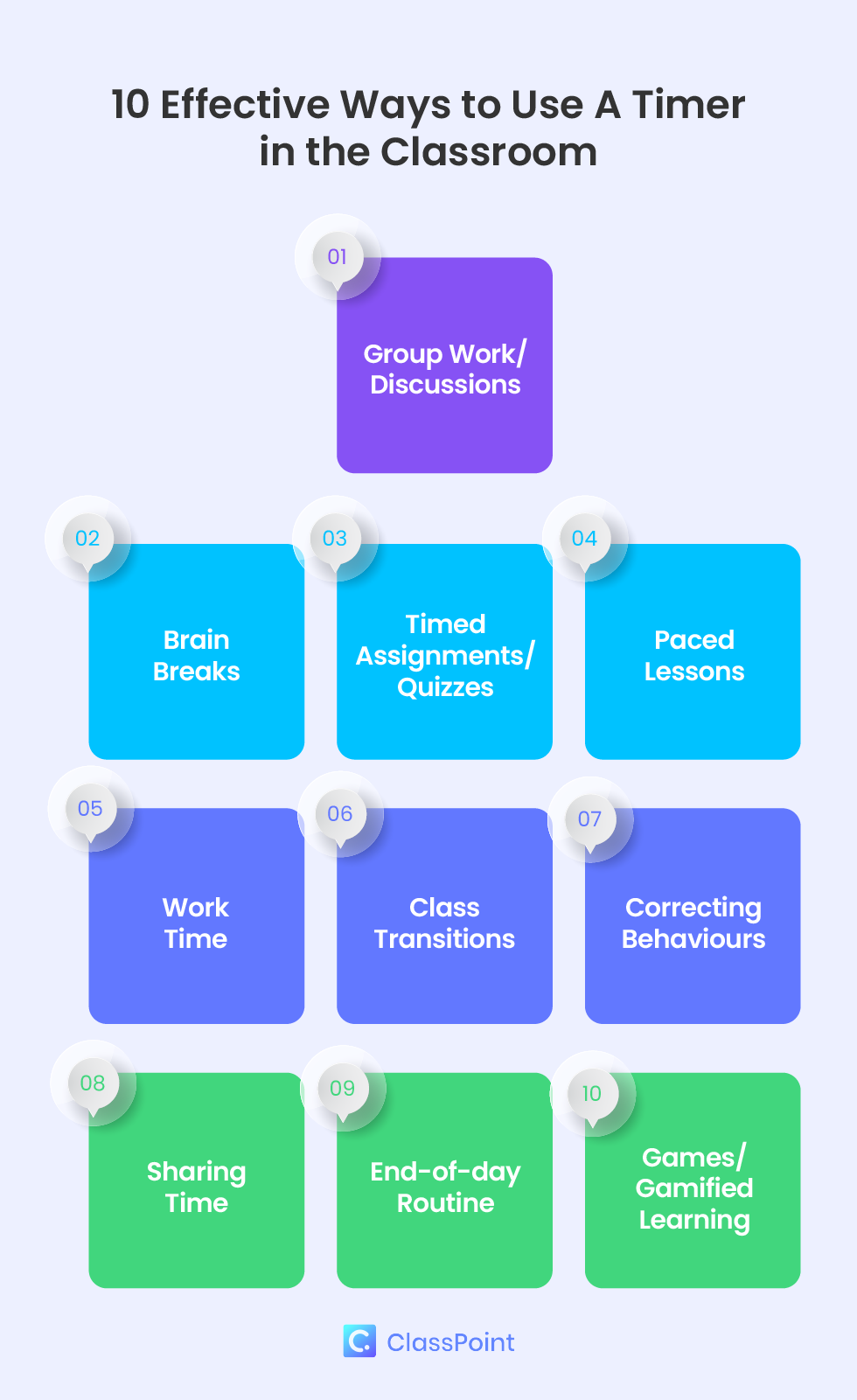
The Timer runs directly in slideshow mode, so you don’t have to switch apps or find your phone to keep activities on track. Use it to set time limits on questions, manage transitions, or give students a visible countdown for independent work.
Tools used:
- Timer
Expert tip:
- The timer works as both a countdown and a stopwatch: use countdown mode for timed activities, stopwatch mode when you want students to see how long they’ve been working.
25. Share Resources and Annotated Notes with Students
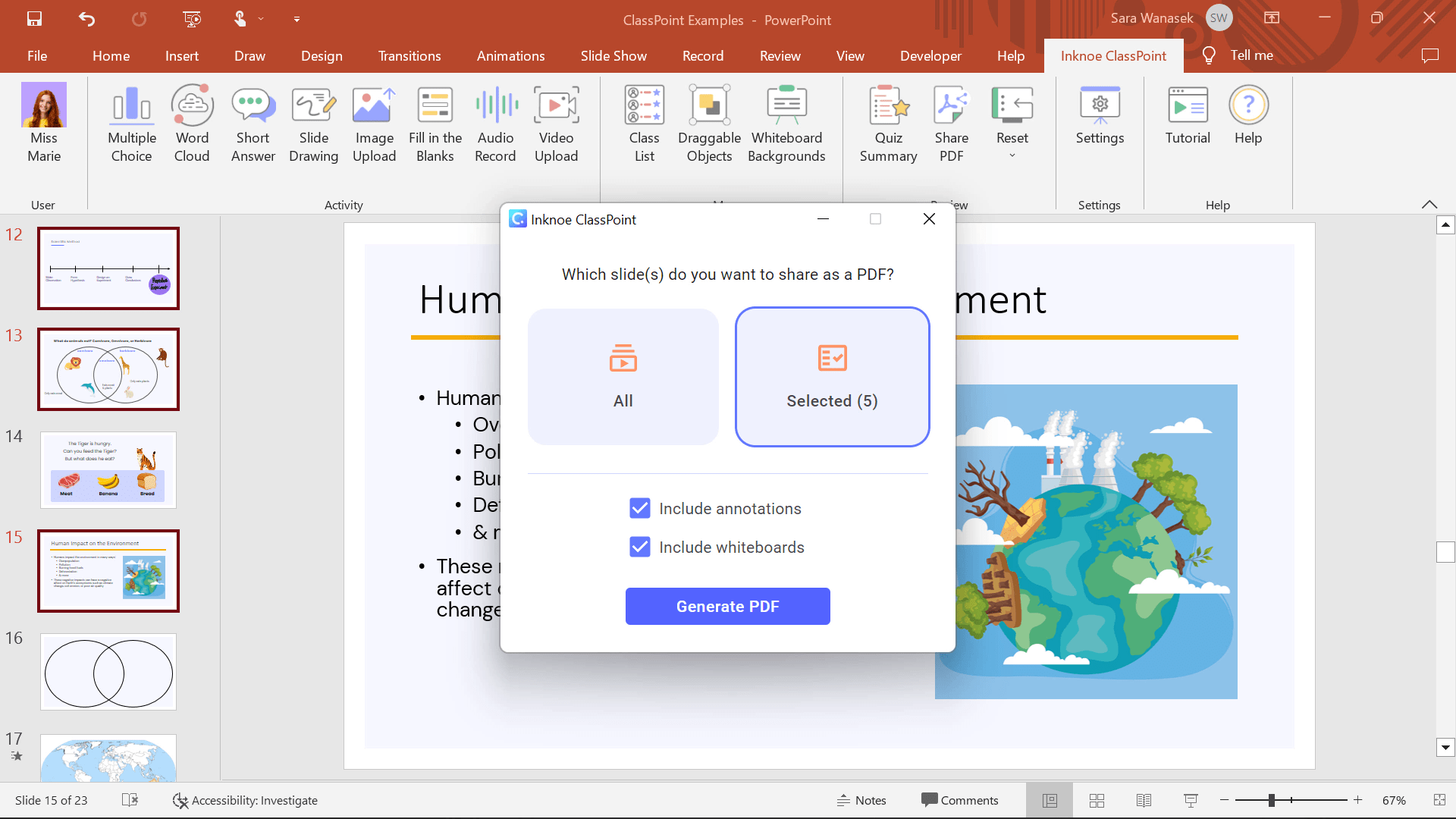
Share PDF lets you send your entire presentation or selected slides, including any annotations you added during class, directly to students as a PDF. They access it on their device in one click, and you don’t have to email anything after the lesson.
Tools used:
- Share PDF
Expert tip:
- To select the slides for sharing, hold down the ‘Shift’ key and click on the specific slides you wish to include. Then click on the ‘Share PDF’ icon located in the ClassPoint tab and opt for the ‘Selected Slides’ feature. This enables you to generate a PDF containing only the chosen slides for distribution.
26. Advanced Language Learning
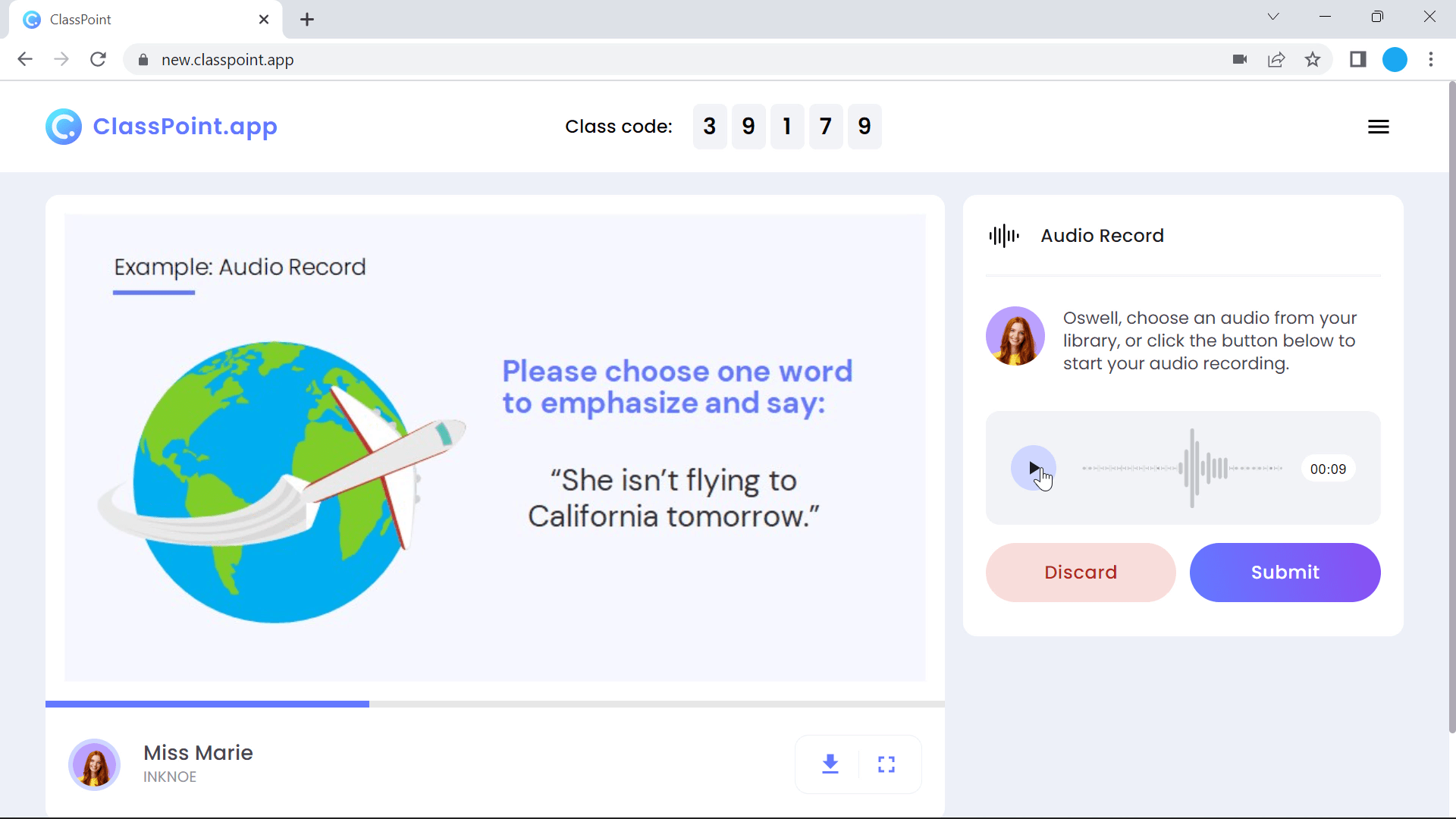
Enhance language skills by using ClassPoint’s audio features for pronunciation exercises, vocabulary practice, and interactive reading activities. 7 Interactive ESL Activities with downloadable PowerPoint templates has ready-made structures you can adapt directly. Use the Audio Record question type to have students submit spoken sentences or words for evaluation of grammar and pronunciation. For a written comprehension check, use Fill-in-the-Blanks to gauge vocabulary knowledge.
Tools used:
- Audio Record
- Fill-in-the-Blanks
Expert tips:
- In certain situations, there might be multiple correct answers. With the Fill-in-the-Blanks feature in ClassPoint, you can incorporate more than one valid answer, simplifying the grading process.
- To aid students, you can provide a word bank by including answer choices on your slide. Alternatively, for a more challenging approach, omit answer choices, requiring students to recall and input the answers without additional hints.
27. Promote Confident Self-Assessment
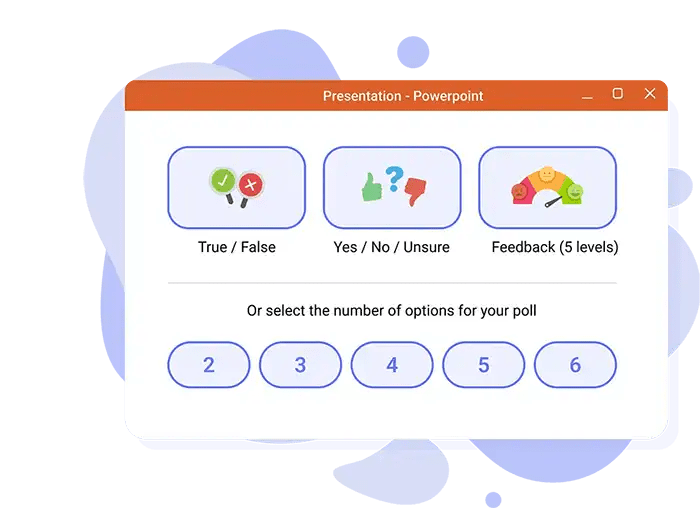
Use ClassPoint’s Quick Poll to let students gauge their own comfort levels and understanding at any point during your lesson. It takes seconds to launch and gives students a moment to reflect before you move on.
Tools used:
- Quick Poll
Expert tip:
- To save and review the Quick Poll data, insert the results as a slide in your presentation.
28. Review Homework Assignments Collectively
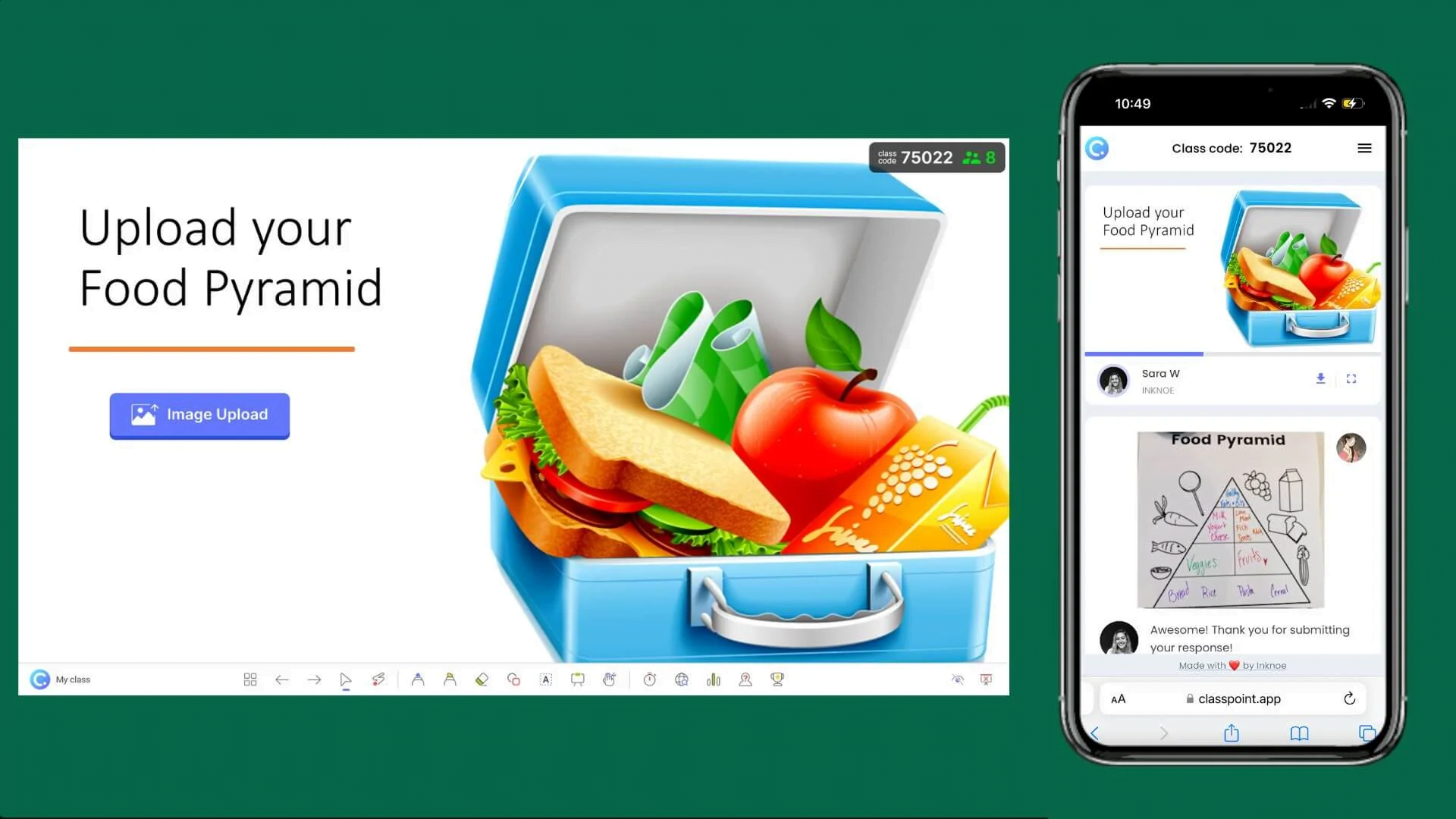
Review homework or assigned out-of-class work effectively using ClassPoint. Students can submit their completed work by uploading an image using the Image Upload feature, or record a voice memo or short video for the class to review together.
Tools used:
- Image Upload
- Audio Record
- Video Upload
Expert tip:
- Using Image Upload, students can easily capture a screenshot of their work completed on either a computer or a mobile device.
29. Present with Interactive Diagrams
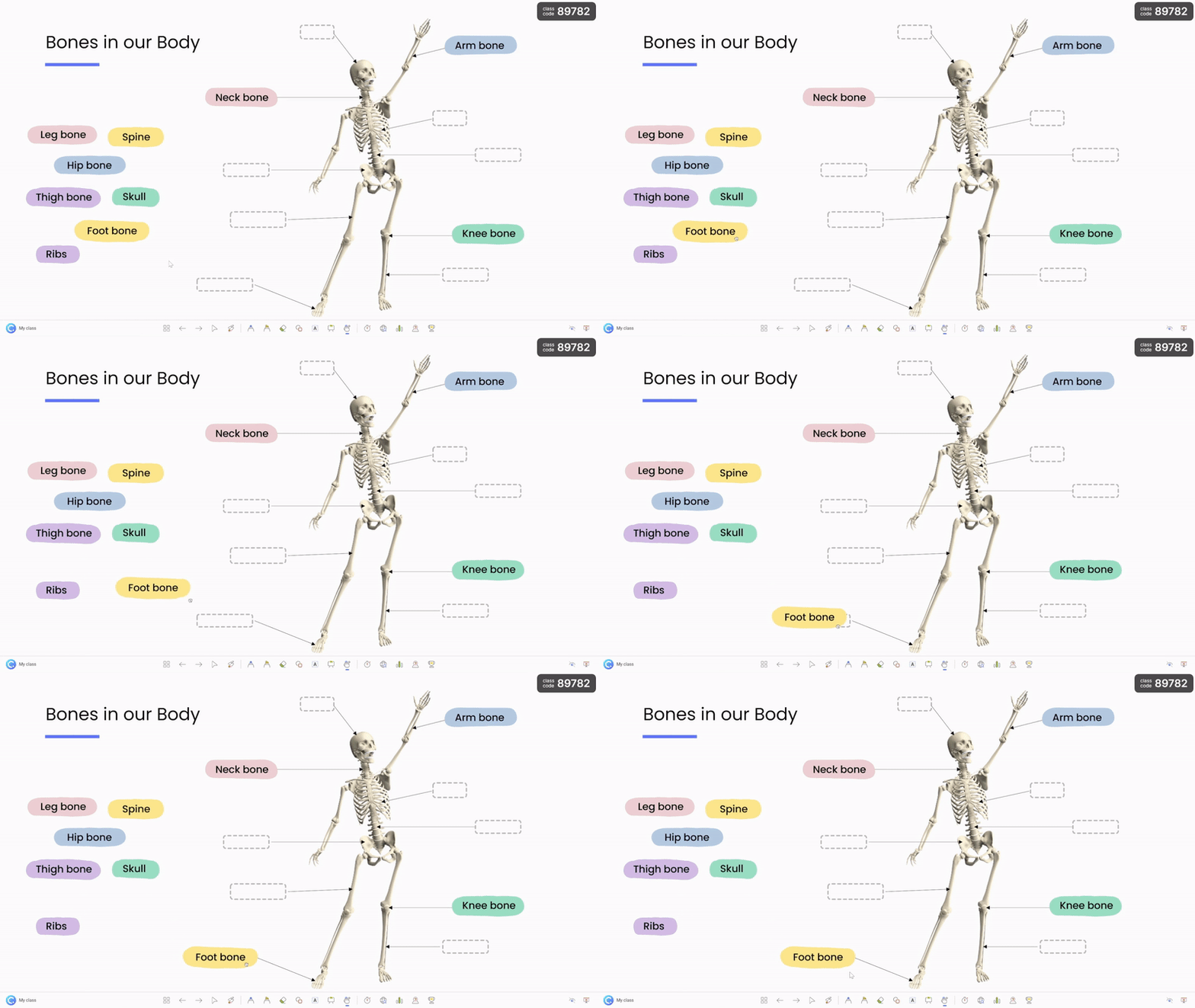
For visual and hands-on learners, a diagram that moves is more useful than one that sits static on a slide. Use Drag and Drop to make individual elements of a diagram moveable. Students can watch parts shift into place, or come up to the board to arrange them correctly themselves.
This works well for labeling activities, anatomy diagrams, process flows, or any concept where the relationship between parts matters.
Tools used:
- Draggable Objects
Expert tip:
- Set up your draggable objects in their starting positions before the lesson. There’s no option to rotate objects during the presentation, so orient each piece exactly as you want it to appear when you launch.
30. Employ Exit Tickets to End a Lesson Effectively
Exit tickets work best when they take under two minutes and give you data you can act on the next day. ClassPoint’s range of question types means you’re not limited to multiple choice. You can ask students to draw, record a short audio, or write a sentence, depending on what you need to know.
Tools used:
- Interactive Quizzes
Expert tips:
- For reusing exit tickets across different presentations, generate a slide and designate it as a custom whiteboard template for recurring use. Access these custom whiteboards at any point during your presentation, ensuring a consistent and easily accessible resource for your exit ticket assessments.
- Include an activity where students rate their understanding on a scale from 1 to 5 using Quick Poll to promote self-assessment and reflection on the lesson material.
- Try AI-generated quizzes for a quick and effortless exit ticket based on Bloom’s Taxonomy, to ensure your teaching materials promote higher-order thinking skills.
Getting Started with ClassPoint
The 30 ways to use ClassPoint in this guide range from features you can set up in under a minute to ones that take a bit of configuration upfront. Most work on the free plan. Features marked as ClassPoint Premium, like Groups, require an upgrade.
If you haven’t installed ClassPoint yet, download it from classpoint.io. Creating a Lesson with ClassPoint from Start to Finish walks through the whole process if you prefer a step-by-step introduction. Once installed, it appears as a tab in your PowerPoint ribbon. To run your first interactive question: add a question button to any slide from the ClassPoint tab, switch to slideshow mode, and students join at classpoint.app using your class code. Responses appear on your screen in real time.
See it in practice A primary school in Dubai used quizzes, polls, word clouds, the name picker, and rewards across their lessons. See how their teachers put it together.
